
 41
41
The Legend of Zelda: Breath of the Wild – Open World Revolution
Breath of the Wild redefined open-world gaming by prioritizing player freedom and environmental interaction over linear progression. One of the highest-rated games ever made with a 98/10 Metacritic score.
Game Info
Verdict
A transformative masterpiece that redefined open-world gaming through radical player freedom, systems depth, and world interactivity.
Pros
- Revolutionary open-world design prioritizing player agency over linearity
- 120 shrines and 900 Korok seeds provide hundreds of hours of compelling exploration
- Environmental interaction and physics systems enable creative problem-solving across all encounters
- Minimalist narrative and environmental storytelling allow player-driven adventure narrative
- Technical achievement on Switch hardware with stable performance and expansive view distances
- Dual-pack DLC expansion (Champions' Ballad) adds substantial story and challenge content
Cons
- Weapon durability system frustrates players preferring attachment to favorite equipment
- 30fps frame rate remains divisive despite stable delivery; motion controls occasionally feel imprecise
- Divine Beast dungeons feel simplified compared to traditional Zelda puzzle-solving progression
- Some NPCs and quests become irrelevant after narrative completion; minimal post-game content
- Performance dips during intense weather or large enemy encounters occasionally break immersion
Performance Notes
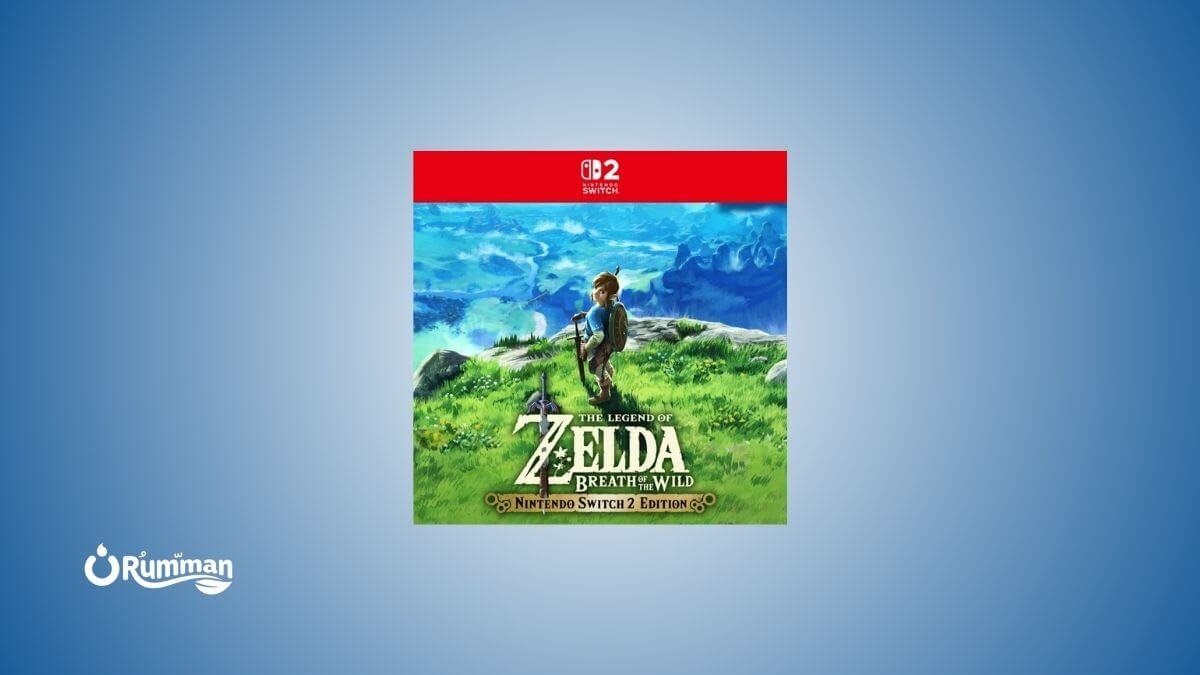
Nintendo Switch: stable 30fps docked (1080p) with occasional dips in dense areas, stronger consistency in handheld mode (720p). Wii U: more frequent frame drops, approximately 25fps average. Switch 2 upgrade June 2025 promises 60fps at 4K resolution.
The Legend of Zelda: Breath of the Wild fundamentally transformed expectations for open-world design when it launched alongside the Nintendo Switch in March 2017. This review explores how the game achieved near-universal acclaim by abandoning traditional Zelda conventions in favor of radical freedom and systems-based interaction. Players discover that nearly any goal can be tackled in multiple ways, using climbing, stealth, magic, physics manipulation, or direct combat. Critical consensus placed it among the greatest games ever made with 43 perfect reviews on Metacritic alone. Whether approaching Divine Beasts immediately or spending 100 hours discovering Korok secrets, this guide covers what made the game resonate across skill levels and playstyles.
How to Play The Legend of Zelda: Breath of the Wild
Link awakens from a century-long slumber with no memory of his past, thrust into a Hyrule threatened by Calamity Ganon. Gameplay emphasizes exploration and freedom. You climb mountains, sail across lakes, glide from towers, and engage enemies through countless approaches. The core loop involves discovering regions, completing shrines, defeating Divine Beasts, and gathering resources.
- Controls – Standard Switch controller scheme with climbing mapped to jump button and abilities to shoulder inputs. Combat feels intuitive with parry/dodge mechanics rewarding timing over button mashing. Minimal learning curve for series veterans; newcomers grasp systems within first hour.
- Progression – Non-linear approach: tackle Divine Beasts in any order, skip main quests entirely, or speedrun narrative. 120 shrines provide Spirit Orbs converting to heart containers or stamina vessels. No experience points; progression comes through discovery and stat management.
- Combat/Mechanics – Weapon durability encourages resource management and experimentation. Perfect Dodge and Parry mechanics reward defensive play. Environmental factors like water, fire, and terrain affect enemy tactics. Elemental weapons and status effects add depth beyond raw damage numbers.
- Tips – Unlock towers early to map regions and locate shrines via Sheikah Sensor. Stock food and cook potions; most fights can be won through preparation. Climbing wet surfaces is impossible; plan routes around weather. Speak to NPCs for hints about shrine locations and combat tactics.
Who Should Play The Legend of Zelda: Breath of the Wild
Breath of the Wild appeals to exploration enthusiasts, players seeking freedom-based gameplay, and those pursuing comprehensive completion. Accessibility options accommodate varied skill levels without compromising challenge or design intent.
- Exploration Completionists – 120 shrines, 900 Korok seeds, dozens of hidden locations, and secret bosses reward thorough exploration. Every corner of Hyrule holds discoverable content.
- Non-Linear Gamers – Skip objectives freely. Defeat Calamity Ganon at character level 3 or complete every shrine first. The game adapts to your chosen difficulty through enemy scaling and resource availability.
- Systems Thinkers – Environmental interaction, elemental combinations, and physics manipulation reward creative problem-solving. Combat encounters present opportunities rather than rigid encounters.
- Skip if – You demand 60fps performance, prefer story-driven linear narratives, expect extensive traditional dungeons with puzzle progression, or dislike weapon durability mechanics that encourage constant equipment cycling.
The Legend of Zelda: Breath of the Wild Platform Performance
Available on Nintendo Switch and Wii U, Breath of the Wild demonstrates technical achievement given hardware constraints. Switch version delivers superior performance, particularly in portable mode. Both versions maintain playable 30fps framerates despite demanding environmental effects and view distances.
| Platform | Resolution | FPS | Notes |
|---|---|---|---|
| Nintendo Switch Docked | 1080p | 30 | Occasional dips to 25fps in dense areas; generally stable across most gameplay |
| Nintendo Switch Handheld | 720p | 30 | Superior consistency vs. docked mode; mobile play maintains stable framerate |
| Wii U | 720p | 30 | More frequent frame drops; inferior performance overall; version removed from digital stores |
| Switch 2 Upgrade | 4K | 60 | Coming June 5, 2025; enhanced graphics and doubled framerate available as paid upgrade or NSO+ member benefit |
The Legend of Zelda: Breath of the Wild System Requirements
Breath of the Wild requires only a Nintendo Switch console or Wii U with sufficient storage space. The title has no PC release, though emulation via Cemu, Yuzu, and Ryujinx remains viable for players with dumped copies. Official system requirements minimal due to Nintendo’s optimization expertise.
| Component | Minimum | Recommended |
|---|---|---|
| Platform | Nintendo Switch or Wii U | Nintendo Switch OLED |
| Storage | 14GB free space | microSD card (256GB) recommended |
| RAM | 4GB (integrated) | OLED variant preferred |
| PC Emulation (Cemu) | GTX 1050 / RX 560 | GTX 1080 / RX 5700 XT |
| Emulation CPU | Intel Core i5-4690 | Intel Core i7-9700K or better |
Similar Games to The Legend of Zelda: Breath of the Wild
Finding exact parallels to Breath of the Wild’s design philosophy proves challenging; few games replicate its combination of freedom, environmental interaction, and non-linear problem-solving. These titles share core design principles despite different thematic contexts.
- Skyrim – Open world with non-linear questing, environmental interaction, and freedom to approach objectives multiple ways. Less refined systems-based design but similar player agency.
- The Outer Worlds – Smaller-scale world with multiple solution paths for encounters. Stealth, dialogue, and combat all viable approaches similar to Breath’s flexibility.
- Prey (2017) – Systems-based design where environmental tools and player creativity solve problems. Physics manipulation and unexpected solutions rewarded.
- Dark Souls Series – Freedom to approach world challenges nonlinearly. Emphasis on learning systems deeply before applying knowledge creatively to overcome obstacles.
The Legend of Zelda: Breath of the Wild vs Competitors
Breath of the Wild occupies a unique market position. Few direct competitors exist in the single-player open-world action-adventure space. Most comparable games prioritize different design philosophies, making true competition limited.
| Feature | Breath of the Wild | Tears of the Kingdom | Skyrim |
|---|---|---|---|
| Price | $59.99 | $59.99 | $59.99 (on sale often) |
| Main Story Playtime | 35-50 hours | 40-60 hours | 30-40 hours |
| World Layers | Single open world | Three layers (sky, surface, underground) | Single world with dungeons |
| Multiplayer | No (community mod exists) | No | No |
| Metacritic Score | 98 | 96 | 94 (varies by platform) |
The Legend of Zelda: Breath of the Wild Story and World
Hyrule exists in post-apocalyptic recovery a century after Calamity Ganon’s initial defeat. Environmental storytelling conveys civilization’s struggle to rebuild through NPC settlements, crumbling structures, and regional cultures. Link’s amnesia frames a personal discovery narrative paralleling player exploration. Princess Zelda’s sacrifice and secret role provide emotional grounding beyond typical fantasy tropes. The world rewards curiosity through optional memories revealing Link’s past. Dungeons feature thematic coherence with regional environments—aquatic temples for water regions, volcanic structures for volcanic zones. Boss designs reference champion personalities, creating emotional resonance despite simplified mechanics compared to traditional Zelda titles. Environmental interaction creates emergent narratives as fire spreads naturally, enemies react to weather, and player choices cascade into world-state changes.
The Legend of Zelda: Breath of the Wild Multiplayer and Online
Breath of the Wild offers no native multiplayer or online modes. The game is designed exclusively for single-player experience. However, a community-created multiplayer mod emerged April 2023, allowing up to 18 simultaneous players in shared world exploration and PvP combat through emulator modifications.
- Single-Player Focus – Entire game designed around solo Link’s adventure. No split-screen, co-op, or online functionality in official version.
- Cloud Saves – Nintendo Switch Online members access automatic cloud backup enabling save transfer across multiple consoles.
- Community Multiplayer Mod – PointCrow’s team released April 4, 2023 multiplayer modification supporting 4-18 player servers on emulated versions. Nintendo issued copyright claims on derivative content shortly after release.
- No Live Service – Zero seasonal events, battle passes, or online-dependent progression. Game ships feature-complete for offline solo play.
The Legend of Zelda: Breath of the Wild DLC and Expansions
Breath of the Wild received substantial post-launch support through a $20 expansion pass split into two packs. Master Trials introduced hard mode, weapon challenges, and cosmetic gear. Champions’ Ballad expanded story content with new shrines, bosses, and narrative depth exploring champion backstories. No additional content released after Champions’ Ballad’s December 2017 launch; development transitioned to Tears of the Kingdom.
- Expansion Pass – $20 USD total for both packs; cannot be purchased separately (regional pricing varies).
- Master Trials (2017) – Hard Mode activation with increased enemy health and damage. Trial of the Sword gauntlet mode. Cosmetic equipment including Korok Mask. Fast-travel medallion. Hero’s Path mode showing 30 hours of recent playtime.
- Champions’ Ballad (2017) – 16 additional shrines. Divine Beast Tamer’s Trial mini-dungeons. New story sequences revealing champion memories. Master Cycle Zero vehicle reward. Monk Maz Koshia boss challenge (hardest fight in game).
- Switch 2 Upgrade – Enhanced version releasing June 5, 2025 with 60fps and improved resolution. Upgrade pricing TBD; NSO+ members get free upgrade.
The Legend of Zelda: Breath of the Wild Community and Support
Community engagement remains strong nearly eight years post-launch. Official Nintendo support continues through patches and maintenance. Speedrunning and challenge communities organize competitions exploiting glitches and systems mastery. Modding community creates quality-of-life improvements, graphical enhancements, and novel content through Cemu, Yuzu, and Ryujinx emulation.
- Official Forums – Nintendo maintains support pages with FAQs, troubleshooting, and patch notes. Community managers engage through official Twitter and social channels.
- Reddit and Discord Communities – r/zelda (800k+ members) and r/cemu host discussions, speedrun records, challenge results, and discovery sharing. Speedrunning Discord servers coordinate any% and 100% competition.
- Modding Community – Cemu emulator modding scene produces 4K texture packs, quality-of-life mods, and graphical overhauls. Yuzu and Ryujinx communities create performance mods and UI improvements. ROM hacking enables entirely new dungeons and quest chains.
- Ongoing Support – Stability patches continue quarterly despite no new content roadmap. Nintendo transparently communicates closure of development focus; community sustains engagement through independent creation.