
 60
60
Visage – Psychological Horror Masterpiece
A haunting psychological horror exploring four tragic stories within a cursed house. This 81/100 Metacritic title prioritizes atmosphere and dread over conventional jump scares.
Game Info
Verdict
Uncompromising psychological horror that prioritizes artistic vision and emotional manipulation over accessibility.
Pros
- Exceptional psychological atmosphere through audio design and environmental suggestion
- Intelligent puzzle logic rewards observation and lateral thinking
- Four distinct narrative chapters with character depth and tragedy
- Multiple endings based on player interpretation and choices
- VR support transforms horror through embodied immersion
- Outstanding visual design creating surreal architectural reality distortion
- Demands genuine emotional investment through forced vulnerability
Cons
- Intentionally obscure puzzle logic frustrates players expecting guidance
- Cumbersome inventory system and slow turning speed feel deliberately punitive
- High playtime (15+ hours) with repetitive backtracking exploration
- Later chapters diminish psychological impact after establishing dread
- Minimal technical documentation creates accessibility barriers
- Price premium ($34.99) reflects indie budget over production scope
- Limited community content due to restrictive modding support
Performance Notes
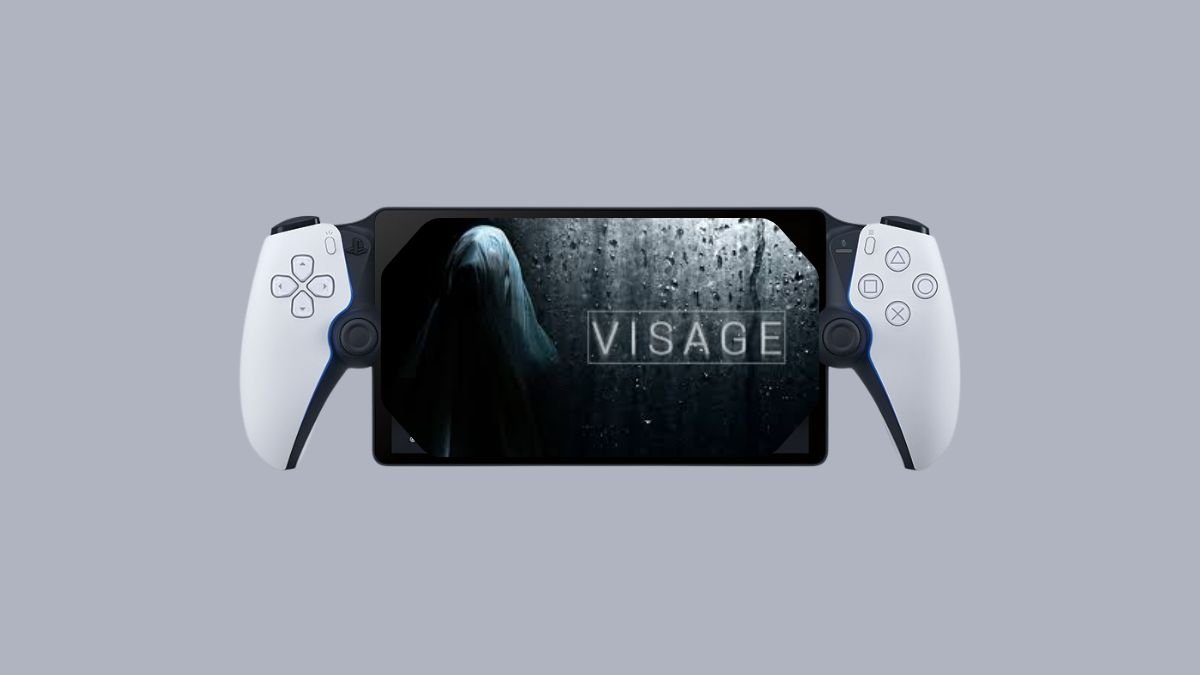
PC achieves stable 60 FPS at 1440p on recommended specs; 4K requires high-end hardware. PS5 and Xbox Series X Enhanced Editions deliver native 4K/60 FPS with improved textures and reduced load times. VR edition targets 90 FPS for comfortable headset experience. Performance remains stable across platforms despite single-location scope demanding high environmental fidelity.
Visage emerges from a five-year development cycle as a methodical descent into psychological madness, rejecting jump-scare mechanics in favor of sustained dread and environmental storytelling. Released October 2020 on PC and enhanced for PS5/Xbox Series X in 2021, this SadSquare Studio production earned 81/100 on Metacritic while developing a devoted cult following among horror purists. The game’s refusal to hold player hands—offering minimal guidance, cumbersome controls, and obscure puzzle logic—creates a gatekeeping effect that ultimately serves the narrative: exploring this haunted house demands patience, observation, and emotional resilience. This review examines how Visage weaponizes player psychology, analyzes its fragmented four-chapter structure, and explains why this polarizing title represents the pinnacle of psychological horror design.
How to Play Visage
Visage operates as a first-person psychological exploration game, not an action title. You navigate a massive haunted house from protagonist Dwayne’s perspective, discovering fragmented story elements through environmental observation and puzzle-solving. The game provides minimal guidance, requiring players to interpret audio cues, visual anomalies, and spatial memory to progress.
- Controls – WASD movement with mouse-look and slow turning speed by design (turning is deliberately sluggish to increase vulnerability perception). Inventory management is intentionally cumbersome, discouraging weapon-hoarding. Learning curve is steep; the UI offers no tutorials or objectives, forcing experimentation.
- Progression – Discovery triggers chapter transitions. Finding key items unlocks narrative sequences revealing previous residents’ tragedies (Lucy’s 1961 possession, Dolores/George’s 1962 descent into madness, subsequent antagonists’ corruption). No quest markers exist; exploration IS the mechanic.
- Combat/Mechanics – Direct confrontation is impossible. Defense mechanisms include hiding, running, and occasionally using light sources to repel entities. Puzzle-solving dominates: understanding room layouts, remembering clue locations, and executing obscure solution sequences consumes gameplay time.
- Tips – Systematically explore every room repeatedly; clues hide in subtle environmental details. Document conversations on paper (no in-game journal). The game remembers what you find; revisiting rooms yields new discoveries. Accept that some puzzles require lateral thinking that contemporary games never demand.
Who Should Play Visage
Visage appeals exclusively to patient horror enthusiasts willing to invest emotional and cognitive resources into decoding obscure narratives. This is not entertainment; it is psychological endurance testing. Casual players will rage-quit; committed players will experience unforgettable horror.
- Psychological Horror Fanatics – Players who view Silent Hill 2 as inspiration will recognize Visage’s thematic DNA. Emphasis on human tragedy, internal madness manifestation, and supernatural elements serving psychological dysfunction appeals directly to this audience.
- Puzzle Enthusiasts – Those who enjoy obtuse adventure game logic and information synthesis will appreciate Visage’s deliberately obscure puzzle design. Solutions require connecting disparate environmental clues across multiple rooms and chapters.
- Patience-Rewarded Gamers – Willing to spend 15+ hours for one campaign, revisit locations repeatedly, and tolerate frustration in service of artistic vision. Horror investment trumps immediate gratification.
- Skip if – You expect modern game design clarity, want action sequences or combat, demand explicit narrative exposition, or prefer jump-scare entertainment over psychological torment. Visage will frustrate you systematically.
Visage Platform Performance
Visage scales adequately across hardware, maintaining horror atmosphere on all platforms. PC dominates performance ceiling, while console enhanced editions deliver stable 60 FPS at 4K resolution. The VR implementation deserves special mention: playing Visage in virtual reality transforms the claustrophobic house exploration into visceral embodied experience, amplifying psychological impact exponentially. Performance remains stable even on legacy hardware, though atmospheric rendering suffers slightly.
| Platform | Resolution | FPS | Notes |
|---|---|---|---|
| PC (Recommended) | 1440p/4K | 60 | Stable framerates on recommended specs. Ray tracing unavailable. Unlimited FPS modding community support |
| PlayStation 5 | 4K | 60 | Enhanced Edition with improved textures, faster loading. Haptic feedback enhances horror atmosphere |
| Xbox Series X | 4K | 60 | Parity with PS5. Smart Delivery included. Performance mode targets native 4K/60 consistently |
| VR (PC Only) | 1440p per eye | 90 | Requires compatible headset (Oculus/Meta, HTC Vive, Valve Index). Immersion dramatically amplifies psychological impact |
Visage System Requirements
PC specifications target mid-range 2015-era hardware, enabling broad accessibility. The 10 GB installation footprint reflects the single-location scope; most storage allocates to environmental asset variation and branching narrative structures. SSD installation is technically optional but strongly recommended for faster load transitions between house sections.
| Component | Minimum | Recommended |
|---|---|---|
| OS | Windows 7/8/8.1/10 (32-bit) | Windows 10 (64-bit) |
| CPU | Intel Core i3 or AMD Ryzen 3 | Intel Core i5-4400E or AMD Ryzen 5 |
| GPU | NVIDIA GTX 950 or AMD Radeon R7 370 (1GB) | NVIDIA GTX 1060 or AMD Radeon RX 480 (4GB) |
| RAM | 6 GB | 8 GB |
| Storage | 10 GB HDD | 10 GB SSD (Recommended for load speed) |
Similar Games to Visage
True psychological horror games emphasizing atmosphere over action remain rare. Visage occupies a niche dominated by Silent Hill 2, PT (cancelled), and a handful of indie releases. These alternatives approach psychological terror through different narrative frameworks and mechanical emphasis.
- Silent Hill 2 – The archetypal psychological horror template. Visage’s narrative structure, tragic character arcs, and environment-as-character design draw directly from this foundation. SH2 emphasizes combat while Visage eliminates it entirely.
- PT (Cancelled) – A short hallway loop generating escalating dread through repetition and subtle anomalies. Visage expands this formula across an entire mansion. Both prioritize atmosphere over exposition, leaving players interpretatively stranded.
- Layers of Fear – First-person psychological horror exploring artistic madness. Shares Visage’s emphasis on environmental storytelling and surrealist reality distortion. Less puzzle-heavy than Visage; more narrative-guided.
- SOMA – Philosophical horror exploring identity and consciousness. Eliminates traditional threats in favor of narrative dilemmas. Both games challenge player psychology through concept rather than creature threat.
Visage vs Competitors
Visage’s 81/100 Metacritic score reflects critical appreciation for artistic vision despite mechanical frustration. Compared to action-oriented horror, Visage sacrifices accessibility for atmospheric purity. The price premium ($34.99 vs competitors’ $19.99-$29.99) reflects indie development costs and artistic conviction over market positioning.
| Feature | Visage | Layers of Fear | SOMA |
|---|---|---|---|
| Price | $34.99 | $19.99 | $24.99 |
| Playtime (Main) | 8-15 hours | 4-6 hours | 6-8 hours |
| Multiplayer | No | No | No |
| Metacritic Score | 81/100 | 76/100 | 82/100 |
Visage Story and World
Visage unfolds across four chapters, each examining a different tragedy within the same cursed house across different eras. Chapter One (1961) follows young Lucy, befriended by a demonic entity communicating through appliances, driving her toward self-destruction. Chapter Two (1962) presents Dolores and George, a married couple whose relationship disintegrates as Dolores descends into postpartum psychosis, hearing phantom infant cries. Subsequent chapters explore additional antagonists’ psychological decay. The protagonist, Dwayne, experiences all these tragedies simultaneously through supernatural psychological collapse, his descent mirrored by alcohol dependency and psychiatric medication manipulation. The house itself becomes narrative character: architecture shifts non-euclideanly, rooms contain surreal corrupted versions reflecting character mental states, and supernatural manifestations externalize internal psychological pathology. Multiple endings exist based on player interpretation and choices, refusing definitive narrative closure. This fragmented storytelling demands player cognitive participation, generating meaning through observation rather than exposition.
Visage Multiplayer and Online
Visage explicitly excludes multiplayer functionality. The horror experience targets singular psychological manipulation; shared presence undermines isolation-dependent dread mechanics. Solo play creates interpretive vulnerability; multiplayer presence offers comfort through companionship, fundamentally contradicting the game’s psychological assault design. Community requests for co-op modes have been consistently declined by developers, prioritizing artistic vision over commercial appeal. This philosophical stance—refusing compromise for market expansion—demonstrates SadSquare’s commitment to psychological horror authenticity.
- Single-Player Mandate – Core experience designed exclusively for solitary psychological manipulation. Game mechanics assume isolation; ambient noise generation, threat ambiguity, and interpretive narrative require singular perspective.
- No Online Features – Zero multiplayer, leaderboards, or community challenges. The game prioritizes personal psychological experience over competitive comparison or cooperative support mechanisms.
- Community Engagement – Despite lack of official online features, active fan communities share interpretation theories, speedruns, and psychology analysis across Reddit and Discord.
- VR Social Limitations – VR implementation remains single-player, though community discussion about potential co-op VR horror remains theoretical speculation without official support.
Visage DLC and Expansions
SadSquare Studio released minimal post-launch paid content, maintaining focus on core psychological horror experience. The VR expansion represents the only significant post-launch addition, enabling immersive embodied exploration of the haunted house. No story expansions or major narrative DLC were developed, preserving the deliberately closed four-chapter structure. Community content remains user-generated through modding rather than official development.
- VR Enhanced Edition – Official VR support enables Oculus, HTC Vive, and Valve Index exploration. Psychological impact amplifies through embodied first-person presence and spatial audio immersion. Premium pricing reflects development complexity.
- Cosmetic DLC – Minimal cosmetic options available, though horror focus discourages cosmetic monetization. No battle passes or seasonal content.
- Future Content – Developers have indicated no planned story expansions, maintaining the artistic closure of four-chapter structure. Development focus shifted toward supporting existing community rather than expanding narrative scope.
- Community Mods – Limited native modding support compared to Unreal/Unity engine games. Community contributions focus primarily on interpretation guides and psychology analysis rather than mechanical modifications.
Visage Community and Support
The Visage community remains intellectually engaged, treating the game as psychological text requiring interpretation rather than mechanical puzzle requiring optimization. Developer presence remains active but measured, prioritizing artistic vision over community direction. Patch frequency emphasizes stability over feature additions, reflecting completion philosophy rather than live-service mentality. Community discussion centers on narrative interpretation, psychology analysis, and lore theorycrafting rather than mechanical exploitation discovery.
- Official Channels – SadSquare maintains presence on official website and occasional social media updates. Responses focus on technical support and player psychology discussion rather than feature roadmap updates.
- Reddit and Discord – r/Visage (15,000+ members) and official Discord host sophisticated discussion analyzing narrative symbolism, psychological themes, and lore interpretation. Community treats Visage as artistic text rather than game-as-puzzle.
- Mod Support – Native modding tools remain limited. Community contributions focus on interpretation guides, collectible location maps, and psychology analysis documents rather than mechanical modifications.
- Update Schedule – Patch frequency emphasizes stability (bug fixes, performance optimization) rather than feature additions. Last major update (2022) addressed platform-specific performance concerns. Current support focuses on legacy platform compatibility and optimization.