
 39
39
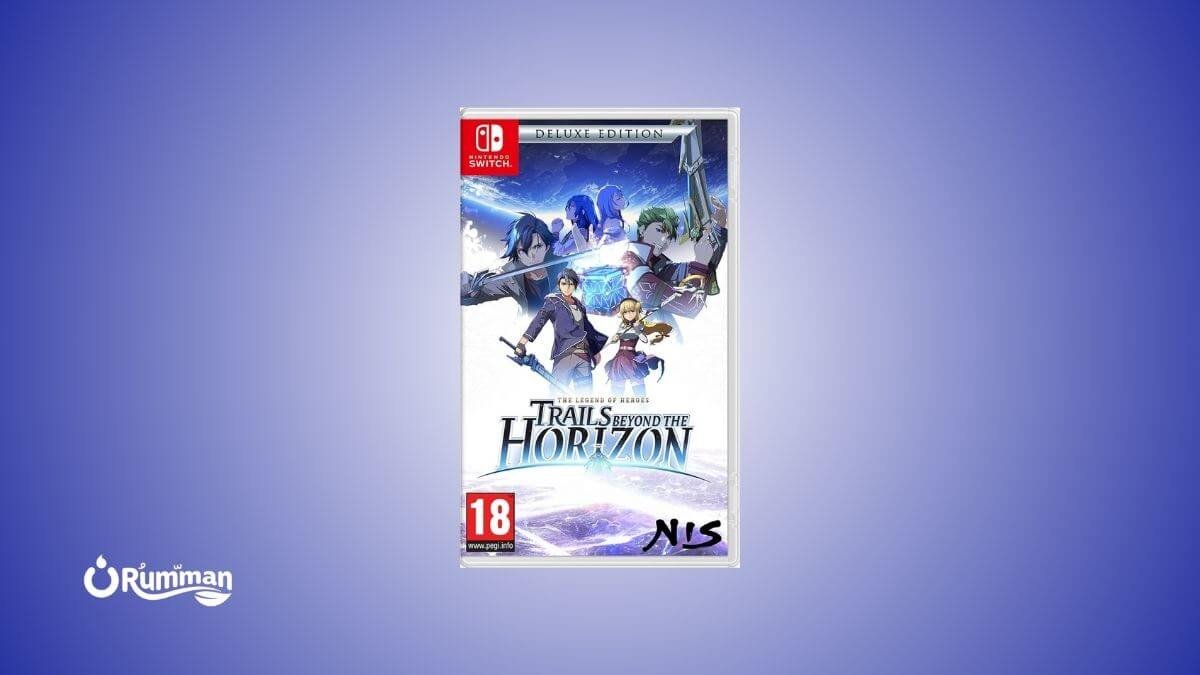
The Legend of Heroes: Trails Beyond the Horizon – Epic Finale
An ambitious JRPG that brings together iconic characters across the Trails series for the Zemurian continent's final chapter. Scored 8/10 across the board by Famitsu, delivering over 100 hours of gameplay with fresh combat mechanics and interconnected storytelling.
Game Info
Verdict
Ambitious narrative conclusion delivering 100+ hours of character-driven JRPG storytelling, constrained by formulaic gameplay and excessive complexity.
Pros
- Exceptional narrative payoff reuniting iconic characters across two decades of Trails storytelling
- Vast 100-120 hour playtime offering substantial content value for dedicated fans
- Improved combat mechanics with Awakening systems and Dual Arts adding strategic depth
- Exceptional world-building through Memento Orbs and NPC dialogue reflecting geopolitical consequences
- Strong character development arcs balanced across three protagonist perspectives
- Grim Garten endgame dungeons providing 20-40 hours of additional post-story content
- Consistent performance across all platforms from Switch to high-end PC
- Comprehensive voice acting (English and Japanese) with emotional weight in key scenes
Cons
- Requires complete series knowledge; new players face 200+ hour prerequisites to understand context
- Formulaic turn-based combat unchanged since 2022 Trails Through Daybreak; minimal mechanical innovation
- 100+ hour playtime forces excessive padding with 4SPG sidequests despite strong narrative
- Multiple protagonist routes prove unevenly balanced; Van's story receives disproportionate development time
- Expensive DLC bundles ($69.99+ for cosmetics and cheat items) exploit franchise loyalty
- Story pacing staggers across 65-100 hours with slow mid-game sections diminishing emotional momentum
Performance Notes
Consistent 60 FPS on PS5 in performance mode (1440p) with optional 4K/30 quality mode. Switch 2 targets 60 FPS docked (dynamic 1440p) with variable uncapped up to 120 FPS handheld. PC performance scales from 30 FPS minimum specs to 144+ FPS on high-end hardware. Original Switch maintains 30 FPS target with frequent drops in outdoor areas. Load times 2-3 seconds on SSD across all platforms.
The Legend of Heroes: Trails Beyond the Horizon stands as the thirteenth installment in the sprawling Trails series, marking what appears to be the conclusion to the Zemurian arc that has unfolded across four sub-series over two decades. Developed by Nihon Falcom and released in Japan in September 2024, this ambitious title reunites fan-favorite protagonists Van Arkride, Rean Schwarzer, and Kevin Graham on a collision course with the apocalyptic “X Day” prophecy.
The game received a consistent 8/10 score from all four Famitsu reviewers, reflecting solid execution of series staples alongside some narrative complexity concerns. This review examines what makes Trails Beyond the Horizon both a triumphant celebration of the franchise and an overwhelming experience that demands over 100 hours of player commitment.
How to Play The Legend of Heroes: Trails Beyond the Horizon
Trails Beyond the Horizon employs a dual-combat system that seamlessly alternates between real-time field battles and strategic command-based encounters. Players navigate towns, dungeons, and open environments with a team of four active characters, discovering side quests from NPCs and progressing through multi-route narrative chapters centered on each protagonist. The core gameplay loop involves exploration, character dialogue progression, and engaging in turn-based tactical combat with new mechanical layers introduced through the Awakening system and Dual Arts magic.
- Controls – Standard JRPG control scheme with field movement on analog stick and menu navigation via directional pad. Combat controls feel responsive with minimal learning curve for series veterans, though new systems require tutorial engagement during early chapters.
- Progression – Players advance through 65-100 hours of story across three protagonist routes. Main story quests drive narrative momentum while optional 4SPG (request board) missions deepen world-building and character connections. Character levels, equipment, and orbment customization determine tactical advantage.
- Combat/Mechanics – Field battles trigger Awakening transformations by consuming Boost Gauge points, granting temporary stat increases and devastating combo potential. Command battles activate B.L.T.Z. chains for consecutive follow-up attacks and Z.O.C. time-slow mechanics for overwhelming offense. Crafts, Arts, and Dual Arts provide tactical variety with turn-based action command timing.
- Tips – Customize orbment equipment to match party composition and incoming boss mechanics. Prioritize understanding the B.L.T.Z. chain system for maximum damage output. Explore Grim Garten dungeons consistently to unlock powerful equipment and story revelations about Ouroboros’ intentions.
Who Should Play The Legend of Heroes: Trails Beyond the Horizon
This game demands significant time investment and narrative context, making it most suitable for dedicated JRPG enthusiasts who value story continuation and character development over mechanical innovation. Newcomers will find themselves lost without completing preceding Trails games, while series veterans will discover deeply satisfying payoff for decades of investment in the Zemurian continent.
- Trails Series Veterans – Essential purchase offering narrative closure and fan-service moments reuniting characters across four sub-series. 100+ hour playtime justified by interconnected storytelling and character arcs spanning multiple games.
- JRPG Enthusiasts – Those seeking traditional turn-based combat with strategic depth and immersive world-building will appreciate the improved combat systems and expanded dungeon mechanics in Grim Garten.
- Story-First Gamers – The game prioritizes narrative exposition and character interaction over action-oriented gameplay, with multiple story routes offering different perspectives on the apocalyptic crisis.
- Skip if – Avoid if you dislike reading-heavy dialogue (voice acting limited in some scenes), require action-heavy gameplay, demand shorter story arcs, or expect major gameplay innovations rather than series-formula refinement.
The Legend of Heroes: Trails Beyond the Horizon Platform Performance
Trails Beyond the Horizon achieves consistent performance across all platforms while showcasing visual polish appropriate to each hardware tier. PlayStation 5 delivers the sharpest presentation with 4K rendering in quality mode, while Switch 2 offers impressive parity with dynamic resolution scaling. PC allows high-refresh gameplay for enthusiasts with capable hardware, though even minimum specs support solid 30+ FPS experiences.
| Platform | Resolution | FPS | Notes |
|---|---|---|---|
| PC (High) | 1440p-4K | 60+ | Scales with GPU capability; high-end systems sustain 144+ FPS; GTX 1650 targets 60 FPS at 1440p |
| PS5 | 4K/1440p | 60 | Quality mode: 4K/30 FPS; Performance mode: 1440p/60 FPS with minor aliasing visible |
| PS4 | 1080p | 30 | Backwards compatibility on PS5 via uncapped framerate mode; native PS4 targets stable 30 FPS |
| Switch 2 | 1440p/1080p | 60/Variable | Docked: dynamic 1440p capped at 60 FPS; Handheld: variable up to 120 FPS uncapped; notable performance dips in Grim Garten |
| Switch (OG) | 1080p/720p | 30 | Handheld mode: 720p target; Docked: 1080p target with frequent frame drops in outdoor environments |
The Legend of Heroes: Trails Beyond the Horizon System Requirements
PC requirements remain modest, reflecting Falcom’s engine optimization across multiple Trails titles. Minimum specs enable playable experiences at 1080p/30 FPS with reduced graphical settings, while recommended hardware guarantees smooth 1440p/60 FPS gameplay with full visual features enabled. Storage allocation of 30GB proves modest for a 100-hour adventure, primarily due to efficient asset compression.
| Component | Minimum | Recommended |
|---|---|---|
| OS | Windows 10/11 64-bit | Windows 10/11 64-bit (latest updates) |
| CPU | AMD Ryzen 5 1600 / Intel Core i5-8400 | Intel Core i5-10400 / AMD Ryzen 5 3600 |
| GPU | NVIDIA GeForce GTX 1050 (2GB VRAM) | NVIDIA GeForce GTX 1650 (4GB VRAM) |
| RAM | 8 GB | 16 GB |
| Storage | 30 GB available SSD space | SSD Recommended (significantly improves load times from 10s to 2-3s) |
| DirectX | Version 11 | Version 11 or 12 |
Similar Games to The Legend of Heroes: Trails Beyond the Horizon
Trails Beyond the Horizon occupies a distinct niche within the JRPG landscape, combining narrative-driven world-building with tactical turn-based combat. While no other series perfectly replicates its multi-game story continuation philosophy, several titles offer comparable elements in specific areas. Players drawn to this game often appreciate narrative depth, character development, and strategic combat depth across extended playtimes.
- The Legend of Heroes: Trails Through Daybreak II – Direct predecessor offering similar combat mechanics and character interconnections; essential context for Horizon but enjoyable standalone entry that introduced Van Arkride and the Calvard setting establishing stakes for this sequel.
- Fire Emblem: Three Houses – Similar multi-route narrative structure allowing protagonist perspective choices; 80+ hour playtime with deep character interaction systems and turn-based tactical combat; however, focuses on military school setting rather than continental conspiracy.
- Persona 5 Royal – Extensive character-driven narrative with 100+ hour playtimes and turn-based combat refinement; shares similar social link progression mechanics influencing combat effectiveness, though urban school setting differs vastly from epic fantasy continent.
- Elden Ring: Shadow of the Erdtree – Offers challenging tactical combat and environmental storytelling across interconnected regions; action-oriented gameplay contrasts sharply with Trails’ turn-based systems, though both reward exploration and subtle narrative revelation.
The Legend of Heroes: Trails Beyond the Horizon vs Competitors
Trails Beyond the Horizon distinguishes itself through uncompromising commitment to narrative continuation and character development across massive playtimes. While competitors offer stronger mechanical innovation or superior graphical fidelity, few JRPGs match this title’s ambition in delivering conclusive storytelling for interconnected character arcs spanning decades of real-world release schedules. The Famitsu consensus score of 8/10 reflects recognition of these strengths balanced against series-formula repetition concerns.
| Feature | Trails Beyond the Horizon | Trails Through Daybreak II | Persona 5 Royal |
|---|---|---|---|
| Price | $59.99 | $59.99 | $59.99 |
| Playtime (Main Story) | 65 hours | 60 hours | 100 hours |
| Playtime (Completionist) | 100-120 hours | 90-110 hours | 120-150 hours |
| Multiplayer | None | None | None |
| Critical Consensus | 8/10 Famitsu (Japan) | 88 OpenCritic | 93 Metacritic |
| Story Continuity | Direct sequel to Daybreak II; requires series knowledge | Can start series here; building context | Standalone; character-driven narrative |
The Legend of Heroes: Trails Beyond the Horizon Story and World
Trails Beyond the Horizon concludes the Calvard arc while addressing apocalyptic threads planted across two decades of Trails storytelling. The narrative spans three parallel routes following Van Arkride (protagonist of Trails Through Daybreak), Ashen Chevalier Rean Schwarzer (leading the Cold Steel subseries), and Father Kevin Graham (the Grail Knight from Trails in the Sky). Their investigation into Marduk’s orbital rocket launch intersects with machinations by the mysterious society Ouroboros, whose reality-warping powers threaten the continent of Zemuria itself.
The game balances fan-service moments reuniting beloved characters with genuine thematic exploration of what it means when the world’s end approaches. Environmental storytelling through Memento Orbs and Grim Garten dungeons reveals crucial worldbuilding details without halting narrative momentum, while NPC dialogue systems create persistent interconnections between player choices and town atmospheres.
The Zemurian continent transforms as “X Day” approaches, with locations shifting from peaceful exploration zones into active conflict areas reflecting geopolitical upheaval. Voice acting (limited in some sequences) and localization efforts preserve the emotional weight of character reunions and climactic revelations.
The Legend of Heroes: Trails Beyond the Horizon Multiplayer and Online
Trails Beyond the Horizon remains strictly single-player focused, prioritizing narrative immersion and personal strategic decision-making over competitive or cooperative experiences. The game’s extensive story routines and character-dependent quest mechanics deliberately restrict multiplayer functionality, ensuring that each player’s journey through Zemuria feels personally meaningful rather than crowd-sourced or streamed.
- Campaign Mode – Three divergent protagonist routes offering 30-40 hours each of dedicated story, dialogue, and combat encounters; character perspectives unlock different sidequest availability and narrative revelations unavailable in alternate routes.
- Grim Garten Dungeon – Post-story endgame content offering 20-40 additional hours of progressively challenging encounters; virtual dungeon mechanics feature party customization across all accumulated characters and unlockable domains revealing lore about Ouroboros.
- New Game+ Features – Carry-over mechanics (confirmed for series tradition) allow experienced players to speedrun narrative on second playthroughs while maintaining stat progression and equipment discoveries.
- Cross-Platform Save – No cross-save functionality announced; separate progressions on each platform; cloud saves available on PlayStation Network and Nintendo Switch Online services.
The Legend of Heroes: Trails Beyond the Horizon DLC and Expansions
Nihon Falcom follows the recent Trails pricing model of bundled DLC packages rather than individual cosmetic offerings. Ultimate Edition pricing exceeds standard retail through accumulated cheat-item bundles and cosmetic packages. Post-launch support appears limited to free balance patches rather than expansive story DLC, positioning this as a standalone narrative conclusion rather than an episodic release framework.
- Digital Soundtrack – Included in Deluxe Edition ($9.99 standalone upgrade); features 50+ tracks composed by Falcom’s in-house team showcasing leitmotif callbacks to previous Trails entries.
- Mini Artbook – Digital artbook featuring character designs, environment concepts, and promotional artwork; included with Deluxe Edition at no additional cost beyond the $9.99 upgrade.
- Costume Packs – Bundled cosmetic sets priced at $19.99-$44.99; includes character outfits from previous Trails games and original designs; purely cosmetic with no gameplay advantages.
- Cheat Item Bundle – Ultimate Edition premium add-on ($69.99 additional) providing Sepith, U-materials, consumables, and restorative items reducing early-game grinding; does not unlock additional content or story chapters.
The Legend of Heroes: Trails Beyond the Horizon Community and Support
Falcom maintains active developer engagement with the Trails community through official channels, patch notes, and balanced updates. Community forums and fan wikis provide comprehensive guides for obscure sidequests and hidden lore revelations, while modding communities remain limited due to Falcom’s anti-tampering stance. Patch frequency averages monthly intervals addressing reported bugs and mechanical balance concerns.
- Official Forums – Nihon Falcom’s Japanese support portal and NIS America’s Western community hub provide developer communications, patch notes, and occasional behind-the-scenes development insights shared in developer interviews and livestreams.
- Reddit/Discord Communities – r/Falcom and dedicated Trails Discord servers maintain active 15,000+ member communities sharing build optimization strategies, fan theories, and character appreciation discussions; moderation prevents spoilers in channel structure.
- Mod Support – No native mod tools or Steam Workshop integration; fan-created texture overhauls and gameplay tweaks exist but limited by anti-cheat protection and developer preservation of intended experience.
- Updates and Patches – Monthly patches address reported bugs; balance adjustments follow community feedback about overpowered strategies or mechanical exploits; feature requests acknowledged but rarely implemented post-launch.