
 44
44
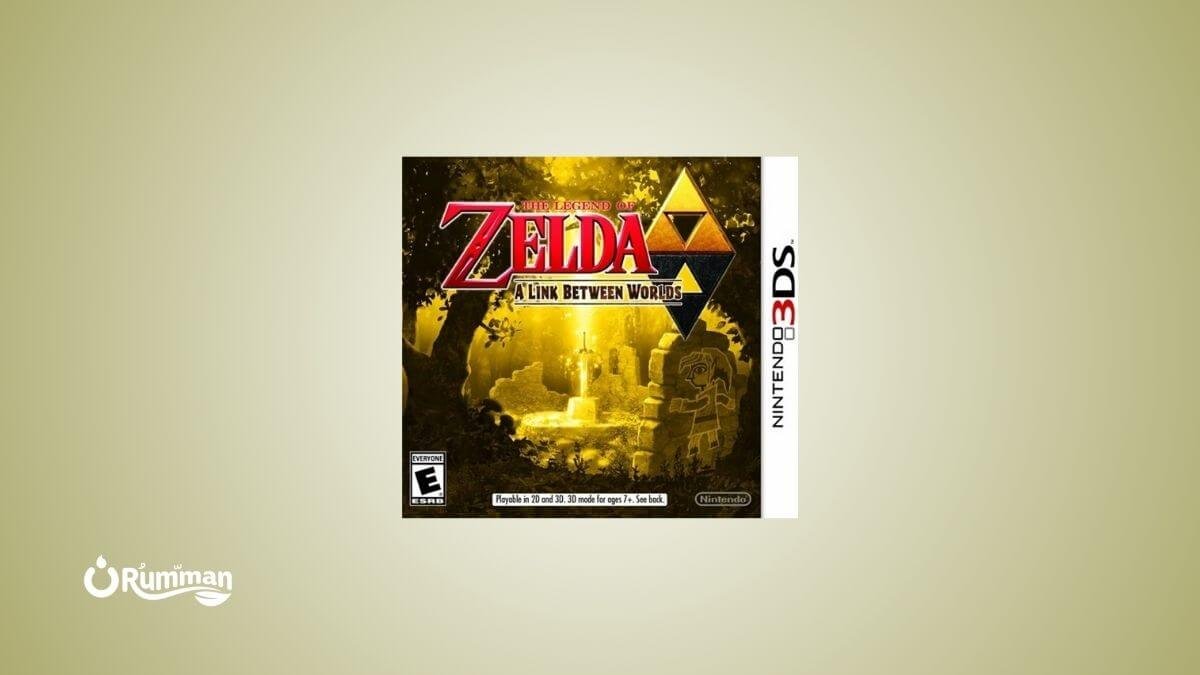
The Legend of Zelda: A Link Between Worlds – 3DS Masterpiece
Nintendo's 2013 3DS triumph blends classic top-down Zelda gameplay with wall-merging innovation, earning 91 on Metacritic with revolutionary nonlinear dungeon design.
Game Info
Verdict
A masterful reinvention that respects legacy while innovating fearlessly, delivering nonlinear dungeon freedom and wall-merge brilliance that redefines portable Zelda.
Pros
- Revolutionary wall-merge mechanic creating entirely new puzzle and combat possibilities
- Unprecedented nonlinear dungeon order respecting player agency and skill
- Silky smooth 60 FPS performance with gorgeous stereoscopic 3D depth effects
- Ravio's rental system enabling experimentation with items from early game
- Perfectly paced 15-20 hour adventure ideal for portable play sessions
- Outstanding boss fights utilizing wall-merge and 3D perspective creatively
- Dual-world concept refined with Hyrule and Lorule offering distinct atmospheres
- Touch screen inventory swapping eliminates menu pausing during combat
Cons
- No DLC or post-launch dungeons despite community demand and infrastructure support
- StreetPass Shadow Link battles limited by physical proximity reducing encounter frequency
- Some dungeons easier than predecessors due to nonlinear design constraints
- Item rental death penalty can frustrate players preferring permanent purchases
- Shorter main quest compared to console Zelda entries may disappoint completionists
Performance Notes
Nintendo 3DS hardware delivers flawless 60 FPS performance in both 2D and stereoscopic 3D modes at native resolution. New 3DS models enhance experience with improved 3D head-tracking and marginally faster loading. Citra emulator on PC enables 4K rendering and HD texture packs while maintaining 60 FPS on modern hardware.
The Legend of Zelda: A Link Between Worlds arrived on Nintendo 3DS in November 2013 as a spiritual successor to the legendary A Link to the Past, set in the same Hyrule but introducing transformative mechanics that redefined handheld Zelda adventures. The wall-merge ability allowing Link to become a living painting creates entirely new puzzle-solving dimensions, while the item rental system enables unprecedented nonlinear dungeon progression that trusts players to tackle challenges in their preferred order. Scoring 91 on Metacritic with universal acclaim from 79 critics, this game proves that Nintendo can honor legacy while innovating boldly, delivering 60 FPS stereoscopic 3D gameplay that showcases the technical prowess of the 3DS hardware at its peak.
How to Play The Legend of Zelda: A Link Between Worlds
A Link Between Worlds refines classic top-down Zelda gameplay with faster pacing and wall-merge mechanics that transform how players approach combat and exploration across dual worlds.
- Controls – Circle pad for movement, face buttons for sword and items, touch screen for instant inventory swapping enabling fluid combat flow, gyroscope aiming for bow precision
- Progression – Rent or buy items from Ravio’s shop early, tackle dungeons in nearly any order after obtaining painting ability, collect maidens from both Hyrule and Lorule dimensions
- Combat/Mechanics – Fast-paced swordplay with stamina-based spin attacks, wall-merge to dodge attacks and reach inaccessible areas, environmental puzzles requiring 3D depth perception
- Tips – Purchase items permanently rather than renting to avoid losing them on death, explore walls thoroughly for hidden passages, use 3D display for judging vertical distances in dungeons
Who Should Play The Legend of Zelda: A Link Between Worlds
This 3DS gem appeals to Zelda veterans seeking fresh mechanics and newcomers wanting accessible entry into the franchise without overwhelming complexity or time investment demands.
- Classic Zelda Fans – Players who loved A Link to the Past will appreciate the familiar Hyrule layout reimagined with new dungeons, updated visuals, and mechanics that honor while evolving the original
- Puzzle Enthusiasts – Those who enjoy spatial reasoning challenges will find the wall-merge mechanic creates unique three-dimensional puzzles impossible in traditional 2D perspective
- Portable Gaming Advocates – Ideal for players wanting console-quality adventure on handheld with bite-sized dungeon design perfect for commuting or short play sessions
- Skip if – You dislike handheld gaming limitations, prefer open-world freedom over structured dungeon progression, or find top-down perspective outdated compared to modern 3D Zelda entries
The Legend of Zelda: A Link Between Worlds Platform Performance
As a Nintendo 3DS exclusive, A Link Between Worlds demonstrates technical mastery of the handheld hardware, delivering consistent performance with stunning stereoscopic 3D effects that enhance gameplay.
| Platform | Resolution | FPS | Notes |
|---|---|---|---|
| Nintendo 3DS | 400×240 (3D) | 60 | Stereoscopic 3D adds depth perception for vertical gameplay, locked framerate |
| Nintendo 2DS | 320×240 | 60 | Identical performance without 3D effect, still fully playable with depth cues |
| New 3DS XL | 400×240 (3D) | 60 | Improved head-tracking 3D for better viewing angles, faster loading times |
| Citra Emulator (PC) | 4K capable | 60+ | Fan emulation at higher resolutions, requires modern CPU/GPU, HD texture packs available |
The Legend of Zelda: A Link Between Worlds System Requirements
Native 3DS hardware provides optimal experience with stereoscopic 3D, though PC emulation via Citra enables enhanced visuals for those without access to Nintendo’s discontinued handheld.
| Component | Minimum | Recommended |
|---|---|---|
| OS | Nintendo 3DS System | New Nintendo 3DS XL |
| CPU (Emulation) | Intel Core i3-6100 | Intel Core i5-8400 |
| GPU (Emulation) | Intel HD 520 | NVIDIA GTX 1050 Ti |
| RAM (Emulation) | 4 GB | 8 GB |
| Storage | 1 GB (3DS) | SSD for emulation loading |
Similar Games to The Legend of Zelda: A Link Between Worlds
The 3DS library and indie scene offer several top-down action-adventures that share A Link Between Worlds’ design philosophy while bringing unique mechanics and artistic styles to the genre.
- The Legend of Zelda: The Minish Cap – GBA classic with size-changing mechanics, charming art style, and dungeon design that bridges 2D Zelda traditions with portable convenience
- Oceanhorn: Monster of Uncharted Seas – Mobile and console title heavily inspired by Zelda’s island exploration, sailing between locations, puzzle dungeons with clear Wind Waker influences
- Ittle Dew 2 – Indie homage featuring humorous tone, challenging combat, nonlinear dungeon approach with multiple solution paths rewarding creative item usage
- Shovel Knight – While platformer-focused, shares tight controls, memorable boss fights, retro aesthetic, and NES-era design philosophy adapted for modern sensibilities
The Legend of Zelda: A Link Between Worlds vs Competitors
Examining A Link Between Worlds against contemporary 3DS action titles and spiritual predecessors highlights its exceptional quality and value proposition within Nintendo’s handheld ecosystem.
| Feature | A Link Between Worlds | The Minish Cap | Fire Emblem Awakening |
|---|---|---|---|
| Price | $20 (used) | $35 (used GBA) | $25 (used) |
| Playtime | 15-20 hours | 15-18 hours | 40-60 hours |
| Multiplayer | StreetPass only | No | Local wireless |
| Metacritic | 91 | 89 | 92 |
The Legend of Zelda: A Link Between Worlds Story and World
Set generations after A Link to the Past, the game begins with Link working as a blacksmith’s apprentice delivering a sword to Hyrule Castle’s Captain. When the mysterious sorcerer Yuga begins transforming descendants of the Seven Sages into paintings, Link receives the ability to merge into walls from the merchant Ravio, who mysteriously occupies Link’s house. The quest expands beyond Hyrule when Link discovers Lorule, a dying parallel world whose Triforce was destroyed by its royal family to prevent conflict, causing the kingdom’s slow collapse.
Princess Hilda of Lorule and her servant Ravio seek Hyrule’s Triforce to restore their world, but the true villain Yuga merges with Ganon to seize ultimate power. The narrative explores themes of sacrifice, parallel destinies, and the consequences of destroying symbols of power rather than protecting them responsibly, delivering surprising emotional depth through its climactic revelation.
The Legend of Zelda: A Link Between Worlds Multiplayer and Online
While primarily a single-player adventure, A Link Between Worlds incorporates StreetPass functionality creating asynchronous competitive multiplayer through Shadow Link battles that extend replay value and social connectivity.
- Shadow Link Battles – StreetPass encounters generate AI-controlled versions of other players’ Links with their equipped gear, challenging you to tactical duels for rupee rewards up to 999
- Bounty System – Defeated Shadow Links provide bounties based on their equipment and stats, with sign posts in Kakariko Village tracking available battles and potential rewards
- StreetPass Configuration – Players customize their Shadow Link’s loadout at Gramps’ lawn, strategically choosing equipment to create challenging opponents or easy targets for others
- Cross-Play – Not applicable, all multiplayer features utilize local StreetPass data exchange without online connectivity requirements, limiting encounters to physical proximity or relay points
The Legend of Zelda: A Link Between Worlds DLC and Expansions
Nintendo released A Link Between Worlds as a complete package without any downloadable content, despite the 3DS infrastructure supporting DLC and community requests for additional dungeons or challenges.
- Launch Content – Game shipped complete with all dungeons, items, and Hero Mode (unlocked after first completion) included on cartridge without day-one patches
- Post-Launch Support – No DLC released despite fan demand, Nintendo focused development resources on Tri Force Heroes as the multiplayer-focused successor game
- Tri Force Heroes – Spiritual sequel released in 2015 received multiple DLC packs adding new levels and costumes, while A Link Between Worlds remained unchanged
- Free Updates – Only system-level 3DS firmware updates affecting save data backup and StreetPass functionality, no game-specific content additions or balance changes
The Legend of Zelda: A Link Between Worlds Community and Support
Though lacking official post-launch content, A Link Between Worlds cultivated dedicated speedrunning and challenge-run communities that continue discovering optimizations and sharing strategies through online platforms.
- Official Forums – Nintendo discontinued Miiverse in 2017, eliminating the integrated social network where players shared accomplishments and tips through the 3DS system interface
- Reddit/Discord – Active communities on r/truezelda and speedrunning Discord servers discuss strategies, glitches, and challenge runs including no-upgrade completions and speedrun routing
- Mod Support – Limited compared to A Link to the Past due to 3DS encryption, though Citra emulator enables save editing and potential ROM modifications for enhanced texture packs
- Updates – Game received minimal patching post-launch with no balance adjustments, though speedrunning community documents version differences affecting glitch execution and routing optimization