
 36
36
The Elder Scrolls V: Skyrim – Open-World Legend
Bethesda's Skyrim, released 2011, scores 94 on Metacritic in its original form. The Anniversary Edition (2021) bundles Creation Club content, creating a remaster ideal for newcomers but controversial among veterans who prefer the modded Special Edition.
Game Info
Verdict
A timeless open-world experience that defined a generation of gaming; mods sustain longevity far beyond vanilla content.
Pros
- Unparalleled modding ecosystem extending playtime to 500+ hours
- Genuine freedom of action with multiple questlines and emergent storytelling
- Landmark game that influenced an industry standard for open worlds
- Available on virtually every gaming platform released since 2016
- Affordable price point, especially during sales ($9.99-$19.99)
- Norse-inspired setting with atmospheric world design
- Accessible skill progression system rewarding organic playstyle development
Cons
- Dated graphics requiring heavy modding for modern visual standards
- Aging engine technology limiting performance despite hardware improvements
- Dialogue writing less sophisticated than Baldur's Gate 3 or The Witcher 3
- Anniversary Edition mod incompatibilities and Creation Club controversies
- No multiplayer support limiting cooperative playstyle options
- Companion relationships lack emotional depth of modern RPGs
Performance Notes
PC performance varies with GPU; RTX 4080 handles 4K maxed with mods at 100+ fps. PS5/Xbox Series X achieve 4K/60fps, though Anniversary Edition reports stuttering on PS5. Xbox Series S maintains 1440p/60fps with reduced shadow quality. Switch version outputs 720p/1080p docked at 30fps with significant visual compromises.
The Elder Scrolls V: Skyrim remains one of gaming’s most culturally influential open-world RPGs, having sold over 30 million copies across platforms since November 2011. While thirteen years separate Skyrim from modern releases, its design philosophy—freedom of action, environmental discovery, and player-driven storytelling—endures as industry reference points. This review examines Skyrim’s positioning in 2025: a foundational experience now fragmented into original, Special Edition (2016), and Anniversary Edition (2021) variants, each with distinct technical characteristics and content bundles. Understanding which version suits your playstyle requires clarity on the mod ecosystem, performance profiles, and Creation Club value proposition that distinguishes editions.
How to Play The Elder Scrolls V: Skyrim
Skyrim operates as a real-time first-person or third-person action RPG. Players inhabit the Dragonborn, a custom character wielding dragon soul absorption for magical combat advantages. Leveling occurs through skill usage: heavy armor improves by taking damage, destruction magic through casting spells. This organic progression system contrasts sharply with experience point mechanics, meaning playstyle directly drives character growth. Combat emphasizes equipment loadouts, potion usage, and positioning relative to enemies rather than tactical positioning as seen in Baldur’s Gate 3.
- Controls – First-person aiming dominates ranged combat; third-person camera useful for melee engagement; controller support available across all platforms; skill floor is low, ceiling is moderately high for min-maxed builds
- Progression – Character advancement tied directly to skill usage; increase one-handed weapons by striking enemies with swords; magic skills level through casting; attributes scale from skills reaching 100; perks unlock every time skills increase
- Combat/Mechanics – Real-time combat with weapon enchantments, spell chains, and potion buffs forming the core loop; stamina management critical for power attacks; shouts (dragon magic) use cooldown timers and require soul absorption
- Tips – Dual-casting spells amplifies effects; heavy armor pairs with restoration magic for tank builds; stealth archers become overpowered by mid-game; crafting skills (alchemy, enchanting, smithing) provide exponential power growth
Who Should Play The Elder Scrolls V: Skyrim
Skyrim appeals to players valuing world exploration and emergent roleplay over structured narratives. Its legacy carries weight: an entire generation of gamers considers Skyrim their first deep RPG experience. However, age-appropriate expectations matter. Modern players accustomed to contemporary graphics and mechanics may find Skyrim’s dated systems frustrating without the mod enhancements that transform its visuals and gameplay.
- Exploration Enthusiasts – If you relish traversing detailed landscapes, discovering hidden locations, and stumbling upon unexpected quests, Skyrim’s Northbound design rewards aimless wandering more than Baldur’s Gate 3’s structured campaign
- Modding Community Participants – Skyrim’s mod ecosystem remains unmatched in scope and quality; Skyrim Modding can enhance graphics to near-2024 standards, add 1000+ hours of content, and fix design imbalances
- Fantasy Immersion Seekers – The setting’s atmosphere—snow-capped mountains, Nordic architecture, dragon mythology—creates genuine fantasy escapism despite aging visuals
- Skip if – You demand modern graphics without heavy modding investment, prefer structured narratives over emergent storytelling, or expect sophisticated dialogue writing (companion relationships lack Baldur’s Gate 3 depth)
The Elder Scrolls V: Skyrim Platform Performance
Performance characteristics vary dramatically across editions and platforms. The original 2011 release runs well on modern hardware but exhibits texture pop-in on older systems. Special Edition (2016) modernizes the engine for 64-bit processing and console optimization. Anniversary Edition (2021) bundles Creation Club content but introduces performance stutters on some configurations, particularly PlayStation 5. Next-generation console upgrades provide frame rate stability at the cost of reduced draw distances and shadow quality compared to maxed PC settings.
| Platform | Resolution | FPS | Notes |
|---|---|---|---|
| PC (High Settings) | 4K with mods | 60-144 | Scales with GPU; RTX 4080 achieves 120+ fps at ultra; modding impacts performance significantly |
| PS5 Anniversary | 4K | 60 | Performance mode targets 60fps; some reports of stuttering during worldspace loads; faster loading times than PS4 version |
| Xbox Series X | 4K | 60 | Performance parity with PS5; enhanced draw distance; higher shadow resolution than console competitors |
| Xbox Series S | 1440p | 60 | Reduced shadow quality and object pop-in; stable frame pacing; acceptable compromise for hardware tier |
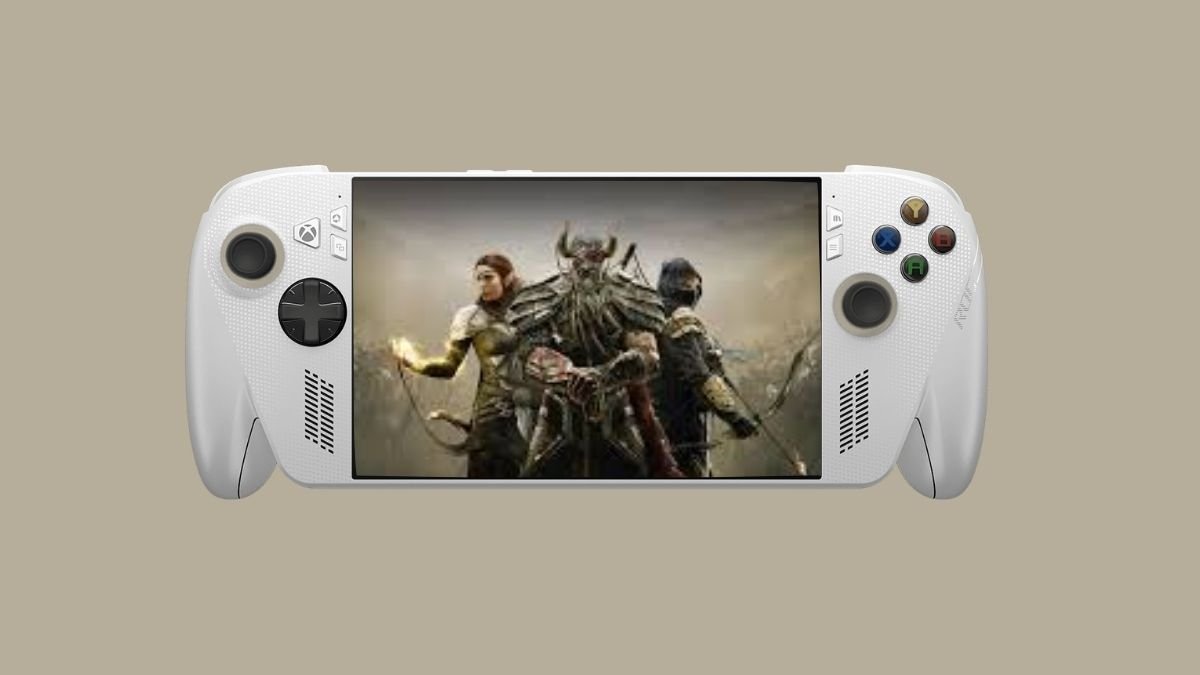
| Nintendo Switch | 720p/1080p docked | 30 | Significant graphical cutbacks; playable but compromised visuals; excellent for portable play despite technical limitations |
| PS4/Xbox One | 1080p | 30 | Aging hardware causes extended load times; texture streaming stutters in dense areas; not recommended for new playthroughs |
The Elder Scrolls V: Skyrim System Requirements
PC Skyrim’s scalability—born from 2011 technology—permits installation on minimal hardware, though optimal experience requires mid-range components. Special Edition significantly raised minimum specifications due to 64-bit architecture and DirectX 11 features. Modern systems easily exceed recommended specifications, enabling extensive graphical mod installation without performance sacrifice. Ultrawide monitor support requires community patches, as vanilla Skyrim lacks native implementation.
| Component | Minimum (Legendary) | Recommended (Special Edition) |
|---|---|---|
| OS | Windows 7/Vista/XP (32/64-bit) | Windows 7/8.1/10 (64-bit) |
| CPU | Dual-Core 2.0 GHz | Intel i5-750 or AMD Phenom II X4-945 |
| GPU | DirectX 9.0c 512 MB (GTX 7600/Radeon X1800) | NVIDIA GTX 780 3GB or AMD R9 290 4GB |
| RAM | 2 GB | 8 GB |
| Storage | 6 GB HDD | 12 GB SSD (highly recommended) |
Similar Games to The Elder Scrolls V: Skyrim
Skyrim’s combination of open-world exploration, skill-based progression, and emergent roleplay defines a specific design archetype. Few modern titles fully replicate this formula, as contemporary games increasingly embrace structured narratives and curated content. However, several games capture individual Skyrim elements—world depth, freedom of action, or modding support—without matching the complete package.
- The Outer Worlds – Obsidian’s spiritual successor to Fallout: New Vegas; smaller scale than Skyrim but sharper writing and C.H.A.T. dialogue system; 30-hour campaign vs. 100+ hour Skyrim
- Baldur’s Gate 3 – Modern narrative density and roleplay freedom but turn-based combat and structured campaign replace Skyrim’s real-time action and emergent storytelling
- Dragon’s Dogma 2 – Action-focused open world with creature-specific combat mechanics; excellent exploration rewards but weaker narrative structure than Skyrim
- Starfield – Bethesda’s spiritual successor emphasizes space exploration and faction gameplay; modding support carries Skyrim’s philosophy into sci-fi setting
The Elder Scrolls V: Skyrim vs Competitors
Skyrim maintains price competitiveness compared to contemporary releases despite its age. Anniversary Edition’s $49.99 price point undercuts Baldur’s Gate 3’s $59.99 launch cost, though Special Edition frequently discounts to $9.99-$19.99 on sale. Value calculations require consideration of mod ecosystem: the Special Edition, despite lower metacritic scoring due to DRM controversies, offers superior modding depth than Anniversary Edition’s Creation Club-integrated approach. Playtime-per-dollar heavily favors Skyrim when accounting for 500+ hour modded playthroughs versus Baldur’s Gate 3’s 100-150 hour single narratives.
| Feature | The Elder Scrolls V: Skyrim | Baldur’s Gate 3 | The Outer Worlds |
|---|---|---|---|
| Price | $29.99-$49.99 | $59.99 | $39.99 |
| Campaign Length (Base) | 30-50 hours | 100-150 hours | 30-40 hours |
| With Mods/DLC | 500+ hours possible | Single playthrough unless replaying | Limited expansion content |
| Multiplayer | None | Yes (4-player online, 2-player split-screen) | None |
| Metacritic (Original) | 94 | 97 | 80 |
| Modding Support | Extensive ecosystem (PC) | Growing (PC/Mac) | Limited |
| Free Post-Launch Content | Creation Club (purchased separately) | Yes (through Patch 8) | No major updates |
The Elder Scrolls V: Skyrim Story and World
The story begins with execution: your character, guilty by proximity, rides toward the executioner’s block alongside a Stormcloak rebel in the town of Helgen. A dragon interrupts—Alduin, the World-Eater—returning after a thousand-year absence, fulfilling ancient prophecy. As the game reveals, you are Dragonborn, capable of absorbing dragon souls and wielding shouts (Thu’um), ancient dragon magic encoded into the Nordic language itself. This premise permits multiple interpretations: join the authoritarian Imperial Legion or the rebellious Stormcloaks, embrace the Thieves Guild, become a vampire, join the Dark Brotherhood assassins, or ignore all questlines to pursue personal adventure. The Forgotten Realms—Skyrim specifically—emphasizes harsh Nordic wilderness, civil war schisms, and racial tensions between humans and fantasy races competing for resources. Player agency dominates: the main quest remains optional indefinitely, permitting 100+ hour playthroughs without confronting Alduin.
The Elder Scrolls V: Skyrim Multiplayer and Online
The Elder Scrolls V: Skyrim remains exclusively single-player, lacking any cooperative or competitive multiplayer modes. This design choice differentiates Skyrim from Baldur’s Gate 3’s four-player online support, making it poorly suited for cooperative play. However, this single-player focus enables the extensive mod ecosystem and uncompromised balance philosophy—multiplayer considerations could necessitate different perk designs or encounter scaling. The modding community has explored multiplayer mods for Special Edition, but these remain unofficial, unsupported, and frequently incompatible with other popular mods.
- No Official Multiplayer – Bethesda has never implemented multiplayer; ESO (Elder Scrolls Online) serves as the franchise’s MMO offering, separate from Skyrim
- Unofficial Multiplayer Mods – Community projects attempt multiplayer functionality; stability and balance issues limit practical usage; Skyrim Together framework permits limited co-op but remains beta-quality
- Single-Player Focus – Design philosophy prioritizes uninterrupted world immersion and personal storytelling over competitive elements
- Console Restrictions – PlayStation, Xbox, and Switch versions completely lack multiplayer; even unsupported mods unavailable on consoles
The Elder Scrolls V: Skyrim DLC and Expansions
Original Skyrim received three DLC expansions (Dawnguard, Dragonborn, Hearthfire) totaling $60 in additional content. The remaster era introduced different content strategies: Special Edition offered the original DLC included but limited Creation Club; Anniversary Edition bundles 500+ Creation Club items, integrating both developer and community content into the base purchase. This fragmentation—where version differences determine content access—creates confusion for new players choosing between editions.
- Original DLC – Dawnguard (vampire questline, $20), Dragonborn (Solstheim island, $20), Hearthfire (home building, $5); all included in Special/Anniversary Editions
- Anniversary Edition Content – 500+ Creation Club items: new quests (Gallows Hall, hendursine ruins), weapons (Duskfang & Dawnfang), armor sets, player homes, survival mode, fishing mechanics; bundled for $49.99
- Creation Club Strategy – Bethesda monetizes mod-adjacent content; quality varies from excellent (Saints & Seducers) to cosmetic (player home variants); controversial ownership model prevents free distribution despite community-created inspiration
- No Further Expansions – Official development concluded; Bethesda prioritizes Elder Scrolls VI and Starfield over Skyrim additions
The Elder Scrolls V: Skyrim Community and Support
Skyrim’s community remains exceptionally active thirteen years post-launch, dominated by modding culture. Nexus Mods hosts 50,000+ Skyrim Special Edition mods and continues accepting submissions. Fan wikis provide comprehensive knowledge bases, outperforming official documentation. The subreddit r/Skyrim (800K+ members) remains one of gaming’s largest communities despite the game’s age. YouTube and Twitch host continuous playthroughs, build guides, and lore videos, ensuring new content generation alongside the base game’s inactivity.
- Modding Communities – Nexus Mods (primary repository), ModDB (secondary), TESAlliance (legacy); SKSE (Skyrim Script Extender) enables advanced modding impossible in Creation Kit
- Knowledge Bases – UESP (Unofficial Elder Scrolls Pages) provides detailed quest/NPC documentation; community wikis rival or exceed official Bethesda resources
- Social Communities – r/Skyrim (800K members), dedicated Discord servers, YouTube content creators maintain active engagement; Twitch streamers regularly play Skyrim with complex mod lists
- Developer Support – Bethesda ceased active development but permits community preservation; bug fixes and balance patches ended in 2018; Creation Club updates stopped in 2020