
 52
52
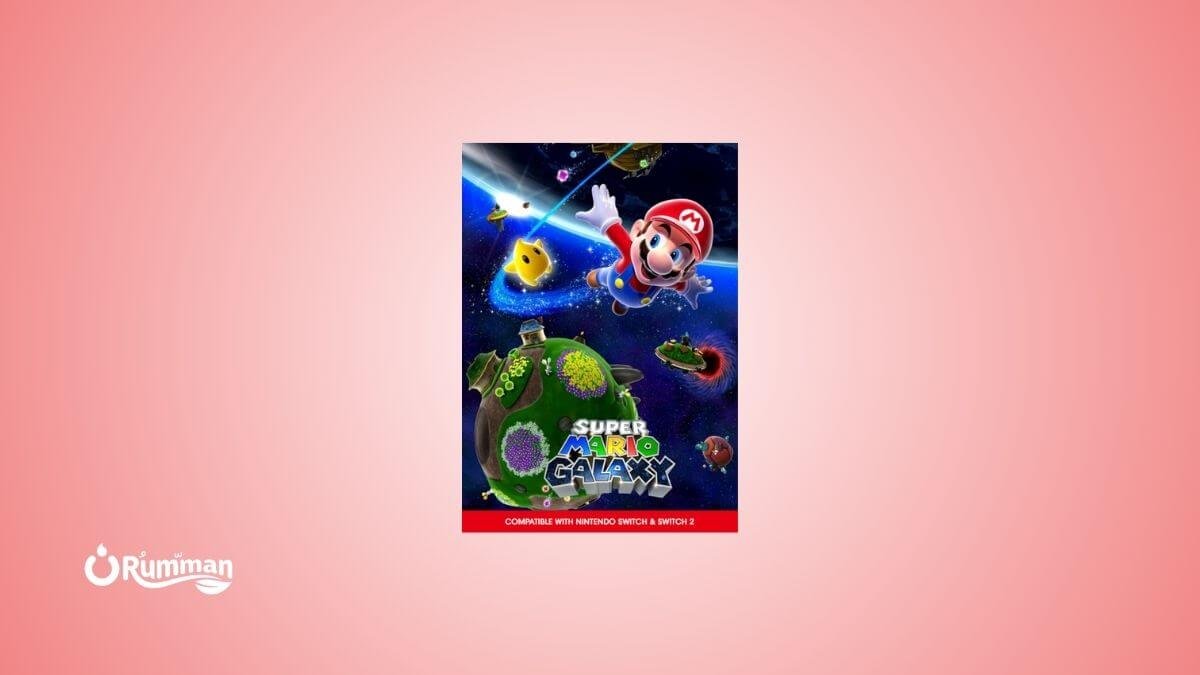
Super Mario Galaxy – Gravity-Defying 3D Platformer Masterpiece
One of gaming's greatest platformers returns with enhanced visuals, new accessibility features, and unprecedented level design. Metacritic 87/100.
Game Info
Verdict
Galaxy remains a gravity-defying masterpiece with timeless level design, exceptional soundtrack, and accessible features that justify revisiting this 2007 classic.
Pros
- Revolutionary gravity mechanics creating unmatched level design complexity
- Exhilarating orchestral soundtrack considered gaming's finest music
- Perfect pacing and difficulty balance maintaining engagement across 40+ hours
- New Assist Mode makes galaxy accessible to players of all abilities
- Timeless visual presentation holds up remarkably well at 1080p/4K
- Co-Star Mode enables meaningful shared-screen multiplayer experiences
- Enhanced UI and performance optimizations improve 2025 experience
Cons
- Joy-Con gyro controls less intuitive than original Wii Remote pointer setup
- Motion control sensitivity issues in handheld mode during pointer-heavy sections
- $69.99 price point excessive for 18-year-old games lacking substantial new content
- Asymmetric multiplayer limits Player 2 to cursor control without direct participation
- Occasional gravity mechanic clarity issues send Mario plummeting unexpectedly
- No online multiplayer features despite 2025 release date expectations
Performance Notes
Runs at 1080p/60fps on Nintendo Switch with stable performance across all galaxies. Nintendo Switch 2 receives free 4K update maintaining 60fps. No frame drops reported in handheld or docked modes. Motion controls integrated smoothly via Joy-Con gyro, delivering responsive cursor tracking and spin mechanics.
Super Mario Galaxy redefines three-dimensional platforming through its revolutionary gravity mechanics and inventive level design. Originally released on Wii in 2007, this 2025 Switch re-release introduces Assist Mode for accessibility, enhanced 1080p resolution (4K on Switch 2), improved menus, and bonus Rosalina storybook chapters. Critics maintain that Galaxy’s creative vision, pacing, and music remain unmatched in the 3D Mario franchise, making this re-release essential for both newcomers and longtime fans seeking the gold standard in platformer design.
How to Play Super Mario Galaxy
You control Mario as he explores miniature planets with independent gravitational fields. Jump between spheres, use gravity shifts for traversal, and execute the Spin attack by shaking your controller. Collect 60 Power Stars to face Bowser, with 120 available for completionists. The game employs gyro-based motion controls for pointing, spinning, and grabbing objects. Progression unlocks new galaxy domes through the Comet Observatory hub world.
- Controls – Joy-Con gyro for spinning and cursor control; standard buttons for jumping and movement. Learning curve is gentle due to gradual complexity introduction.
- Progression – Collect Power Stars by completing planet missions. Five galaxies per dome unlock Grand Star boss fights. Assist Mode doubles health and prevents instant death from falls.
- Combat/Mechanics – Spin attack stuns enemies and breaks objects. Launch Stars catapult you across space. Planetoid gravity pulls you toward any surface. Ground pound, wall jump, and stomp are core techniques.
- Tips – Use the second player’s cursor to collect Star Bits before attempting difficult jumps. Unlock Luigi afterward for different physics. Experiment with gravity directions on multi-sided planets.
Who Should Play Super Mario Galaxy
Galaxy appeals to platformer fans seeking refined level design, accessibility-conscious gamers thanks to new Assist Mode, parents introducing children to quality 3D games, and completionists chasing 120-star perfection. The game accommodates skill levels from beginner to expert through optional side content and Assist features.
- 3D Platformer Enthusiasts – Those who loved Odyssey or 64 will appreciate Galaxy’s gravity-based innovation and impeccable pacing that remains unmatched in the genre.
- Accessibility-First Players – New Assist Mode grants extra health points, fall recovery, and prevents void deaths, opening Galaxy to players with motor control challenges.
- Completionists and Speedrunners – 120 Power Stars await. Post-game Luigi mode, bonus Grand Finale Galaxy, and motion control mastery offer 50+ hours of content.
- Skip if – You dislike motion controls or prefer open-world exploration (try Odyssey instead). Galaxy’s structured, linear progression differs from Odyssey’s freeform kingdoms.
Super Mario Galaxy Platform Performance
Galaxy performs smoothly across Nintendo Switch systems. Switch version runs 1080p at 60fps with stable performance across all galaxies. Switch 2 receives a free update enabling 4K resolution at 60fps, delivering noticeably sharper visuals while maintaining the same responsive gameplay feel inherent to both releases.
| Platform | Resolution | FPS | Notes |
|---|---|---|---|
| Nintendo Switch (Handheld) | 1080p | 60 | Smooth performance; motion controls require Joy-Con grip |
| Nintendo Switch (Docked) | 1080p | 60 | Best motion control experience with TV display |
| Nintendo Switch 2 | 4K | 60 | Free update available; significantly sharper visuals |
| Nintendo Switch Lite | 1080p | 60 | Requires external Joy-Cons for co-op multiplayer |
Super Mario Galaxy System Requirements
Super Mario Galaxy is exclusive to Nintendo Switch platforms and does not require PC specifications. However, for those interested in emulation testing, minimum specs target 1080p 60fps performance on modest hardware. The game occupies approximately 8GB storage space on any Switch console.
| Component | Minimum (Emulation) | Recommended (Emulation) |
|---|---|---|
| OS | Windows 10 | Windows 11 / Linux |
| CPU | Intel Core i5-8400 or equivalent | Intel Core i7-10700K or AMD Ryzen 5 5600X |
| GPU | NVIDIA GTX 1050 Ti or AMD equivalent | NVIDIA RTX 2080 or AMD RX 5700 XT |
| RAM | 8 GB DDR4 | 16 GB DDR4+ |
| Storage | 8 GB free space | NVMe SSD recommended for loading |
Similar Games to Super Mario Galaxy
Galaxy occupies a unique space in platforming, though several titles offer comparable experiences. Super Mario Odyssey provides open-world exploration with motion mechanics but sacrifices Galaxy’s gravity-based innovation. Kirby and the Forgotten Land delivers charming 3D platforming with unique mechanics but less challenging design. Banjo-Kazooie: Nuts and Bolts introduced vehicle mechanics to 3D platforming. Splatoon 3 uses motion controls effectively across different genres, proving gyro’s effectiveness beyond Galaxy.
- Super Mario Odyssey – Open-world platformer with Cappy possession mechanic. More exploration, fewer gravity puzzles. Slightly easier difficulty curve.
- Kirby and the Forgotten Land – Linear 3D platformer with copy abilities. Charming but simpler than Galaxy’s challenge peaks and polish.
- Super Mario Sunshine – Pioneering 3D platformer with FLUDD water jetpack. Technically challenging, dated camera, less balanced pacing than Galaxy.
- Donkey Kong Country: Tropical Freeze – Exceptional 2D platformer with superior production values but lacks Galaxy’s gravity innovation in 3D space.
Super Mario Galaxy vs Competitors
Galaxy stands apart in the 3D Mario lineage through gravity mechanics unavailable in competing titles. While Odyssey offers broader content and exploration, Galaxy’s pacing, soundtrack, and creative level design remain unmatched. Odyssey’s 999 Power Moons far exceed Galaxy’s 120 stars, yet Galaxy’s collectibles feel more purposeful. Sunshine pioneered 3D Mario but feels mechanically dated. Galaxy maintains superiority in cohesive design philosophy.
| Feature | Super Mario Galaxy | Super Mario Odyssey | Super Mario Sunshine |
|---|---|---|---|
| Price | $69.99 (both) | $59.99 | $59.99 (remaster) |
| Playtime (Main) | 14.5 hours | 15-20 hours | 12-15 hours |
| 100% Completion | 42 hours | 60 hours | 30-40 hours |
| Metacritic Score | 87 | 97 | 82 |
| Multiplayer | Asymmetric co-op | Asymmetric co-op | Single-player |
| Motion Controls | Integral, intuitive | Optional, secondary | None |
| Difficulty | Moderate-Hard | Easy-Moderate | Hard |
Super Mario Galaxy Story and World
Princess Peach is captured by Bowser, who steals the universe’s Power Stars through a massive Comet Observatory theft. Mario chases Bowser into space, where he encounters Rosalina, a maternal figure protecting Luma creatures across the cosmos. The narrative unfolds through quiet moments aboard the Observatory hub rather than cutscenes. Galaxy’s setting celebrates cosmic wonder; each galaxy presents visually distinct environments from volcanic planets to underwater spheres to gravity-defying ice worlds. The tone balances whimsical charm with genuine wonder, supported by an orchestral soundtrack considered among gaming’s finest. New storybook chapters expand Rosalina’s lore ahead of the 2026 Mario Galaxy movie, adding narrative depth to this remaster.
Super Mario Galaxy Multiplayer and Online
Galaxy features Co-Star Mode, a unique asymmetric multiplayer experience where player one controls Mario while player two wields a cursor-controlling Luma spirit. Player two collects Star Bits, temporarily stuns enemies, and activates switches—a cooperative dynamic without direct character control. No online multiplayer exists; all modes are local only. Co-Star Mode supports Joy-Con or Pro Controller configurations, making shared-screen gameplay accessible. While unconventional, this multiplayer design elegantly solves the challenge of split-screen 3D platforming without compromising single-player integrity.
- Co-Star Mode – Two-player local co-op where P2 controls a Luma cursor to assist Mario’s progress through levels and boss fights.
- Assist Support – P2’s cursor freezes enemies and collects Star Bits, reducing difficulty spikes during timed platforming sections.
- Joy-Con Flexibility – Works with single Joy-Con each, paired Joy-Con, or Pro Controllers depending on preference and experience level.
- Online Features – None. Galaxy remains fundamentally a local experience, limiting modern online connectivity expectations.
Super Mario Galaxy DLC and Expansions
The 2025 Switch release includes no traditional DLC or paid expansions. Nintendo delivers post-launch content through free updates: new Rosalina storybook chapters exclusive to Switch version that bridge to the 2026 Mario Galaxy movie. Future updates may include additional story pages and bonus levels aligning with movie release dates. Two Galaxy-themed amiibo figures (Mario and Luma, Rosalina and Lumas) release April 2, 2026, providing cosmetic in-game items. A premium hardcover storybook featuring artwork and narrative will release separately, containing movie-connected lore.
- Rosalina Storybook Chapters – Free updates adding narrative content tied to the upcoming Super Mario Galaxy movie (April 2026 theatrical release).
- Mario and Luma Amiibo – Releasing April 2, 2026; unlocks 1-Up Mushrooms and life recovery items in-game when scanned.
- Rosalina and Lumas Amiibo – Companion amiibo releasing alongside Mario version with similar in-game reward functionality.
- Premium Storybook – Hardcover collection of Rosalina’s diary with artwork from both games and exclusive movie-connected story expansions.
Super Mario Galaxy Community and Support
Nintendo maintains active developer support with regular Switch system-level updates ensuring stability. Community discussions thrive across Reddit’s r/SuperMario, r/NintendoSwitch, and Discord servers dedicated to Galaxy speedrunning and completionism. The modding community remains vibrant through emulation platforms (Yuzu, Dolphin, Sudachi), though only for non-commercial play. Online documentation, farming guides, and secret location databases proliferate across Nintendo Fan Wiki and GameFAQs. Nintendo’s official forums provide technical support, though response times for legacy titles remain slower than current-generation releases.
- Official Nintendo Support – Technical troubleshooting available through Nintendo’s support portal; patches released periodically for stability.
- Community Forums – Reddit communities (r/SuperMario, r/NintendoSwitch) host discussion threads, speedrun records, and secret-finding collaborations.
- Speedrunning Scene – Vibrant community maintains world records; current any% speedrun record sits near 2 hours 54 minutes with active progression.
- Fan Documentation – Comprehensive guides on GameFAQs, Mario Wiki, and YouTube cover all Power Stars, secret planets, and motion control optimization techniques.