
 31
31
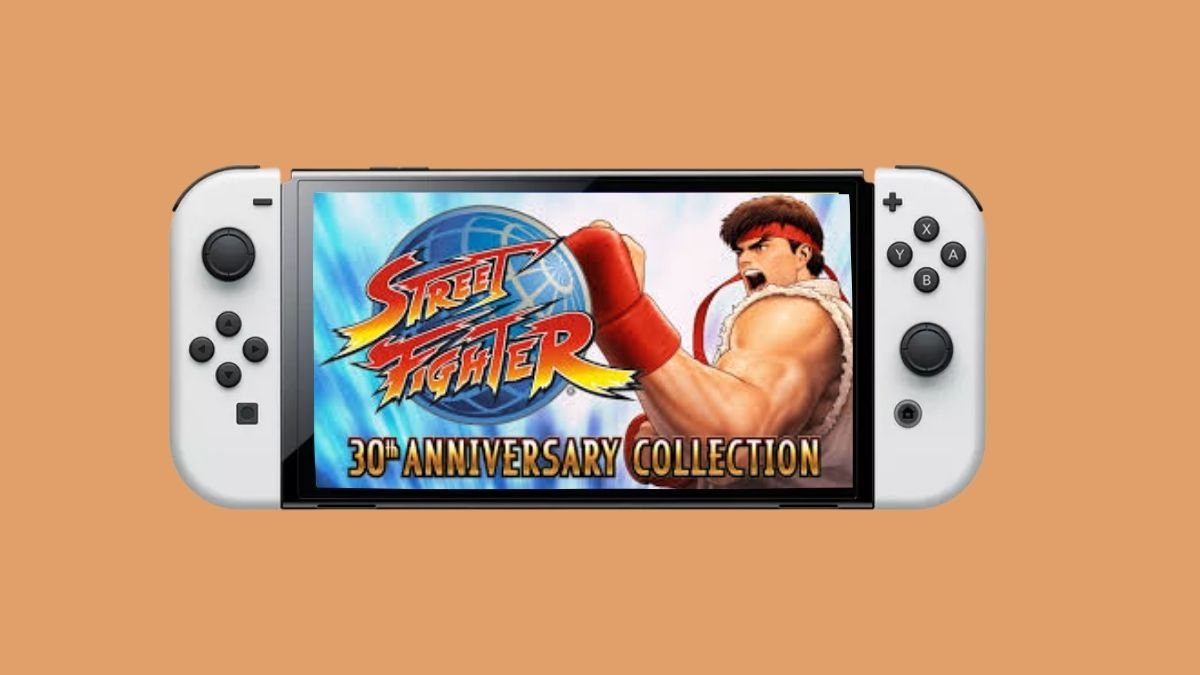
Street Fighter 30th Anniversary Collection – The Fighting Game History Masterclass
An ambitious 12-game retrospective spanning 30 years of fighting game evolution. Excellent emulation, comprehensive museum mode, and online functionality for key titles make this essential for fighting game historians. Rating: 8.1/10
Game Info
Verdict
An essential fighting game retrospective marred by limited online support for 8 of 12 games despite arcade-perfect emulation and comprehensive historical museum content.
Pros
- Twelve arcade-perfect game emulations preserving fighting game history in single affordable package
- Excellent museum mode with character art, biographies, soundtracks providing historical context and game design education
- Rollback netcode for four competitive titles enables stable online play across global regions
- Training mode with dummy recording systems supports skill development and combo practice
- Local multiplayer for all 12 games maintains accessibility for casual play and regional tournaments
- Cross-platform lobbies unify Japanese and international player bases for expanded online competition
- 3.7 million copies sold demonstrates market success and mainstream fighting game accessibility achievement
Cons
- Online support limited to only 4 of 12 games frustrates competitive players seeking variety in ranked competition
- No paid DLC but also no post-launch content creation diminishes long-term engagement potential
- Input lag issues on Nintendo Switch handheld mode compromise competitive integrity during portable play
- Street Fighter III: Alpha 2 arcade version included despite console versions featuring superior character rosters
- PC Steam version occasionally experiences online connectivity instability reported by competitive community
- Training mode restricted to 4 online-enabled titles prevents practice opportunities for other game versions
Performance Notes
Arcade-perfect emulation across all platforms maintains 60 FPS gameplay. PlayStation 4, Xbox One, and Switch docked versions display at 1080p. Switch handheld mode at 720p introduces minor input lag during competitive play. PC Steam version supports 4K resolution but experiences occasional online connectivity instability reported by competitive players.
Street Fighter 30th Anniversary Collection celebrates three decades of competitive fighting game history in a single package. Released May 29, 2018 across PlayStation 4, Xbox One, Nintendo Switch, and Steam, this Digital Eclipse-developed compilation delivers arcade-perfect ports of 12 canonical Street Fighter titles spanning 1987 through 1999. With strong critical reception averaging 80+ Metacritic scores across platforms and over 3.7 million copies sold by 2025, the collection succeeded in introducing classic fighting games to modern audiences. This review examines whether the compilation justifies its $39.99 price point and addresses why limited online support remains its primary shortcoming.
How to Play Street Fighter 30th Anniversary Collection
Street Fighter demands pattern recognition, timing precision, and frame-data understanding. Each of the 12 included games operates under distinct rulesets; jumping from Street Fighter II to Street Fighter III feels like learning an entirely new game. The transition proves pedagogically valuable—players experience the genre’s evolution firsthand, witnessing how Capcom refined mechanics across three decades of iteration.
- Controls – Six-button fighter stick layout (three punches, three kicks) remains the competitive standard. The collection supports arcade sticks, Pro Controllers, and Joy-Cons, though arcade hardware delivers superior response. Training mode teaches button combinations and special move inputs across the four online-enabled titles.
- Progression – Arcade Mode chains 10 fights against progressively difficult AI opponents. Characters remain permanently unlocked from startup. Save functionality allows mid-campaign breaks, eliminating original arcade’s single-sitting requirements. Difficulty modifiers scale challenge to player skill.
- Combat Mechanics – Special move inputs require directional pad sequences: quarter-circle forward launches hadoukens, dragon punches demand forward, down, forward combinations. Timing windows tighten at competitive levels; execution separates casual players from professionals.
- Tips – Master basic combos before attempting tournament-level play. Training mode’s dummy recording system lets players practice defensive responses. Start with Street Fighter II before progressing to Alpha and Third Strike, which introduce significantly greater complexity and speed.
Who Should Play Street Fighter 30th Anniversary Collection
The collection addresses two distinct audiences: fighting game historians seeking genre education and competitive players wanting accessible online play. Casual fighters find Arcade Mode and local multiplayer entertaining; serious competitors leverage Training Mode and online ranking systems. The museum mode appeals to gaming culture enthusiasts regardless of fighting game skill.
- Fighting Game Historians – The 12-game arc demonstrates how Capcom refined Street Fighter across three decades. Playing chronologically illustrates mechanical evolution: Street Fighter II’s introduction of eight playable characters, Alpha’s air combos, Third Strike’s parry system. This progression functions as interactive game design education.
- Competitive Players – Street Fighter II Hyper Fighting, Super Street Fighter II Turbo, Alpha 3, and Third Strike feature online ranked matchmaking with rollback netcode. Training mode, difficulty modifiers, and replay functionality support skill development at all competitive levels.
- Local Multiplayer Enthusiasts – All 12 games support local versus play. The variety ensures fresh matchups: Street Fighter II’s straightforward execution contrasts with Third Strike’s complex parry mechanics. Nintendo Switch’s Super Street Fighter II Tournament Battle mode enables eight-player local tournaments.
- Skip if – Players seeking modern fighting mechanics should explore Street Fighter 6 or Tekken 8. The collection requires patience with 1980s-1990s game design conventions. Casual players uncomfortable with complex inputs may find frustration outweighing entertainment.
Street Fighter 30th Anniversary Collection Platform Performance
Digital Eclipse’s emulation maintains arcade accuracy across all platforms. PlayStation 4 and Xbox One versions perform identically at stable frame rates. Nintendo Switch’s portable format introduces minor input lag trade-offs during handheld play but preserves competitive integrity in docked mode. Steam PC version suffers occasional connection issues in online play reported by competitive players. Cross-version play remains unsupported; lobbies segregate by platform.
| Platform | Resolution | FPS | Online Support |
|---|---|---|---|
| PlayStation 4 | 1080p | 60 | 4 games; rollback netcode enabled |
| Xbox One | 1080p | 60 | 4 games; rollback netcode enabled |
| Nintendo Switch (Docked) | 1080p | 60 | 4 games; rollback netcode enabled |
| Nintendo Switch (Handheld) | 720p | 60 | 4 games; minor input lag reported |
| Steam PC | 4K | 60+ | 4 games; occasional connection instability |
Street Fighter 30th Anniversary Collection System Requirements
The collection demands minimal processing power on all platforms due to authentic arcade emulation. Original arcade hardware (Capcom CPS-1/CPS-2 boards) ran these games on processors far weaker than modern consoles. PC requirements remain modest: any computer built within the last 10 years easily handles 60 FPS gameplay. Nintendo Switch’s portable architecture proves sufficient despite hardware age relative to home console generation.
| Component | Minimum | Recommended |
|---|---|---|
| OS | Windows 7 | Windows 10 or higher |
| CPU | Intel i3-4160 or equivalent | Intel i5-8400 or equivalent |
| GPU | NVIDIA GTX 650 or AMD R7 260X | NVIDIA GTX 1060 or AMD RX 480 |
| RAM | 4 GB | 8 GB |
| Storage | 10 GB SSD space | SSD Recommended for faster loading |
| Network | 5 Mbps upload/download | 10+ Mbps for stable online play |
Similar Games to Street Fighter 30th Anniversary Collection
Fighting game alternatives emphasize different mechanical philosophies. King of Fighters emphasizes team-based strategy; Mortal Kombat prioritizes graphic violence and special move accessibility; Tekken introduces 3D spatial gameplay; Killer Instinct rewards aggressive combo chains. Street Fighter’s neutral-game focus, precise input requirements, and tournament legitimacy distinguish it from genre peers. This collection remains the gold-standard retrospective for series newcomers.
- Mortal Kombat 1 (2023) – Modern alternative emphasizing violence, character personalities, and story campaigns. Simpler inputs and faster-paced matches appeal to newcomers; competitive scene dwarfs Street Fighter’s regional tournaments.
- Tekken 8 (2024) – 3D fighting emphasizing close-range combat and character-specific juggle combos. Steeper learning curve than Street Fighter II but deeper character development and mechanical complexity satisfy veterans.
- King of Fighters XV (2021) – Three-versus-three team fighting requiring team composition strategy absent from one-on-one games. Appeals to players valuing roster variety and support character mechanics.
- Street Fighter 6 (2023) – Modern iteration featuring World Tour single-player campaign, extensive character roster (18 at launch), and refined mechanics. Superior modern experience but lacks the historical perspective this collection uniquely provides.
Street Fighter 30th Anniversary Collection vs Competitors
The 30th Anniversary Collection competes directly against standalone fighting game releases and rival fighting game compilations. Street Fighter 6 offers modern mechanics and narrative content but abandons arcade history. Mortal Kombat 1 provides superior graphical presentation and character storytelling. Tekken 8 features deeper character mechanics. However, no competitor matches this collection’s ability to trace fighting game evolution across three decades within a single $39.99 package. The museum content adds educational value impossible to replicate. Limited online support remains its critical weakness against modern competitors.
| Feature | SF 30th Collection | Street Fighter 6 | Mortal Kombat 1 |
|---|---|---|---|
| Price | $39.99 | $69.99 | $69.99 |
| Games/Characters | 12 games; 50+ characters total | 1 game; 18 characters | 1 game; 20 characters |
| Single-Player Campaign | Arcade Mode only | World Tour (extensive) | Story Campaign (full narrative) |
| Online Multiplayer | 4 of 12 games | Yes (full support) | Yes (full support) |
| Ranked Competitive | Yes (4 games) | Yes | Yes |
| Graphics/Presentation | 1987-1999 arcade accurate | Modern HD graphics | Modern HD graphics with violence |
| Metacritic Average | 80/100 | 82/100 | 72/100 |
Street Fighter 30th Anniversary Collection Story and World
Street Fighter’s narratives evolved substantially across 12 games. The original 1987 Street Fighter featured sparse storytelling; players selected a fighter and battled tournament opponents. Street Fighter II introduced character-specific endings, establishing personality differentiation. Each fighter now possessed backstory motivations: Ryu seeking martial arts mastery, Chun-Li avenging her father’s death, Guile pursuing military duty. Alpha series introduced time-travel narrative complexity; Third Strike’s Gill faction developed antagonistic depth. The museum mode contextualizes these progressions through character biographies, artwork evolution, and thematic development across decades. Players witness how limited Arcade hardware constrained narrative delivery; cutscenes transition from text-based exposition to sprite animation to detailed backgrounds. The collection presents Street Fighter’s thematic journey from tournament spectacle toward character-driven melodrama—a narrative arc mirroring the medium’s technological advancement and storytelling maturation.
Street Fighter 30th Anniversary Collection Multiplayer and Online
Multiplayer accessibility varies significantly. Four titles feature online ranked matchmaking: Street Fighter II Hyper Fighting, Super Street Fighter II Turbo, Street Fighter Alpha 3, and Street Fighter III: 3rd Strike. Online modes employ rollback netcode enabling players from distant regions to compete with minimal input lag. Training mode exists exclusively for these four titles, allowing players to practice special moves, combos, and defensive strategies before ranked competition. All 12 games support local versus play, critical for casual multiplayer and regional tournaments. Nintendo Switch includes exclusive Super Street Fighter II Tournament Battle, enabling eight-player local competitions through additional controllers.
- Online Ranked Matches – 4 games feature ranked competitive play; matchmaking locates opponents matching skill levels
- Casual Online – Lobbies enable friendly matches; replay data permits analysis of opponent strategies
- Training Mode – Available for 4 online-enabled games; dummy recording allows defensive practice
- Local Multiplayer – All 12 games support controller-to-controller competition; 2-player matches primary format
- Tournament Play – Switch exclusive Tournament Battle mode (Super Street Fighter II) supports 8 simultaneous players in structured bracket competitions
Street Fighter 30th Anniversary Collection DLC and Expansions
The collection shipped as a complete package with zero post-launch paid content. Capcom committed to free patches addressing online functionality, training mode improvements, and audio refinements. October 23, 2018 patch improved online lobby systems enabling cross-region play between Japanese and international versions. No additional characters, games, or cosmetics were released. Pre-order bonus Ultra Street Fighter IV (released separately 2014) provided continuity bridging this collection to modern Street Fighter V but requires separate purchase on PlayStation 4, Xbox One, and Steam.
- Pre-Order Bonus – Ultra Street Fighter IV digital code (PlayStation 4, Xbox One, Steam); bridges arcade history to Street Fighter V
- Free Updates – October 2018 patch improved online, training mode, audio, and museum content
- Paid DLC – None; 12 complete games included at launch
- Cosmetics – No character skins or visual customization options available
- Seasonal Content – No battle passes, seasonal updates, or time-limited content implemented
Street Fighter 30th Anniversary Collection Community and Support
The competitive fighting game community embraces this collection as training apparatus despite limited online support. Reddit communities (r/StreetFighter, r/Fighters), Discord servers, and YouTube content creators leverage the collection for tutorials, beginner guides, and retrospective analysis. Tournament organizers host local events using collection games. Modding remains prohibited by licensing; console versions prevent ROM manipulation. Community consensus identifies online rollback netcode as industry-standard functionality that should have encompassed all 12 games rather than exclusive subset availability.
- Official Forums – Capcom Unity hosts community discussion; developer engagement varies with post-launch patch frequency
- Reddit/Discord – r/StreetFighter and Fighting Game subreddits maintain active beginner-friendly communities
- Competitive Scene – Third Strike and Hyper Fighting remain tournament mainstays; collection accessibility supports regional competition growth
- Content Creators – YouTube educators produce extensive beginner tutorials and character guides using collection titles
- Updates – Post-launch support concluded by 2019; no new content expected beyond 2025