
 39
39
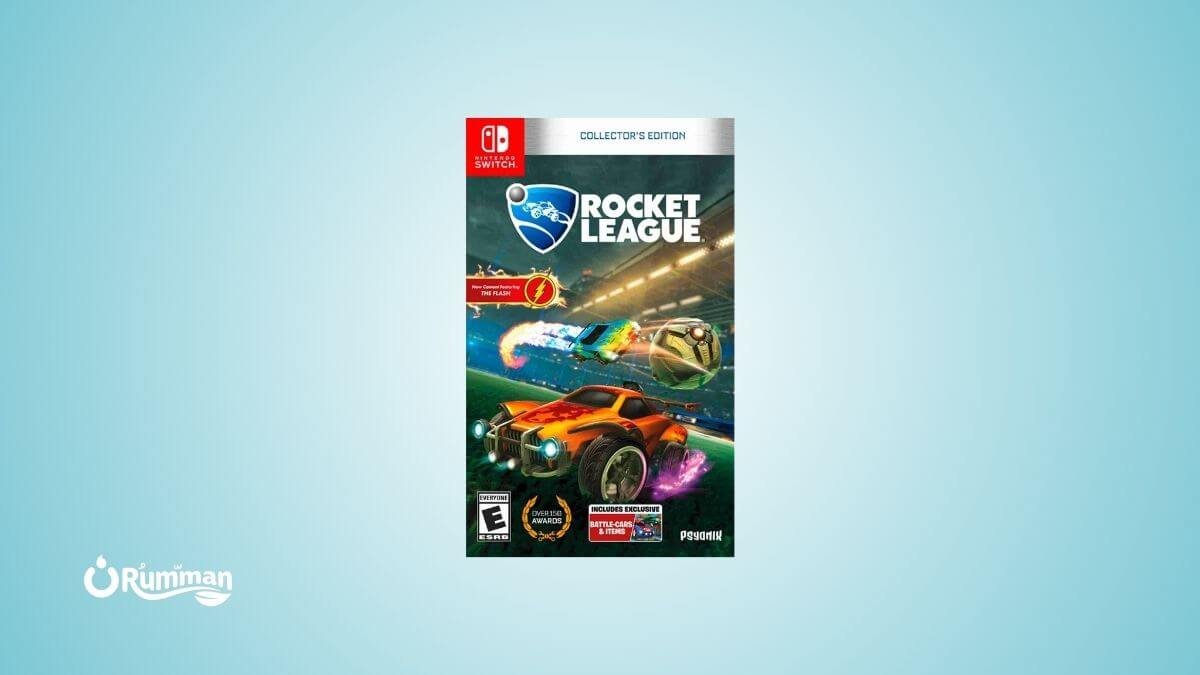
Rocket League – Vehicular Soccer Phenomenon Redefines Genre
Rocket League combines arcade soccer with vehicular mayhem in a skill-driven, free-to-play esports sensation rated 85% on Metacritic. Cross-platform play and competitive seasons deliver endless replayability across 2024-2025.
Game Info
Verdict
Rocket League achieves unprecedented competitive depth through deceptively simple mechanics, establishing esports legitimacy through skill-driven rank progression and cross-platform accessibility.
Pros
- Skill ceiling expands indefinitely; 5,000+ hour veterans discover new mechanics unavailable to intermediate players
- Free-to-play model eliminates financial barriers; cosmetics never grant competitive advantages versus paid players
- Cross-platform play unifies PC, PlayStation, Xbox, and Switch populations into single competitive ecosystem
- Five-minute match duration enables satisfying competitive sessions during time-limited availability
- Extra Modes (Rumble, Hoops, Snow Day, Dropshot) provide mechanical variety without compromising rank integrity
- Professional RLCS esports infrastructure with published salary information and transparent advancement pathways
- Consistent 60+ FPS performance on all platforms maintains competitive mechanical responsiveness
Cons
- No single-player campaign or narrative content limits appeal for story-focused gamers
- Server lag significantly impacts competitive viability; 70+ millisecond latency creates untenable disadvantages
- Toxic chat culture remains endemic; reporting systems insufficient for permanent behavioral correction
- Matchmaking occasionally pairs vastly disparate skill levels creating lopsided outcomes
- Free Rocket Pass items limited; battle pass progression heavily weighted toward paid tier advancement
Performance Notes
Delivers locked 60 FPS on all console platforms (PS5/Xbox Series X at 1440p-4K). PC scales to 360+ FPS with uncapped frame rate mode for competitive esports. Nintendo Switch maintains 60 FPS in both handheld and docked modes. Server-side matchmaking ensures cross-platform consistency; client-side frame rate advantages eliminated through input latency compensation.
Rocket League represents a paradigm shift in competitive gaming, merging soccer fundamentals with physics-driven vehicular acrobatics into a deceptively simple formula with unlimited mechanical depth. Originally released in 2015 by Psyonix before acquisition by Epic Games in 2019, the game transitioned to free-to-play in 2020 and subsequently became a global esports phenomenon with professional competitive infrastructure rivaling traditional esports titles. This review analyzes what makes Rocket League’s skill-driven gameplay compelling, examines its platform accessibility, evaluates the competitive ecosystem, and explains its sustained relevance through 2025 despite competition from countless copycat titles.
How to Play Rocket League
Rocket League’s core mechanic requires propelling a ball into opposing goals using rocket-powered vehicles, with matches lasting precisely five minutes in standard modes. The simple objective masks extraordinary mechanical complexity; players progress from basic ball contact to advanced aerial maneuvers, wall bounces, and air rotations through thousands of hours of deliberate practice. The fundamental gameplay loop remains unchanged since 2015, creating consistency that competitive players value.
- Controls – Standard controller inputs (boost, jump, power-slide) are learnable within five minutes, but executing these inputs at high velocity against skilled opponents requires extensive practice. Gamepad is mandatory; keyboard controls exist but remain competitively unviable. Each button press influences vehicle orientation and momentum differently depending on current position and velocity.
- Progression – Ranked matchmaking places players into seven competitive tiers (Bronze through Grand Champion) across 1v1, 2v2, and 3v3 modes. Matches won grant rating points toward rank advancement; losses deduct points with diminishing returns for heavily outmatched opponents. Each season introduces new cosmetics and tournament opportunities without mechanics changes.
- Combat/Mechanics – No traditional combat exists; all competition involves positioning, ball control, and momentum prediction. Rocket-powered vehicles accelerate from 0 to 140+ units per second, with boost mechanic determining maximum velocity. Air control allows mid-flight orientation adjustments crucial for aerial goalkeeping and scoring setups.
- Tips – New players should master basic ball control before attempting competitive ranked play. Training Packs available in-game provide scenario-based skill progression. Spending 50+ hours in unranked casual matches before ranked ladder climbing prevents teammate frustration and accelerates mechanical development.
Who Should Play Rocket League
Rocket League appeals to competitive players across skill levels, from casual social gamers enjoying quick five-minute matches to esports professionals investing 40+ hours weekly into rank climbing. The free-to-play model eliminates financial barriers; optional cosmetics never impact competitive viability. Cross-platform play ensures consistent matchmaking regardless of hardware selection.
- Esports Aspirants – The RLCS (Rocket League Championship Series) provides competitive ladder infrastructure with seasonal tournaments, regional qualifiers, and international championship events. Professional players earn six-figure salaries; semi-pro pathways generate additional income through contract opportunities.
- Quick Session Gamers – Five-minute match duration enables satisfying gaming sessions during work breaks or commutes. No loading screens between matches and instant matchmaking reduce time overhead compared to traditional competitive games.
- Casual Social Players – Extra Modes (Rumble, Hoops, Snow Day, Dropshot) provide silly, low-stakes alternatives to ranked competition. Private matches with friends enable custom rules and mutators that fundamentally alter gameplay without affecting rankings.
- Skip if – Players seeking narrative-driven campaigns or PvE progression should explore alternatives; Rocket League contains zero single-player story content. Those with poor internet connectivity find consistent 60+ FPS experience compromised by lag; server latency directly determines competitive viability.
Rocket League Platform Performance
Rocket League achieves remarkable performance consistency across PC and console platforms, with optimizations ensuring stable frame rates for competitive integrity. Cross-platform play requires unified frame-rate performance; console versions deliver locked 60 FPS in competitive modes with higher refresh-rate options on current-generation hardware. PC scales to 360+ FPS on capable hardware.
| Platform | Resolution | FPS | Notes |
|---|---|---|---|
| PC (High-End) | 1440p – 4K | 120-360+ | Scales to monitor refresh rate; unlock frame rate for competitive advantage on 240Hz+ displays |
| PlayStation 5 | 1440p – 4K | 120 | Quality mode: 4K/60, Performance mode: 1440p/120; locked performance in both modes |
| Xbox Series X | 1440p – 4K | 120 | Performance settings match PS5; dynamic resolution maintains target frame rate in all scenarios |
| Nintendo Switch | 720p Handheld / 1080p Docked | 60 | Consistent 60 FPS in handheld and docked modes; portable competitive play available |
Rocket League System Requirements
Rocket League’s system requirements reflect Psyonix’s commitment to accessibility, supporting entry-level hardware from 2012 while scaling to cutting-edge gaming rigs. Minimum specs enable competitive 1080p/60 FPS gameplay on mid-range systems; recommended specs support high refresh rates and maximum visual fidelity for esports participants.
| Component | Minimum | Recommended |
|---|---|---|
| OS | Windows 7 64-bit or newer | Windows 10/11 64-bit |
| CPU | 2.5 GHz Dual Core | 3.0+ GHz Quad Core |
| GPU | NVIDIA GeForce GTX 760, AMD Radeon R7 270X, or better | NVIDIA GeForce GTX 1060, AMD Radeon RX 470, or better |
| RAM | 4GB | 8GB |
| Storage | 5-20GB available space | SSD recommended for minimal load times |
Similar Games to Rocket League
Rocket League’s unique formula resists direct imitation; few titles successfully combine ball-physics simulation with vehicle-control depth. Several spiritual successors and arcade alternatives attempt vehicular sports concepts but lack Rocket League’s mechanical polish and esports infrastructure. Each alternative emphasizes different aspects of competitive multiplayer.
- Supersonic Acrobatic Rocket-Powered Battle-Cars – Spiritual predecessor (2008) featuring identical core mechanics. Limited roster, outdated graphics, and minimal playerbase; historically significant but functionally obsolete for modern play.
- PUBG: Battlegrounds Arena Mode – Epic Games’ attempt at competitive team-based multiplayer. Different genre entirely (battle royale variants) but shares cross-platform infrastructure and seasonal cosmetic systems.
- ChampionSelect (Concept) – Abandoned competitive title attempting vehicular sports integration. Failed due to mechanical imbalance and limited playerbase fragmentation; demonstrates why Rocket League dominates its niche.
- Gran Turismo Sport – Features racing esports infrastructure and competitive ranking system. Fundamentally different game (circuit racing simulation) but shares competitive seasonal structure and professional competitive pathways.
Rocket League vs Competitors
Direct comparison reveals Rocket League’s dominance in competitive accessibility, cross-platform integration, and sustained esports support. Competitors in vehicular sports and arcade soccer occupy different market segments or failed to achieve critical player density necessary for competitive viability. Rocket League’s five-year growth trajectory since free-to-play conversion validates its market position.
| Feature | Rocket League | FIFA 25 (EA Sports FC) | Madden NFL 25 |
|---|---|---|---|
| Price | Free-to-Play | $69.99 | $69.99 |
| Playtime to Competence | 100-200 hours | 20-40 hours | 20-40 hours |
| Multiplayer Modes | 5+ Core + Extras | 1 (Soccer) | 1 (Football) |
| Esports Support | Professional League with Prize Pool | Partner Leagues Only | Partner Leagues Only |
| Metacritic Score | 85 | 75 | 75 |
Rocket League Story and World
Rocket League abandons traditional narrative in favor of implicit world-building through arena design, team customization, and seasonal progression. Players construct personal identity through cosmetic vehicles, decals, paint finishes, and wheel selections without canonical character development. Arena environments ranging from futuristic domes to alien planets create aesthetic variety without story exposition. The game’s implicit narrative emerges from ranked progression: beginning as unranked novice through strategic rank advancement toward professional-level Grand Champion status. Seasonal cosmetic themes (festive holidays, crossover events) evolve the world aesthetically without disrupting competitive mechanics.
Rocket League Multiplayer and Online
Rocket League’s multiplayer infrastructure represents the gold standard for cross-platform competitive integration. All modes support simultaneous play across PlayStation, Xbox, PC, and Switch platforms with region-locked servers ensuring playable latency. Seasonal progression creates continuous competitive incentive without mandatory cosmetic purchases affecting rank climbing.
- Ranked 1v1 Solo Duel – Head-to-head competitive matches establishing foundational mechanical mastery. Solo queue prevents team synergy variables; pure mechanical skill determines outcomes. Longest average skill ceiling of all modes.
- Ranked 2v2 Doubles – Two-versus-two team competition requiring rotation discipline and positional spacing. Most popular competitive mode balancing individual skill with team coordination demands.
- Ranked 3v3 Standard – Full-team competitive play with rotation complexity and team passing sequences. Advanced positioning enables possession-based gameplay strategies impossible in smaller team formats.
- Extra Modes (Ranked) – Rumble (power-ups), Hoops (basketball), Snow Day (hockey puck), Dropshot (destructible floor) provide competitive variants with distinct mechanical requirements and playstyle adaptation.
Rocket League DLC and Expansions
Rocket League’s monetization prioritizes cosmetic customization over gameplay advantages, maintaining competitive integrity while funding ongoing development. Battle Pass system provides cosmetic progression; premium cosmetics available through Item Shop with rotating weekly selections. No gameplay-affecting purchases exist; all cosmetics remain purely visual.
- Rocket Pass (Battle Pass) – Seasonal paid progression ($9.99) unlocking cosmetics across 290 tiers. Free Track provides cosmetics without payment; premium tier unlocks additional exclusive items. New season launches every 1-2 months.
- Item Shop – Rotating cosmetic marketplace featuring limited-time vehicle bodies, decals, wheels, and goal explosions. Prices range $2-$15 per item; crossover licenses (Fast and Furious, Marvel properties) drive exclusive cosmetic releases.
- Season Packs – Limited cosmetic bundles including vehicles (e.g., Season 20 Rocketeer Pack $19.99) providing convenience over battle pass grinding. No gameplay advantages; purely aesthetic differentiation.
- Free Updates – Weekly challenges provide cosmetics through gameplay achievement without payment. Seasonal events (Haunted Hallows, Frosty Fest) unlock special cosmetics through match participation.
Rocket League Community and Support
Rocket League maintains one of gaming’s most engaged communities despite competitive intensity. Official infrastructure supports social play through clans, tournament systems, and community event hosting. Developer communication remains transparent regarding balance patches and seasonal roadmaps, though some community concerns regarding matchmaking progression receive inconsistent acknowledgment.
- Official Forums and Support – Psyonix operates official forums and support portal for bug reports, balance feedback, and account issues. Regular developer blog posts explain seasonal changes and competitive infrastructure updates.
- Reddit/Discord – r/RocketLeague (1M+ members) serves as primary community hub; subreddits organize clan recruitment, tournament hosting, and mechanic discussion. Hundreds of competitive Discord servers facilitate scrim organization and esports team coordination.
- Mod Support – No official modding system exists; competitive integrity restrictions prevent community gameplay modifications. Custom training packs created through in-game tools enable peer-designed skill progression scenarios.
- Updates and Patches – Bi-weekly patches address balance concerns, bug fixes, and cosmetic additions. Seasonal roadmap communication outlines three-month content plans; major mechanical changes receive extensive feedback periods before implementation.