
 68
68
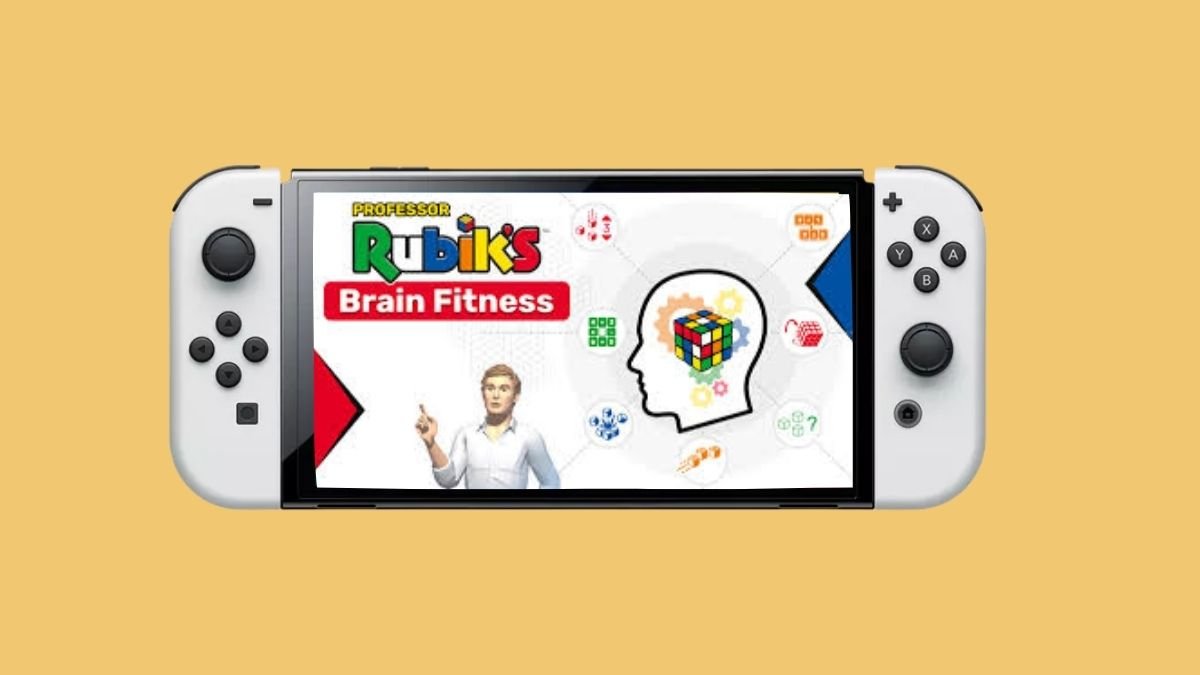
Professor Rubik’s Brain Fitness – Cube-Based Puzzle Training
Brain training mini-games wrapped in Rubik's Cube theming. Limited depth and repetitive content hold back potential. Metacritic 50.
Game Info
Verdict
Clever Rubik's cube theming cannot overcome repetitive puzzle variety and lack of post-launch support.
Pros
- Rubik's Cube brand integration feels natural and visually cohesive
- Accessible difficulty for casual players and all ages
- Daily training structure and brain score tracking provide motivation
- Local multiplayer modes add social engagement for families
- Runs on any hardware; no technical barriers
- 22 mini-games offer initial variety
Cons
- Puzzle solution pools are extremely limited, creating repetition within 2-3 days of daily play
- Identical questions appear repeatedly in the same gameplay session
- No online multiplayer or leaderboards
- Brain-training premise undermined by lack of content variation
- Zero post-launch support or content updates since 2021
- UI relies on 8-directional selection requiring answer reading, wasting precious seconds
- Competitive multiplayer mode reduces scores rather than increasing engagement
Performance Notes
Runs flawlessly on all platforms at 60 fps. Minimal computational load; even seven-year-old hardware produces zero frame drops. Graphics are simple menu-based UI with minimal 3D rendering, optimized for accessibility over visual fidelity.
Professor Rubik’s Brain Fitness applies the iconic Rubik’s Cube license to brain-training gameplay, positioning itself as a modern successor to Dr. Kawashima’s Brain Training. The game leverages Rubik’s brand recognition and clean visual identity effectively, but critical consensus (Metacritic 50, Gaming Age gave 50/100) reveals a fundamental problem: the mini-game library exhausts its content depth within days due to limited puzzle variation. Despite 22 mini-games plus challenge modes promising lasting engagement, repetitive question sets undermine the brain-training premise. Players report seeing identical puzzles after only 2-3 daily sessions, defeating the neuroplasticity benefits brain-fitness games claim to provide.
How to Play Professor Rubik’s Brain Fitness
Professor Rubik’s Brain Fitness splits gameplay into two complementary modes: Daily Training tests your brain across six randomized mini-games and tracks cognitive improvement over weeks; Free Training lets you practice individual activities at your own pace without scoring pressure. The game targets six cognitive domains: memory, logic, letters, speed, concentration, and spatial reasoning.
- Controls – Simple 8-directional menu navigation with button confirmation; no complex inputs required, making the game accessible to all ages and abilities
- Progression – Complete Daily Training sessions (5-10 minutes) and assess scores tracked against historical performance; unlock new mini-games by reaching score milestones
- Combat/Mechanics – Core loop involves: selecting answer from directional options (which costs seconds reading jumbled responses), answering under time pressure, receiving brain-score feedback and cognitive domain breakdown
- Tips – Play daily training consistently for at least 2-3 weeks before expecting measurable improvements; multiplayer challenges add social pressure that paradoxically reduces score consistency
Who Should Play Professor Rubik’s Brain Fitness
Professor Rubik’s Brain Fitness targets casual players and families seeking accessible brain stimulation without hardcore puzzle complexity. Rubik’s Cube enthusiasts appreciate the thematic integration but may find the difficulty shallow. The game succeeds for players committing to long-term daily play despite limited content variety.
- Casual Brain Trainers – Families and older adults seeking low-commitment daily cognitive exercises find the structure and tracking helpful, despite content repetition
- Rubik’s Fans – Players who love the Rubik’s brand and collect cube-themed games will appreciate the clever integration of cube mechanics into puzzle gameplay
- Local Multiplayer Groups – The 1-4 player local modes work well for family game nights, though competitive scoring sometimes undermines collaborative fun
- Skip if – You seek genuine cognitive challenge, varied puzzle content, or long-term engagement; the repetitive question pools and shallow difficulty curve disappoint within weeks
Professor Rubik’s Brain Fitness Platform Performance
Technical performance remains stable across all platforms with no optimization issues. The game’s simple 3D graphics and minimal computational load run flawlessly on seven-year-old consoles. Resolution and frame rates are consistent, though the art style produces no visual standout beyond its Rubik’s color palette.
| Platform | Resolution | FPS | Notes |
|---|---|---|---|
| PC | 1080p-1440p | 60 | Requires minimal GPU; integrated graphics sufficient |
| PlayStation 4 | 1080p | 60 | Stable performance; no frame drops during menu-heavy gameplay |
| Xbox One | 1080p | 60 | Identical to PS4; consistent experience across platforms |
| Nintendo Switch | 1080p docked / 720p handheld | 60 | Smooth handheld mode; touch-screen controls not supported |
Professor Rubik’s Brain Fitness System Requirements
PC system requirements are negligible. The game is a lightweight application requiring no high-end hardware. Any system manufactured in the last 15 years exceeds recommended specifications comfortably, and the game even runs acceptably on low-spec or budget laptops.
| Component | Minimum | Recommended |
|---|---|---|
| OS | Windows 7 or higher | Windows 10 or higher |
| CPU | Intel Pentium or equivalent (2 GHz+) | Intel Core i3 or equivalent |
| GPU | Intel HD Graphics 3000 or equivalent | Dedicated graphics (GeForce GTX 750 or equivalent) |
| RAM | 2 GB | 4 GB |
| Storage | 2 GB available space | SSD optional (loading is minimal) |
Similar Games to Professor Rubik’s Brain Fitness
Brain-training games evolved dramatically since Nintendo’s Dr. Kawashima established the genre in 2005. Professor Rubik’s Brain Fitness sits in the middle tier between mobile casual apps and sophisticated cognitive science tools. Dr. Mario World applies similar logic puzzles with Nintendo’s polish and character charm. Brain Age 2 offers deeper mini-game variety. Tetris Effect combines puzzle-solving with audio-visual engagement, elevating the genre beyond question-answer loops.
- Dr. Mario World – Block-matching puzzle with more visual appeal and game-feel polish than Rubik’s; limited brain-training scope but higher engagement
- Brain Age 2 – Nintendo’s successor to the original establishes genre standards with greater mini-game variety and narrative coaching from Dr. Kawashima
- Tetris Effect Connected – Puzzle-based cognitive exercise combining pattern recognition, speed, and sensory feedback with production quality exceeding Rubik’s
- Lumines Remastered – Music-synced block-matching game offering rhythm-puzzle hybrid gameplay instead of traditional brain-training loops
Professor Rubik’s Brain Fitness vs Competitors
Professor Rubik’s Brain Fitness prices competitively but underperforms competitors on content depth and long-term retention. Dr. Mario World offers more character charm and strategic depth. Brain Age 2 provides double the mini-game variety. Tetris Effect commands premium pricing justified by production quality, audio design, and genre innovation. Rubik’s positions itself as mid-market: affordable entry point with intellectual property appeal, but lacks the depth or polish to compete with established titles.
| Feature | Professor Rubik’s | Brain Age 2 | Tetris Effect |
|---|---|---|---|
| Price (USD) | $29.99 | $39.99 | $39.99 |
| Mini-Games/Modes | 22 games + 4 puzzles | 20+ games with depth progression | 1 core game with variant modes |
| Multiplayer | Local 1-4 players | Local 1-2 players | Local and online multiplayer |
| Metacritic Score | 50 | 75 | 77 |
Professor Rubik’s Brain Fitness Story and World
The game adopts a minimalist narrative where Professor Rubik (an AI coach inspired by the cube’s inventor Ernó Rubik) guides your brain-training journey. The visual identity revolves around the Rubik’s Cube’s signature color palette: bright primary colors (red, blue, yellow, white, orange, green) dominate menus and mini-game interfaces. Each challenge integrates cube imagery—exploding cubes, rotating cube faces, cube-based pattern matching. However, the world-building stops at aesthetic theming. There is no story progression, no character development, no environmental evolution. The game feels like a branded training application rather than an immersive experience, prioritizing functionality over narrative engagement. Audio design is neutral: simple beeps confirm correct answers, gentle background music avoids distraction. The overall tone is clinical and corporate, missing the charm that made Dr. Kawashima’s Brain Training feel like a game rather than homework.
Professor Rubik’s Brain Fitness Multiplayer and Online
Multiplayer is local-only, supporting 1-4 simultaneous players on the same system for competitive or cooperative brain-training challenges. There is no online multiplayer, no leaderboards, and no asynchronous challenge modes. Competitive multiplayer increases stress and paradoxically reduces score consistency, making cooperation more enjoyable than competition.
- Local Competition – 2-4 players compete in side-by-side brain-training challenges; stress of real-time comparison sometimes hurts individual performance
- Cooperative Challenges – Team modes split puzzles between players, encouraging shared problem-solving over individual speed
- No Online Features – Absence of online multiplayer, leaderboards, or friend challenges severely limits long-term engagement compared to modern competitors
- Cross-Play – Not applicable; the game does not support any online features
Professor Rubik’s Brain Fitness DLC and Expansions
The game has received minimal post-launch content since 2020. No DLC packs, seasonal events, or cosmetic additions have been released. Developer Magic Pockets did not pursue the games-as-service model, choosing instead a single-release strategy. The lack of content roadmap or community engagement beyond launch suggests limited investment in long-term support.
- No Paid DLC – The 22 mini-games and 4 puzzle modes represent the complete content available at launch and today
- No Free Updates – No post-launch patches have added new gameplay modes, cosmetics, or difficulty variations
- No Season Pass – The game offers no additional content plans or community-driven feature additions
- Stagnant Support – Five years post-launch with no developer communication regarding content roadmap indicates ceased active development
Professor Rubik’s Brain Fitness Community and Support
The game has cultivated minimal community engagement. Official forums remain active but sparse. Reddit has no dedicated subreddit. Discord communities exist but contain fewer than 500 total members across all platforms. Reviews on retail platforms acknowledge the fun factor but consistently criticize repetitive content. Community feedback has not influenced post-launch development, and developer communication is virtually nonexistent.
- Official Forums – Microids hosts community boards with minimal developer presence; forums contain bug reports and feedback with slow response times
- Reddit and Discord – Small communities exist but lack developer visibility or organized events; most player discussion centers on content repetition complaints
- Mod Support – None; the game uses proprietary systems with no modding tools or Steam Workshop integration
- Updates – Patch cycle ceased approximately 18 months post-launch; no balance changes, cosmetics, or features have been added since 2021