
 38
38
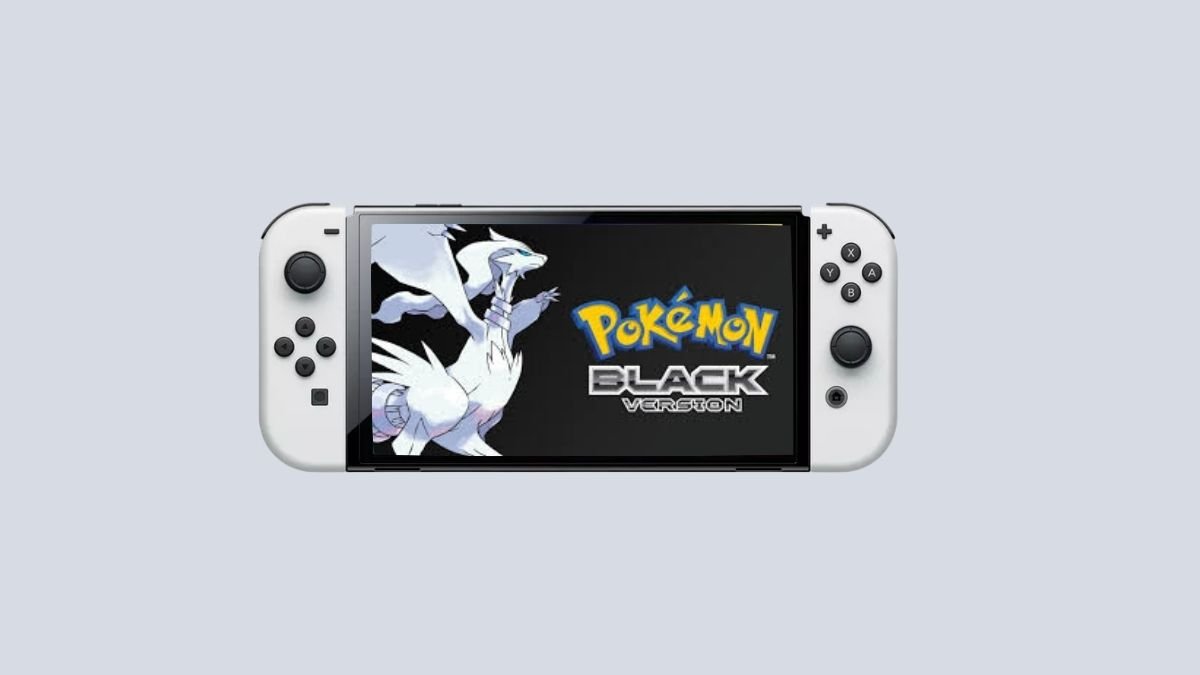
Pokémon Black – Revolutionary Fifth Generation Entry
A bold reinvention of the series with 156 new Pokémon, stunning animations, and the strongest narrative in the franchise. Metacritic 87/100.
Game Info
Verdict
A bold reinvention featuring compelling storytelling, modernized mechanics, and the largest new Pokémon roster in franchise history.
Pros
- Most cohesive narrative in Pokémon series with philosophically complex antagonists
- 156 new Pokémon exclusively available until post-game maintains freshness throughout campaign
- Triple and rotation battles introduce novel strategic depth beyond traditional single battles
- Exceptional musical composition elevates emotional resonance during key story moments
- Fully animated Pokémon sprites revolutionize visual presentation for Nintendo DS hardware
Cons
- Limited post-game content compared to later generations disappoints completionists
- New Pokémon designs divisive among fanbase; controversial aesthetic choices alienate traditionalists
- Nintendo Wi-Fi Connection shutdown (2014) eliminated online trading and competitive functionality
- Unova region criticized for linear structure and limited exploration incentives
- Absence of generational Pokédex breadth restricts team-building flexibility during campaign
Performance Notes
Smooth 60 FPS battle animations on Nintendo DS hardware. 30 FPS overworld exploration. No performance issues across DS, DS Lite, DSi, or 3DS backwards compatibility. Enhanced visual clarity on DSi and 3DS XL screens.
Pokémon Black launched in 2010 as one of the most divisive yet critically acclaimed entries in the franchise, earning universal praise for its ambitious design philosophy and storytelling depth. This Nintendo DS title introduced 156 new Pokémon—the largest debut roster in series history—forcing players to engage exclusively with fresh creatures during the campaign. Critics lauded the enhanced visual presentation, featuring fully animated Pokémon sprites and a narrative focused on philosophical questions about trainer and Pokémon relationships through the antagonist Team Plasma. The game’s critical reception established it as the third-best mainline Pokémon title according to professional reviewers, with many ranking it alongside Gold and Silver as narrative pinnacle. Players seeking a fresh take on monster-training RPGs with compelling storytelling and modernized battle systems will discover Black as a compelling alternative to the series’ earlier entries.
How to Play Pokémon Black
Pokémon Black follows the familiar turn-based monster-training formula while introducing modernized mechanics including rotation battles, triple battles, and animated combat sequences. The game guides you through Unova, a region inspired by New York City, as you capture new creatures and challenge gym leaders while uncovering Team Plasma’s dark schemes. The learning curve remains beginner-friendly despite enhanced complexity.
- Controls – Nintendo DS stylus and directional pad controls enable intuitive navigation and seamless menu navigation. First-time players adapt within 1–2 hours.
- Progression – Eight gym leaders and the Elite Four structure the main campaign across eight regions. Players typically reach the post-game after 30–35 hours.
- Combat/Mechanics – Triple battles and rotation mechanics add strategic depth. Speed stats now determine action order, rewarding offensive Pokémon while penalizing slower teams during competitive encounters.
- Tips – Level your team consistently with trainer battles; avoid overusing type-advantage early or the mid-game difficulty plateaus. Capture diverse Pokémon types since the dex forces new-generation only usage until post-game.
Who Should Play Pokémon Black
Pokémon Black appeals to narrative-focused RPG fans seeking deeper storytelling than typical monster-battling games. Competitive players value the polished battle mechanics and balanced team building. Franchise veterans appreciate the generation reset forcing engagement with unfamiliar creatures, while newcomers benefit from lower difficulty curves in early regions.
- Story Enthusiasts – Team Plasma raises genuine moral questions about Pokémon rights; N emerges as one of the series’ most complex antagonists with character development few monster trainers receive.
- Competitive Players – Flat Rule Wi-Fi battles establish foundation mechanics still relevant in modern competitive play. Triple and rotation battles enable strategic experimentation unavailable in later generations.
- Franchise Newcomers – The generation-exclusive approach removes franchise history burden; the 32-hour campaign accommodates casual and hardcore engagement equally.
- Skip if – Pokémon purists attached to Kanto/Johto rosters may resist forced new-generation usage. Limited post-game content compared to later 3DS titles disappoints completionists seeking 100+ hour experiences.
Pokémon Black Platform Performance
As a Nintendo DS exclusive released in 2010, Pokémon Black operates within DS hardware constraints, delivering smooth 60 FPS battle animations and 30 FPS overworld exploration. No performance compromises exist across all regional DS versions. The 3DS backwards compatibility ensures identical performance when played on newer Nintendo hardware through original cartridges.
| Platform | Resolution | FPS | Notes |
|---|---|---|---|
| Nintendo DS | 256×192 | 60 | Native hardware; no performance issues; enhanced visuals when played on DS Lite or DSi. |
| Nintendo 3DS | 256×192 | 60 | Full backwards compatibility; enhanced screen scaling improves sprite clarity significantly. |
| Nintendo DSi | 256×192 | 60 | Optimal visual fidelity; improved screen quality over original DS without emulation artifacts. |
| Emulation (PC) | 1280×960+ | 60 | DeSmuME and MelonDS enable upscaling; optional cheats available for competitive Pokémon generation. |
Pokémon Black System Requirements
Pokémon Black functions on any Nintendo DS, DS Lite, DSi, or DSi XL without special requirements beyond a game cartridge. Physical memory totals 16 MB RAM; storage capacity maxes at 512 MB cartridge size. No internet connection required for single-player campaigns, though Wi-Fi features mandate Nintendo Wi-Fi Connection (now discontinued) or local wireless trading.
| Component | Minimum | Recommended |
|---|---|---|
| Hardware | Nintendo DS (Original) | Nintendo DSi or 3DS |
| Storage | Game Cartridge | 512 MB cartridge |
| RAM | 4 MB system RAM | 16 MB internal |
| Connectivity | Local Wireless | Wi-Fi Connection (discontinued) |
| Display | DS Screen | 3DS XL Screen |
Similar Games to Pokémon Black
Monster-training RPGs offering comparable mechanics, narrative depth, and strategic combat exist across multiple platforms. Pokémon X and Y provide the 3D evolution while retaining fundamental gameplay loops. Digimon Cyber Sleuth delivers similar creature collection gameplay with detective narrative elements, appealing to those seeking alternative franchises. Dragon Quest Monsters and Yo-kai Watch introduce variant monster-collection mechanics through different thematic lenses while maintaining turn-based combat systems fundamental to Black’s appeal.
- Pokémon X and Y (3DS) – Same franchise’s transition to 3D; 87–88 Metacritic; trades Unova’s cohesive narrative for expanded Pokédex freedom and mega evolution mechanics.
- Digimon Cyber Sleuth (Multi-platform) – Detective mystery narrative wrapped around monster-training mechanics; turn-based combat with team-building depth; available on modern hardware.
- Pokémon Ultra Sun/Ultra Moon (3DS) – Spiritual successor with enhanced presentation; island trials replace gyms; similar 33-hour campaign with stronger post-game content.
- Dragon Quest Monsters Joker 3 Professional (3DS) – Monster-breeding mechanics emphasizing team composition; turn-based tactical combat; appealing alternative for series veterans.
Pokémon Black vs Competitors
Pokémon Black occupies a unique position within the franchise’s evolution, matching critical reception of contemporary RPGs while preceding the 3D technical leap. Comparative analysis reveals Black’s narrative depth surpassing most series entries, though post-game content trails later generations released on newer hardware with expanded development budgets and storage capacity for comprehensive endgame activities.
| Feature | Pokémon Black | Pokémon X/Y | Digimon Cyber Sleuth |
|---|---|---|---|
| Price (Launch) | $34.99 | $39.99 | $49.99 |
| Playtime (Main) | 32 hours | 30 hours | 45 hours |
| Multiplayer | Local/Wi-Fi | 3DS Online | Local only |
| Metacritic | 87 | 87–88 | 75 |
| Platform | Nintendo DS | Nintendo 3DS | PS Vita/Switch |
Pokémon Black Story and World
Pokémon Black establishes Unova as a detailed metropolitan region inspired by New York City, featuring urban areas, natural wilderness, and industrial zones. The narrative diverges sharply from series conventions by introducing philosophical antagonists questioning the ethics of Pokémon capture and training. Team Plasma leader N emerges as a complex protagonist whose ideals challenge player moral positioning throughout the 32-hour campaign. The game explores themes of friendship, freedom, and personal growth through character-driven storytelling rare in generation three through four entries. Musical composition elevates emotional resonance during key narrative moments, with compositions by Junichi Masuda and Shota Kageyama establishing iconic themes players remember decades after release.
Pokémon Black Multiplayer and Online
Pokémon Black integrated online functionality through Nintendo Wi-Fi Connection, enabling asynchronous trading, real-time battles, and global competitions. The Pokémon Global Link website synced save data for accessing Dream World mechanics—a web-based hub enabling Pokémon capture with hidden abilities. The Entralink enabled local multiplayer for wireless trading and co-operative multiplayer challenges, supporting up to four players. Xtransceiver video chat with doodling features enabled friend communication during trades. Competitive Wi-Fi battles supported both unrestricted and flat-rule rulesets, establishing foundation mechanics for future competitive formats.
- Random Match – Battle random players worldwide without prior friend codes; matchmaking skill levels approximately balanced.
- Friend Code Trading – Exchange Pokémon with registered friend codes; GTS-equivalent functionality via Dream World integration.
- Wi-Fi Battles – Single, double, triple, and rotation battle formats; no time limits; Pokémon level 50 standard for flat rules.
- Cross-Play – Local wireless enabled physical proximity battles; no cross-generation compatibility with generation four titles.
Pokémon Black DLC and Expansions
Pokémon Black received no traditional DLC due to Nintendo DS cartridge limitations and the absence of digital distribution infrastructure in 2010–2011. Post-launch support centered on Wi-Fi distributions including legendary Pokémon (Reshiram, Zekrom, Victini) obtained through Nintendo events. Dream World integration continuously provided new hidden-ability Pokémon requiring online synchronization. The Pokéwalker pedometer accessory (compatible with HeartGold/SoulSilver) could transfer creatures into Black, though no Black-exclusive Pokéwalker versions released. Pokémon Black 2 and White 2 (2012) served as sequels rather than expansions, presenting enhanced experiences with additional Pokémon availability.
- Victini Distribution – Event-exclusive legendary; Wi-Fi download from March 2011 onward; enables special Pokémon games via event flag.
- Dream World Pokémon – Rotating weekly releases of Pokémon with hidden abilities; requires web-based Pokémon Global Link account.
- Liberty Ticket – Event item enabling Victini encounter in Liberty Garden tower post-game; Wi-Fi distribution limited-time availability.
- Free Updates – Bug fixes and Wi-Fi stability patches released throughout 2011; no feature expansion patches due to cartridge storage constraints.
Pokémon Black Community and Support
Pokémon Black fostered dedicated communities across Serebii.net, Bulbapedia, and Reddit’s r/pokemon subreddit, enabling collective knowledge-sharing regarding Pokédex completion, competitive team building, and optimal breeding strategies. Game Freak maintained official forums and social media communication channels disseminating event information and patch updates. Fan wikis documented comprehensive mechanics, location guides, and EV training optimization guides still consulted by players decades later. Modding communities emerged for ROM hacking, enabling custom region creation, narrative modification, and quality-of-life improvements. Official tournaments and Nintendo-sanctioned events provided competitive outlets for players seeking structured battling formats beyond random Wi-Fi matches.
- Official Communities – Nintendo forums and Pokémon.com hosted event registration; no active dedicated community forums post-Wi-Fi Connection shutdown.
- Reddit/Discord – r/pokemon contains historical discussion archives; dedicated Black/White subreddits (r/BlackandWhite) maintain active communities; Discord servers facilitate current-generation trading.
- Mod Support – ROM hacking enabled through tools like PokéScript; Unova region remakes create modern graphics interpretations; limited native modding due to cartridge architecture.
- Updates – Wi-Fi services concluded on May 20, 2014; no active development roadmap post-shutdown; emulation communities maintain online servers enabling continued multiplayer access.