
 39
39
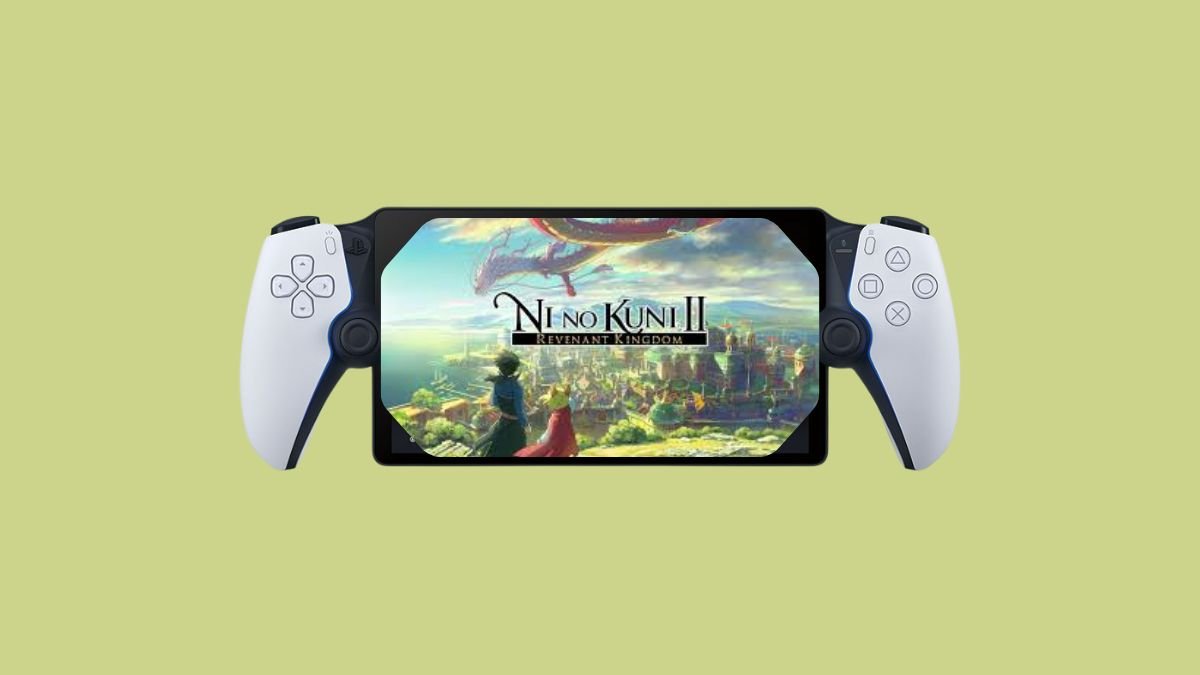
Ni no Kuni II: Revenant Kingdom – Action RPG Magic
A gorgeous action RPG blending real-time combat, kingdom building, and anime-inspired visuals into an adventure spanning 30-80 hours. Metacritic: 84.
Game Info
Verdict
A breathtaking action RPG that celebrates beauty and charm, offering 30-80 hours of accessible adventure with kingdom-building depth.
Pros
- Stunning anime-inspired visuals with Studio Ghibli aesthetic influence throughout
- Real-time action combat balances accessibility with mechanical variety
- Kingdom building mechanic provides satisfying meta-progression layer
- Engaging ensemble cast with meaningful character interactions
- 30-50 hour campaign respects player time while allowing 80+ hour completion
- Beautiful soundtrack by Joe Hisaishi elevates emotional moments
Cons
- Simplified difficulty scaling causes enemy balance issues at higher levels
- Repetitive quest design requires excessive fetch tasks for completion
- Limited voice acting creates inconsistent dialogue presentation
- Difficulty spikes late-game demand excessive grinding
- Story simplicity underwhelms players seeking complex narratives
Performance Notes
PS4 Pro achieves 1080p at 60FPS in standard mode or 4K at 30FPS in quality mode. Standard PS4 maintains 1080p/30FPS. PC scales to 4K on high-end hardware. Xbox Series X (2023 update) reaches 4K/60FPS. Nintendo Switch delivers 1080p docked, 720p portable. All versions feature stable performance except PS4 standard with occasional congestion drops.
Ni no Kuni II: Revenant Kingdom arrives as Level-5’s ambitious follow-up to the beloved original, delivering a complete departure from its predecessor’s strategic foundation in favor of real-time action gameplay. Released in March 2018 for PlayStation 4 and PC, with subsequent ports to Nintendo Switch and Xbox consoles, Revenant Kingdom establishes itself as one of gaming’s most visually striking JRPGs. The game combines enchanting anime aesthetics inspired by Studio Ghibli with accessible yet mechanically varied combat systems, complimented by an engaging kingdom-building mechanic that rewards player progression beyond battle. This review examines gameplay flow, technical performance across platforms, and whether the substantial genre shift from the original delivers sufficient value to warrant the investment of 30 to 80 hours of gameplay.
How to Play Ni no Kuni II: Revenant Kingdom
Revenant Kingdom abandons the turn-based command structure of its predecessor, instead embracing real-time action combat where players directly control a party member while issuing tactical commands to allies. Party members automatically attack while players manage defensive positioning, ability timing, and resource management through an intuitive menu system accessible mid-battle. Overworld navigation occurs in third-person perspective with seamless dungeon integration, eliminating separate battle screens entirely. The kingdom-building mechanic provides meta-progression and resource generation independent of combat.
- Controls – Intuitive action controls with dodge mechanics, light and heavy attacks, and magic spells mapped to accessible buttons. Learning curve remains gentle for newcomers while offering sufficient complexity for veterans. Controller strongly recommended over keyboard.
- Progression – Story advances through story-driven battles and character recruitment through side quests. Kingdom expansion unlocks via citizen recruitment, which provides passive bonuses and unlocks new story progression gates. Experience gains reward combat engagement and optional skirmish battles.
- Combat & Mechanics – Real-time action battles with elemental weaknesses, ability cooldowns, and support creature (Higgledy) assistance. Party members can be freely swapped mid-battle. Difficulty settings significantly impact challenge and resource consumption.
- Tips – Play story-focused playthroughs on normal difficulty to avoid excessive grinding. Engage kingdom building consistently to unlock story progression. Recruit diverse citizen types to maximize kingdom bonuses. Elemental weakness exploitation trivializes difficulty if overused.
Who Should Play Ni no Kuni II: Revenant Kingdom
This game appeals to players seeking beautifully presented action RPGs with accessible mechanics and charming narratives. Studio Ghibli’s artistic influence attracts fans of anime and stylized game design. The kingdom-building layer attracts players seeking progression mechanics beyond combat. The story’s lighthearted tone and accessible combat welcome genre newcomers while maintaining sufficient complexity for veterans seeking something different.
- Studio Ghibli Enthusiasts – The anime-inspired visuals and whimsical tone capture that studio’s aesthetic charm, even without direct Ghibli involvement in this sequel. Beautiful environments reward exploration.
- Action RPG Players – Real-time combat mechanics will appeal to those seeking something faster-paced than traditional turn-based systems. Elemental mechanics and positioning matter, but button-mashing remains viable on normal difficulty.
- Kingdom Building Fans – The city development minigame provides satisfying progression loops separate from combat. Watching your kingdom grow from humble beginnings offers emotional investment.
- Skip if – Turn-based combat purists frustrated by real-time action should explore alternatives. Completionists may find the 100+ hour playtime excessive for fetch quest density. Those demanding complex narratives may find the story simplistic.
Ni no Kuni II: Revenant Kingdom Platform Performance
Platform performance varies significantly across hardware generations. PlayStation 4 Pro delivers the most consistent experience with smooth 1080p/60FPS in standard mode. Standard PS4 operates at 1080p/30FPS with occasional drops in crowded areas. PC performance scales substantially with hardware investment. Nintendo Switch and Xbox versions receive solid optimization despite hardware limitations. All versions maintain stable frame rates during critical story moments.
| Platform | Resolution | FPS | Notes |
|---|---|---|---|
| PC (High-end) | 4K Unlocked | 60+ | Scales beautifully with GPU; minimal visual impact on frame rate |
| PlayStation 4 Pro | 1440p / 1080p | 60/30 | Standard mode prioritizes performance; 4K mode sacrifices fluidity |
| PlayStation 4 | 1080p | 30 | Occasional frame drops in dense areas; acceptable for story mode |
| Xbox Series X | 4K | 60 | 2023 update elevates experience significantly; best console version |
Ni no Kuni II: Revenant Kingdom System Requirements
PC requirements remain approachable for mid-range systems, though 4K/60FPS demands modern hardware. Minimum specifications enable 1080p/30FPS adequate for story engagement. Recommended specs target 1440p/60FPS or 4K/30FPS gameplay. The game does not demand cutting-edge hardware, prioritizing art direction and stable frame rates over raw technical fidelity. Storage requirements are moderate at 40GB, manageable on most modern drives.
| Component | Minimum | Recommended |
|---|---|---|
| OS | Windows 7 64-bit | Windows 10 64-bit |
| CPU | Intel Core i5-4460 / AMD FX-6300 | Intel Core i7-3770 / AMD FX-8350 |
| GPU | NVIDIA GTX 750 Ti / AMD R7 260X (2GB VRAM) | NVIDIA GTX 970 / AMD R9 series (3GB VRAM) |
| RAM | 4 GB | 8 GB |
| Storage | 40 GB HDD | 40 GB SSD Recommended |
Similar Games to Ni no Kuni II: Revenant Kingdom
Several games offer comparable blends of beautiful presentation, action gameplay, and kingdom-building mechanics. Dark Cloud 2 stands as the spiritual predecessor with similar city development focus. The Tales series provides action combat alternatives with comparable narrative accessibility. Dragon Quest XI offers epic scope with turn-based alternative. Community recommendations frequently include Rogue Galaxy and Ys series entries for combat similarities, though kingdom building varies significantly across titles.
- Dark Cloud 2 – Spiritual predecessor featuring similar kingdom-building focus combined with action dungeon crawling; more dated presentation but stronger city development mechanics.
- Tales of Berseria – Action JRPG with real-time combat and character-driven narrative; comparable playtime and mechanical accessibility without kingdom-building focus.
- Dragon Quest XI – Epic JRPG adventure with turn-based combat alternative; comparable scope and emotional beats with stronger narrative depth.
- Rogue Galaxy – Action RPG with similar aesthetic charm and combat flow; developed by the same studio with spiritual connection to Ni no Kuni design philosophy.
Ni no Kuni II: Revenant Kingdom vs Competitors
Ni no Kuni II distinguishes itself through exceptional visual presentation and kingdom-building mechanics rarely seen in modern action RPGs. Its 30-50 hour main story completion rivals shorter action games while offering 80+ hours for completionists. The price point reflects industry standard JRPG positioning, with frequent sales making the value proposition even stronger. Compared to turn-based alternatives, the real-time action system offers faster-paced engagement without sacrificing tactical elements. The lack of challenging difficulty and streamlined mechanics appeal to broader audiences than hardcore action RPG enthusiasts.
| Feature | Ni no Kuni II | Tales of Berseria | Dragon Quest XI |
|---|---|---|---|
| Price | $59.99 | $49.99 | $59.99 |
| Campaign Length | 30-50 hours | 40-60 hours | 80-120 hours |
| Combat Type | Real-time Action | Real-time Linear Motion Battle | Turn-based Command |
| Kingdom Building | Yes (Central Mechanic) | No | Limited Side Activity |
| Metacritic | 84 | 76 | 91 |
Ni no Kuni II: Revenant Kingdom Story & World
The narrative follows Evan Pettiwhisker Tildrum, a young king dethroned through political intrigue, who embarks on a quest to forge new alliances, build his own kingdom, and save the world from encroaching darkness. Rather than world-ending apocalypse stakes, the story emphasizes hope, friendship, and political reconciliation. Evan encounters allies from distinct kingdoms, each with unique aesthetics, cultures, and character arcs. The world design encourages exploration through beautifully realized environments—from whimsical forests to industrial cities—each telling visual stories without excessive exposition. Without spoiling narrative details, the finale delivers emotionally resonant conclusions while maintaining the series’ signature whimsical tone. Voice acting is selective, limiting dialogue delivery to key story moments, which some players appreciate for pacing while others critique as inconsistent.
Ni no Kuni II: Revenant Kingdom Multiplayer & Online
Ni no Kuni II focuses entirely on single-player experience without competitive or cooperative multiplayer modes. The game design emphasizes personal narrative progression and individual decision-making throughout the adventure. Post-launch updates concentrate on balance adjustments, performance improvements, and bug fixes rather than live service content. The absence of online mechanics simplifies progression systems while ensuring no pay-to-win mechanics undermine the experience. Kingdom building remains entirely player-driven with no time-gating mechanics punishing offline play.
- Single-Player Campaign – Fully featured 30-50 hour main story with additional 80+ hours available through completionist pursuits and secondary activities.
- Kingdom Management – Develop your kingdom through citizen recruitment, building construction, and resource management occurring parallel to story progression. Kingdom level unlocks cosmetic rewards and stat bonuses.
- Skirmish Battles – Large-scale army battles occur via isometric tactical gameplay distinct from primary combat system; entirely optional but necessary for completionists.
- No Online Features – Cross-play not applicable; entirely offline progression system across all platforms.
Ni no Kuni II: Revenant Kingdom DLC & Expansions
Post-launch DLC includes cosmetic costume packs, special equipment, and additional scenarios featuring guest appearances. The free DLC rotation includes occasional story missions and side quests. The complete edition released consolidates base game and select DLC. Performance updates for Switch and Xbox versions arrived years after initial release, significantly improving technical stability. The Season Pass was reasonably priced at $19.99 (now often bundled), providing cosmetic and mechanical additions without gating core story content behind paywalls.
- Cosmetic DLC – Multiple costume packs ($2.99-$4.99 each) featuring alternative outfits for party members; purely cosmetic without mechanical impact.
- Story Scenarios – Limited post-game story episodes featuring alternate perspectives; priced individually at $4.99 or included in bundles.
- Equipment Packs – Special weapons and armor sets providing minor stat bonuses; available at launch and through post-launch updates.
- Free Updates – Periodic balance adjustments, performance improvements, and quality-of-life enhancements released without cost.
Ni no Kuni II: Revenant Kingdom Community & Support
The active community maintains engagement across Reddit, Discord, and official forums with steady discussion of gameplay mechanics and story analysis. Developer Level-5 provides occasional balance updates and patches addressing reported technical issues. Community wikis document all recruitment locations, stat distributions, optimal builds, and quest solutions. Fan art communities celebrate the game’s visual presentation through artwork and cosplay. The community remains supportive of newcomers despite the game’s age, with helpful guides readily available for players discovering the title in 2024-2025.
- Official Forums – Bandai Namco maintains moderated forums for patch notes, technical support, and occasional developer communication regarding balance and reported issues.
- Reddit Community – r/Ni_no_Kuni hosts 80,000+ members discussing strategy, quest solutions, and story interpretations with active newcomer support threads.
- Community Wikis – Comprehensive fan-maintained wikis document every recruitment location, stat distribution, optimal equipment, and quest guide; exceptionally detailed and well-maintained.
- Patch Support – While development has concluded, critical bug fixes receive deployment. Server infrastructure for online features remains stable across all platforms.