
 34
34
My Hero One’s Justice 2 – Chaotic arena fighter for anime fans
My Hero One's Justice 2 is a flashy 3D arena fighter with a big My Hero Academia roster, scoring around 6.5/10 overall from critics.
Game Info
Verdict
Lively and faithful to My Hero Academia, My Hero One's Justice 2 delivers enjoyable chaos for fans but lacks the depth of top-tier fighters.
Pros
- Large roster covering many heroes and villains from multiple seasons of My Hero Academia
- Accessible controls that let newcomers perform flashy sequences quickly
- Destructible arenas and Plus Ultra animations create satisfying visual impact
- Variety of offline modes including story, missions, and arcade-style challenges
- Solid local versus play for casual sessions with friends or family
- Frequent DLC character additions broaden team-building options
- Lightweight PC requirements make high frame rates easy to reach
Cons
- Combat system plateaus quickly for experienced fighting game players
- Story retelling can feel rushed or repetitive for fans who know the anime well
- Online experience depends heavily on connection quality and active player base
- Limited tutorial depth for advanced mechanics or matchup knowledge
- Presentation and mechanics change little compared with the first game
Performance Notes
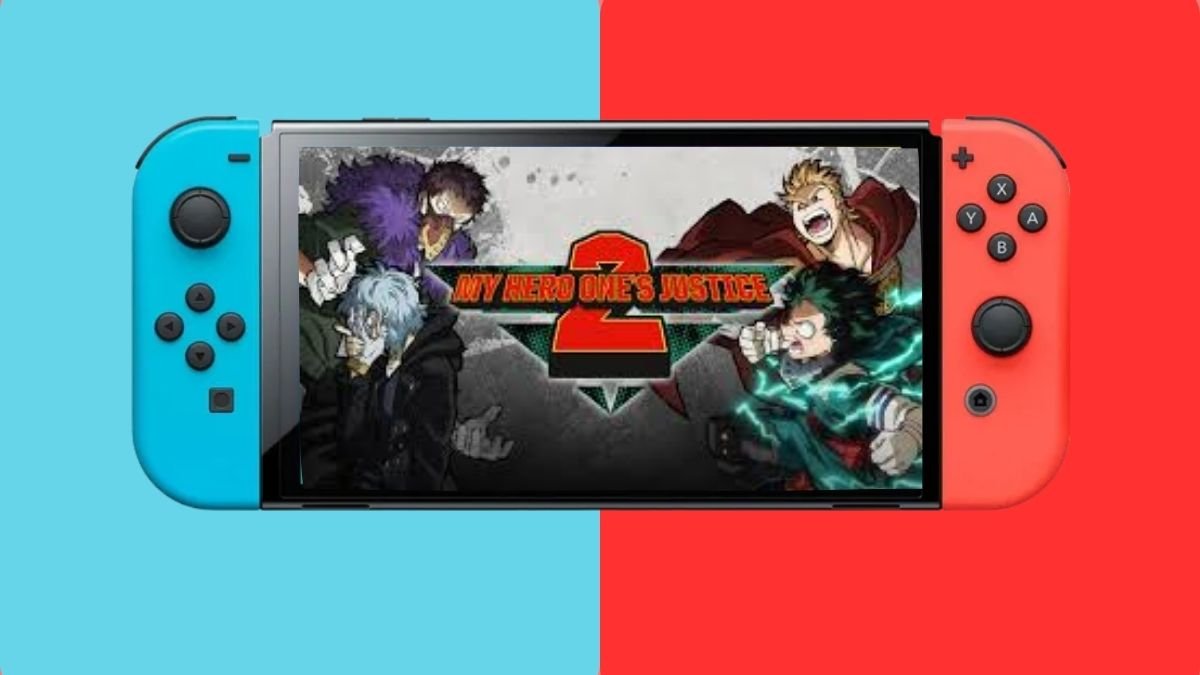
On PC and current consoles, My Hero One's Justice 2 generally maintains 60 fps at 1080p with modest hardware demands. The Nintendo Switch version targets 30 fps with reduced visual effects and occasional drops in large stages, remaining serviceable but noticeably less fluid than other platforms.
My Hero One’s Justice 2 builds on the first game as a 3D arena fighter based on My Hero Academia, expanding the roster and refining combat while keeping a familiar structure. Critics praised its faithful presentation and energetic battles but noted limited depth and modest innovation, with scores hovering around the high‑60s on Metacritic and OpenCritic. This review explains how the systems work, who it suits, and how it compares to other anime fighters.
How to Play My Hero One’s Justice 2
My Hero One’s Justice 2 is a tag-based 3D fighter: choose a main hero or villain plus sidekicks, then dash, jump, and wall-run around destructible arenas while chaining normals, special moves, and Plus Ultra finishers to overwhelm opponents.
- Controls – Simple inputs map basic attacks, quirk skills, jumps, dashes, and blocks to face buttons, with assists and Plus Ultra supers on shoulder buttons, keeping execution approachable.
- Progression – Story, mission, and arcade modes unlock customization items, gallery entries, and currency, while online play raises separate ranks without altering character balance.
- Combat/Mechanics – The core loop revolves around reading guard breaks, using armored attacks, extending juggles with assists, and managing meter for Plus Ultra supers in explosive, short rounds.
- Tips – Learn one character’s basic strings, practice calling sidekicks to cover gaps, avoid spamming unsafe armored moves, and use training mode recording to understand common pressure sequences.
Who Should Play My Hero One’s Justice 2
My Hero One’s Justice 2 mainly suits fans of the anime who want playable versions of favorite heroes and villains in a light, spectacle-driven fighter rather than a highly technical competitive title.
- Player 1 – My Hero Academia viewers eager to reenact story arcs and dream matchups using an expansive cast pulled from multiple seasons.
- Player 2 – Casual fighting game players who enjoy quick, chaotic matches with straightforward inputs and dramatic super animations.
- Player 3 – Families or groups seeking local versus play where beginners can still have fun through assists and cinematic moves.
- Skip if – You want deep competitive mechanics, meticulous balance, or long single-player campaigns beyond anime retellings and challenge boards.
My Hero One’s Justice 2 Platform Performance
My Hero One’s Justice 2 runs best on PC, PlayStation 4, and Xbox One, where it targets 60 fps, while Switch versions trade fluidity for portability at a lower frame rate and reduced effects.
| Platform | Resolution | FPS | Notes |
|---|---|---|---|
| PC (High) | 1080p/4K | 60 | Reaches a stable 60 fps on modest hardware at 1080p; higher resolutions remain smooth with modern GPUs and minimal stutter. |
| PS4 / PS5 BC | 1080p | 60 | Targets 60 fps with rare dips during heavy effects; PS5 backward compatibility tightens frame pacing further. |
| Xbox One / Series | 1080p | 60 | Similar performance to PS4, with Series consoles providing improved stability and faster loading via SSD. |
| Switch | 1080p/720p | 30 | Runs at 30 fps docked and handheld with lowered effects; occasional slowdowns in busy stages but generally playable. |
My Hero One’s Justice 2 System Requirements
On PC, My Hero One’s Justice 2 is relatively light, running well on older CPUs and entry-level GPUs, though using a modern graphics card ensures consistent performance at higher resolutions.
| Component | Minimum | Recommended |
|---|---|---|
| OS | Windows 7 64‑bit | Windows 10 64‑bit |
| CPU | Intel Core i5‑750 or AMD Phenom II X4 940 | Intel Core i5‑3470 or AMD FX‑6300 |
| GPU | Nvidia GeForce GTX 460 / AMD Radeon HD 6870 | Nvidia GeForce GTX 660 / AMD Radeon HD 7870 |
| RAM | 4 GB | 4 GB |
| Storage | 12 GB | SSD Recommended |
Similar Games to My Hero One’s Justice 2
Players drawn to My Hero One’s Justice 2 often enjoy other anime arena fighters that emphasize faithful adaptation and visual flair over traditional competitive fighting depth.
- Naruto Shippuden Ultimate Ninja Storm 4 – Similar cinematic arena battles with large-stage destruction but tied to Naruto’s storyline and mechanics.
- Demon Slayer: The Hinokami Chronicles – Another anime adaptation with streamlined systems and impressive presentation focused on Demon Slayer arcs.
- Dragon Ball FighterZ – More demanding 2D fighter with stronger competitive scene and tighter mechanics set in the Dragon Ball universe.
- Jump Force – Crossover arena brawler with a wide Shonen Jump roster, though critical reception for mechanics and visuals was weaker.
My Hero One’s Justice 2 vs Competitors
Within anime fighters, My Hero One’s Justice 2 sits between casual and competitive experiences, offering more depth than some licensed titles but less refinement and balance than leading fighting games.
| Feature | My Hero One’s Justice 2 | Demon Slayer: The Hinokami Chronicles | Dragon Ball FighterZ |
|---|---|---|---|
| Price | [$39.99] | [$59.99] | [$59.99] |
| Playtime | 15–40 hours | 12–30 hours | 30–100+ hours |
| Multiplayer | Yes | Yes | Yes |
| Metacritic | [~68] | [~79] | [~87] |
My Hero One’s Justice 2 Story and World
The story mode follows key arcs from My Hero Academia’s later seasons, presenting them as a blend of comic-style panels, cutscenes, and battles. Players alternate between heroic and villain perspectives, filling in background details for major clashes. Stage design mirrors show locations with collapsing buildings, school grounds, and city streets, reinforcing the sense of smashing through familiar scenes while remaining focused on quick, fight-driven storytelling.
My Hero One’s Justice 2 Multiplayer and Online
Multiplayer support spans local and online play, offering casual and ranked options whose quality depends heavily on connection stability and matchmaking activity on each platform.
- Local Versus – Two players battle on a single system with full access to the roster and customizations, ideal for quick sessions or practice.
- Ranked Online – Matchmaking pairs opponents by rank, allowing players to test skills and climb while facing common strategies and character picks.
- Player Matches – Unranked lobbies enable friends or strangers to fight without ladder pressure, often used for learning new characters.
- Cross-Play – No cross-platform play; online communities are separated by system such as Switch, PlayStation, Xbox, or Steam.
My Hero One’s Justice 2 DLC and Expansions
My Hero One’s Justice 2 received extensive downloadable content, mainly focused on additional fighters and cosmetic sets, which extended variety for fans who enjoy experimenting with multiple characters.
- DLC Characters – Packs add fighters like Hawks, Mei Hatsume, Gentle and La Brava, Present Mic, Hitoshi Shinso, and others, each typically sold at budget character-pack pricing.
- Costume Sets – Bundles such as Cheerleader, Celebration Wear, Weekend Clothes, and Villainous Wear introduce themed outfits across the cast.
- Season Passes – Two passes bundle character packs and bonus items, offering a lower combined cost compared with buying individual add-ons.
- Free Updates – Balance tweaks, minor quality-of-life changes, and occasional bug fixes arrived through patches, improving stability and variety over time.
My Hero One’s Justice 2 Community and Support
The community lives across social platforms where players share combo routes, tier discussions, and character tech, while official support delivered periodic patches and promotional events tied to anime seasons.
- Official Forums – Bandai Namco channels and news posts highlight patch details, DLC announcements, and promotional tie-ins.
- Reddit/Discord – Fan hubs organize tournaments, learning lobbies, and character-discussion channels for both casual and competitive players.
- Mod Support – On PC, unofficial mods focus on cosmetic changes and simple tweaks; there is no formal mod framework.
- Updates – Post-launch patches refined balance, improved online stability somewhat, and supported the release cadence of additional fighters.