
 32
32
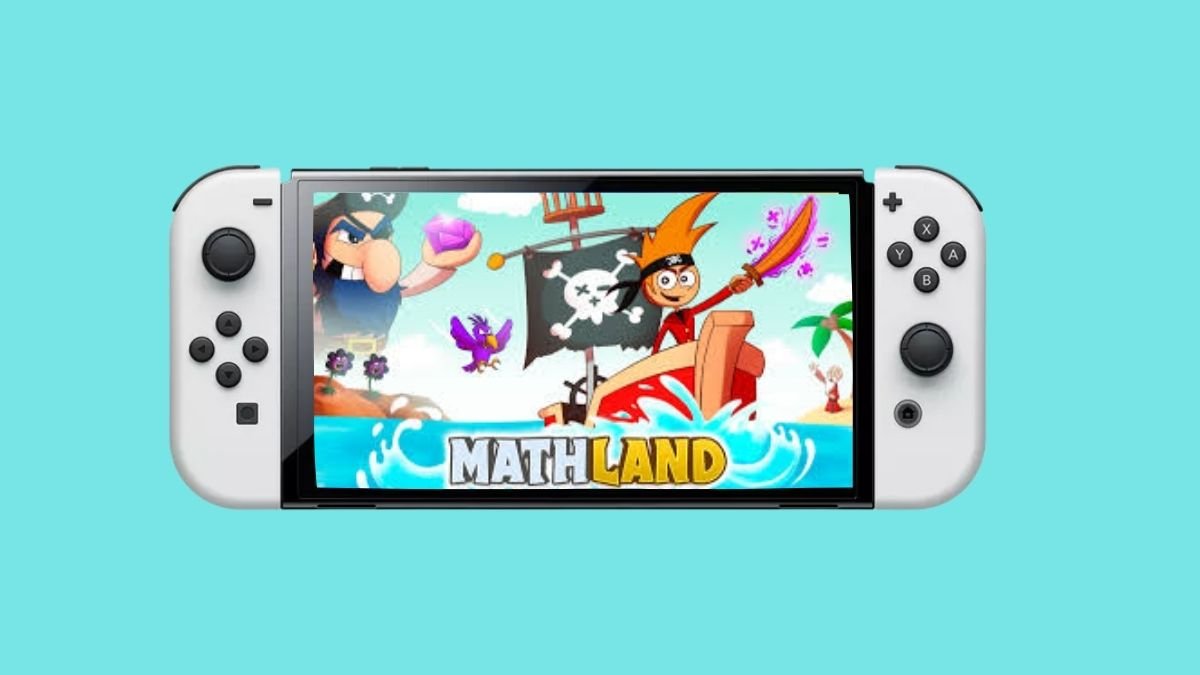
MathLand – Pirate Math Adventure Game
An engaging educational adventure that disguises math practice in pirate exploration. MathLand balances fun gameplay with genuine learning, earning praise for making math appealing to pre-teens. Rated 6.8/10 by critics.
Game Info
Verdict
Smart edutainment that genuinely entertains while teaching math; ideal for struggling learners who need engagement.
Pros
- Successfully blends education and entertainment without sacrificing either
- Age-adaptive difficulty accommodates learners from 6 to 14 years old
- Affordable price ($5.99-$6.99) with no hidden costs or additional transactions
- Pirate theme integrates naturally into gameplay progression
- Excellent accessibility for younger players; respawning at checkpoints maintains engagement
- Cross-platform availability (Switch, PlayStation, Xbox, PC, iOS, Android)
- Minimal file size (133 MB) makes it accessible on almost any device
Cons
- Limited gameplay depth beyond educational mechanics; controls feel imprecise in platforming sections
- Timed math challenges may create anxiety in some younger learners
- Short playtime (3-5 hours) limits long-term replay value for older children
- No post-game content or additional challenges after completing math mastery
- Lacks narrative depth and character development
- No voice acting or substantial dialogue diminishes immersion
Performance Notes
Runs at 30 FPS on Nintendo Switch (1080p docked, 720p handheld) with stable performance. PlayStation 5 and Xbox Series X support 60 FPS with HDR10. Minimal 133 MB footprint; negligible load times across all platforms. Optimized for low-end PC systems.
MathLand combines two typically opposed goals: making mathematics actually fun and delivering a mechanically competent adventure game. Released initially on mobile platforms in 2017, it found its audience on Nintendo Switch in February 2020 before expanding to PlayStation, Xbox, and PC in May 2023. Unlike edutainment failures that sacrifice gameplay for educational messaging, MathLand genuinely succeeds at both. You navigate a pirate world solving math problems to unlock adventure levels, earning spyglasses through timed arithmetic challenges and collecting gems across five thematic islands. This review evaluates whether MathLand’s blend of entertainment and education delivers real value for the target demographic of ages 6 to 14.
How to Play MathLand
MathLand alternates between exploration platforming and timed mathematics challenges. The game asks your child’s age at startup, then adapts difficulty accordingly. Gameplay flows in two directions: earn spyglasses by solving math problems, then use spyglasses to unlock island levels where you collect coins, avoid obstacles, and solve additional math puzzles to progress toward treasure chests. The on-foot exploration is straightforward isometric platforming with jump mechanics; the ship sections offer simplified sailing-puzzle gameplay where you navigate between islands and collect hidden coins.
- Controls – Move with directional buttons; jump with assigned button; attack/interact with another button; navigate menus intuitively; simple enough for age 5+
- Progression – Solve time-limited math problems in the spyglass challenge menu to earn spyglasses, which unlock adventure levels; complete levels by collecting coins and reaching the treasure chest
- Math Mechanics – Answer addition, subtraction, multiplication, division, and comparison questions; select answer cards from bottom of screen; correct answers award time bonuses; limited time to complete challenges
- Tips – Practice math challenges in coin-free levels first to learn patterns; adjust age difficulty setting if challenges feel too hard; take breaks between timed challenges to avoid frustration
Who Should Play MathLand
MathLand targets children struggling with traditional math homework who engage more with games than workbooks. The game works best for ages 6 to 12, though the age-difficulty system accommodates learners through age 14. Parents seeking educational entertainment and children who enjoy pirate themes will find most value. Older teens and adults will complete MathLand quickly and find limited replay value.
- Elementary School Learners – Ages 6 to 11 building foundational arithmetic skills (addition, subtraction, multiplication tables, division)
- Struggling Math Students – Children avoiding math homework who need engaging motivation to practice basic operations in low-pressure environments
- Adventure Game Fans – Young players drawn to pirate themes and exploration who tolerate math as the unlock mechanism
- Skip if – You expect substantial gameplay depth, voice acting, or narrative; prefer pure entertainment without educational elements; have a teenager comfortable with traditional math practice
MathLand Platform Performance
MathLand released across multiple platforms with consistent optimization. The Nintendo Switch version maintains stable performance in both handheld and docked modes. PlayStation and Xbox versions support enhanced features like HDR10 and optimized graphics on Series X/S hardware. PC (Steam) version offers standard performance scaling. File size remains modest at 133 MB, making installation quick on any platform. Load times are negligible across all versions.
| Platform | Resolution | FPS | Notes |
|---|---|---|---|
| Nintendo Switch (Docked) | 1080p | 30 | Stable performance; recommended for extended play sessions |
| Nintendo Switch (Handheld) | 720p | 30 | Perfect for portable math practice; full gameplay experience |
| PlayStation 5 | 4K | 60 | Optimized for next-gen; supports HDR10 and adaptive triggers |
| Xbox Series X|S | 4K/1440p | 60 | Smart Delivery enabled; optimized for Series X performance |
MathLand System Requirements
MathLand has minimal system requirements across all platforms. The 133 MB file size is one of the smallest educational games available, making it accessible on older hardware. Mobile versions (iOS/Android) require minimal storage space. PC version runs on nearly any Windows or Mac computer from the past decade without graphics card requirements.
| Component | Minimum (PC) | Recommended (PC) |
|---|---|---|
| OS | Windows 7 or newer | Windows 10/11 64-bit |
| Processor | Intel Core 2 Duo era (2007+) | Intel i3 or AMD equivalent |
| GPU | Integrated graphics acceptable | Dedicated GPU (GeForce GTX 750 or equivalent) |
| RAM | 1 GB | 4 GB |
| Storage | 150 MB available space | SSD for faster loading (optional) |
Similar Games to MathLand
Educational gaming is crowded with inferior titles, making MathLand’s execution noteworthy. Competitors range from tablet-based games like Times Table Rockstars (pure drilling without gameplay) to classic point-and-click edutainment like Freddi Fish (outdated technology). Few games successfully balance entertainment and education at MathLand’s quality level. Nearby alternatives include Brain Training games and the classic Mario Teaches Typing series.
- Times Table Rockstars – Pure multiplication drilling via arcade format; minimal story or world; popular in schools but less engaging for home play
- Freddi Fish Series – Beloved point-and-click adventure with educational elements; superior narrative and humor; outdated graphics and limited platform availability
- Brain Training (Nintendo) – Puzzle-based mental exercises; broader skill focus beyond math; lacks coherent world and narrative context
- Mario Teaches Typing – Text-entry education disguised in platformer; excellent integration of skill and gameplay; typing less relevant than mathematics in modern education
MathLand vs Competitors
MathLand’s competitive advantage centers on integration: math challenges feel organic to progression rather than forced gates. Pricing is aggressive at $5.99 to $6.99 across platforms, undercutting similar edutainment titles. The game includes age-adapted difficulty across arithmetic domains, whereas competitors often focus narrowly on multiplication tables. MathLand’s weakness is limited post-completion content; once children master all math levels, replay motivation drops. Competitors like Brain Training offer modular play encouraging ongoing engagement.
| Feature | MathLand | Times Table Rockstars | Brain Training |
|---|---|---|---|
| Price | $5.99-$6.99 | $7.99+ (subscription model) | $49.99 (full game) |
| Gameplay Length | 3-5 hours main story | Unlimited (endless drilling) | 10-20 hours varied content |
| Math Topics | Addition, subtraction, multiplication, division, comparisons | Multiplication tables focused | Math mini-games only portion |
| Age Range | 6-14 years | 5-13 years | 5+ years |
| Adventure Elements | Yes (pirate story and exploration) | No (pure drilling) | Limited (menu-based) |
MathLand Story and World
MathLand’s narrative is simple but functional. An evil pirate named Max has stolen sacred gems and cursed five islands with obstacles and traps. You play as Ray, a heroic pirate tasked with recovering the gems and lifting the curse. Each island represents a mathematical domain: Addition Island, Subtraction Island, Multiplication Island, Division Island, and Comparison Island. The pirate theme integrates naturally; you sail between islands, dodge cannonballs, navigate temple traps, and face quirky characters like bewitched parrots and carnivorous plants. Environmental storytelling through coin collectibles teaches pirate history without breaking gameplay flow. The world feels cohesive despite a light narrative; it serves the educational purpose without demanding attention away from math practice. The overall tone is lighthearted and appealing to the target 6-12 age group, with cute character designs and non-threatening enemy encounters.
MathLand Multiplayer and Online
MathLand is single-player only with no competitive or cooperative multiplayer modes. Online features are limited to achievement tracking on console platforms. The game includes no social connectivity, leaderboards, or multiplayer challenges. This design choice simplifies development and keeps focus on individual pacing for educational goals. Parents can observe their child playing locally but cannot compete or collaborate in real-time.
- Single-Player Campaign – Entirely story-driven solo experience; no shared sessions or competitive modes
- Achievement Tracking – Console versions (PlayStation, Xbox) include standard achievement lists; no online leaderboards
- Shared Device Play – Multiple children can use the same console by progressing separately through individual playthroughs
- No Cross-Play – No online connectivity, cloud saves, or cross-platform progression between versions
MathLand DLC and Expansions
MathLand has received no DLC or paid expansions since launch. The game ships with all five math-themed islands and educational content at full price. Free updates have been modest, focusing on bug fixes and occasional balance adjustments. No season pass, cosmetic items, or additional content packs exist. The game represents a complete, finished product without post-launch monetization strategy.
- No Paid DLC – All 25+ levels and five math topics included at purchase; no content locked behind additional paywalls
- Free Updates – Occasional patches for bug fixes and minor balance adjustments; no new content areas or challenges
- Complete Experience – Base game is the entire offering; finishing all levels represents game completion
- No Cosmetics – Character skins, outfit variations, and boat customizations not available or planned
MathLand Community and Support
Community presence is minimal. MathLand attracted modest developer engagement with players discussing strategies on gaming forums but lacking official social channels or Discord servers. The developer Didactoons has maintained responsive customer service for technical issues but doesn’t actively cultivate community content creation. Reddit threads and parental gaming forums discuss the game positively, focusing on its educational value. Fan wikis and community guides are sparse due to the game’s straightforward design. Community support grows stronger on YouTube with parent-oriented reviews and educational gaming channels highlighting MathLand as a recommended title for remote learning.
- Developer Support – Email support at Didactoons for technical issues; responsive to reported bugs
- Reddit and Forums – Parent communities discuss MathLand as an edutainment alternative; focused on educational efficacy rather than entertainment
- YouTube Content – Educational gaming channels review and demonstrate MathLand; positive coverage for learning-focused parents
- No Official Community – No official Discord, forums, or social media for player interaction; indie game with lean community infrastructure