
 29
29
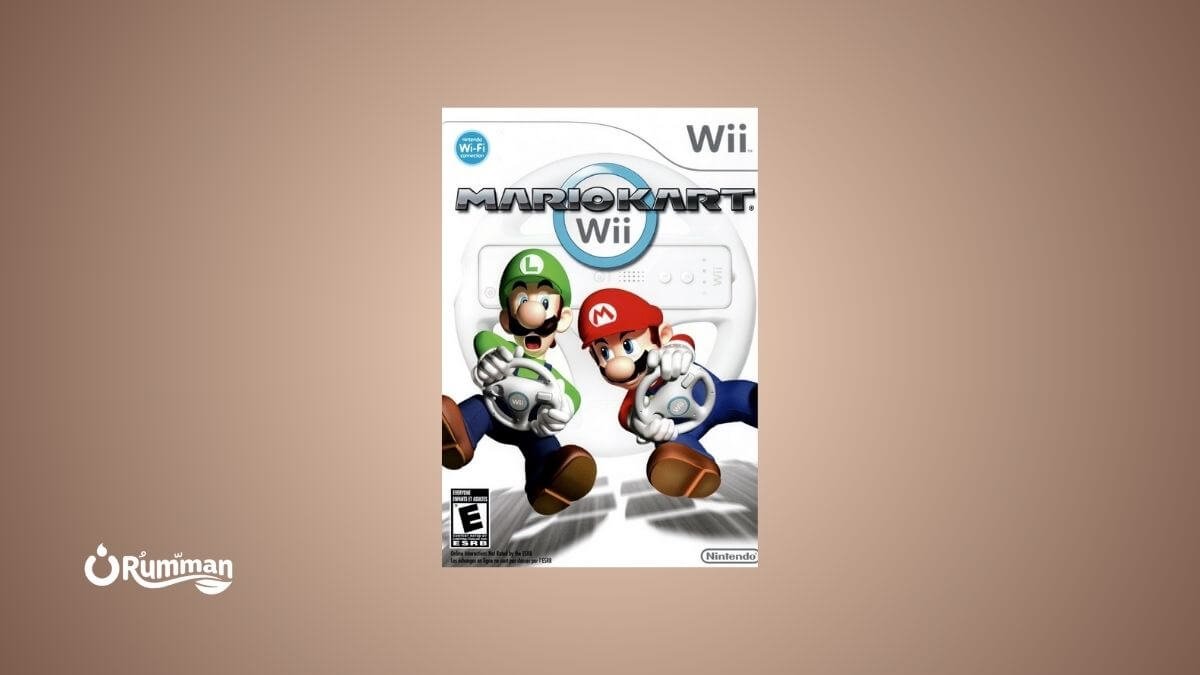
Mario Kart Wii – The Classic 2008 Racing Phenomenon
The legendary 2008 racer that sold 37+ million copies features 32 tracks, 24 characters, and innovative motion control racing. Still rated 8.2/10 by critics.
Game Info
Verdict
A landmark motion control racing experience that sold 37 million copies and defined Wii's multiplayer legacy, despite graphical limitations versus contemporary consoles.
Pros
- Revolutionary motion control steering via Wii Wheel peripheral
- 32 diverse tracks with distinct thematic environments
- 24 playable characters including Mii customization
- 12-player online racing with global matchmaking
- Exceptional accessibility for non-traditional gamers
- Stable 60 FPS performance throughout
- Robust local 4-player multiplayer support
Cons
- 480p resolution feels dated compared to contemporary Xbox 360/PS3 graphics
- Item balancing heavily favors rubber-band difficulty mechanics
- Online Wi-Fi Connection service discontinued (May 2014)
- Motion control accessibility varies between players
- Limited single-player campaign depth
- No post-release DLC or content expansion
Performance Notes
Stable 60 FPS throughout all race modes at 480p native resolution. Motion control responsiveness remains exceptional despite Wii hardware limitations. No frame rate drops during 12-player online races. Component cable output recommended for optimal visual clarity on modern displays.
Mario Kart Wii stands as a watershed moment in racing game history, introducing motion control steering via the Wii Wheel peripheral to mainstream audiences and proving that innovative input methods could coexist with traditional controllers. Released in April 2008 across global markets, this sixth mainline Mario Kart installment became the second-best-selling racing game of all time with over 37 million copies sold. The game fundamentally shaped Wii’s commercial trajectory while establishing design precedents that influenced multiplayer racing for over a decade. With 32 diverse tracks, 24 playable characters including Miis, and revolutionary 12-player online racing via Nintendo Wi-Fi Connection, Mario Kart Wii transformed expectations about social gaming infrastructure on home consoles.
How to Play Mario Kart Wii
Mario Kart Wii’s core loop emphasizes accessibility through motion control while maintaining depth for competitive players. Players select characters, customize karts through weight/acceleration/speed tiers, then engage in circuit races collecting power-ups and executing drifting techniques. The game balances skill-based performance with rubber-band difficulty adjustment that keeps races competitive regardless of player ability disparity.
- Controls – Wii Wheel peripheral delivers motion-based steering with intuitive tilt mechanics. Standard Wii Remote pointer controls remain available. GameCube Controller support provides traditional analog stick racing. Learning curve accommodates all ages within minutes; mastery requires significant practice.
- Progression – Grand Prix mode progresses through four difficulty tiers (50cc, 100cc, 150cc, Mirror). Unlocking vehicles and characters creates long-term progression hooks. Completing specific challenges unlocks exclusive karts and characters tied to playtime investment.
- Combat/Mechanics – Power-up collection drives tactical racing strategy. Drifting mechanics reward timing and angle execution. Wheelie techniques on motorcycles add vehicle-specific skill expression. Item balancing creates rubber-band dynamics where trailing racers receive superior power-ups, maintaining competitiveness.
- Tips – Master drifting timing through single-player practice; experiment with kart configurations matching your driving style; prioritize weapon usage defensively during mid-race; memorize track shortcuts for competitive advantages.
Who Should Play Mario Kart Wii
Mario Kart Wii transcends traditional gamer demographics through motion control accessibility and ubiquitous cultural appeal. Families seeking motion-controlled experiences, competitive online racers, and casual party gamers all found value within the game’s comprehensive feature set. The title remains remarkably welcoming for players unaccustomed to traditional controller schemes.
- Motion Control Enthusiasts – Wii Wheel peripheral delivers intuitive steering that made racing accessible to non-gamers. Family members uncomfortable with complex controllers embraced motion controls enthusiastically.
- Competitive Online Racers – 12-player online races with global matchmaking created internationally connected communities. Ranking systems and ghost data downloads provided competitive infrastructure.
- Casual Party Gamers – Battle modes for 4-player local competition. Accessible difficulty settings eliminated skill-based barriers. Multiplayer racing culture thrived among console-owning families.
- Skip if – Players expecting cutting-edge graphics compared to contemporary Xbox 360/PS3 standards will encounter visual limitations. Hardcore simulation racing fans may find rubber-band difficulty frustrating. Modern online players accustomed to voice chat infrastructure will notice communication limitations.
Mario Kart Wii Platform Performance
Mario Kart Wii operates exclusively on Nintendo Wii hardware released in 2006. Performance remains stable at 60 FPS throughout all race modes, though native resolution tops at 480p (Wii’s maximum output capability). The Wii’s technical limitations relative to contemporary consoles create noticeable graphical differences, yet gameplay fluidity remained exceptional for the era. Motion control responsiveness established new standards for accelerometer-based gameplay.
| Platform | Resolution | FPS | Notes |
|---|---|---|---|
| Nintendo Wii (Standard) | 480p | 60 | Stable frame delivery throughout races; motion control maintains perfect responsiveness |
| Nintendo Wii (Component Cable) | 480p | 60 | Improved picture quality via RGB signal; frame rate unchanged |
| Nintendo Wii (Composite) | 480i | 60 | Standard video output; acceptable quality for casual play |
| Emulation (Dolphin) | Up to 4K | 60+ | Modern emulation enables upscaling; requires PC hardware; unofficial experience |
Mario Kart Wii System Requirements
Mario Kart Wii exists exclusively on Nintendo Wii hardware with no PC port or modern platform availability. The game requires a Wii console, standard television with composite/component inputs, and access to Nintendo Wi-Fi Connection service (discontinued in 2014 for online functionality). No PC specifications exist due to console-exclusive status. Current ownership requires secondary market acquisition.
| Component | Minimum | Recommended |
|---|---|---|
| Hardware | Nintendo Wii console | Nintendo Wii with component cables |
| Display | Standard television (480i composite) | HD television (component 480p) |
| Controllers | Single Wii Remote with Wii Wheel peripheral | Wii Remote + Nunchuk or GameCube Controller options |
| Online Access | Broadband internet connection (discontinued 2014) | Stable WiFi 2.4GHz (legacy support only) |
| Storage | Game disc only (no installation required) | Wii Memory Card for save data backup recommended |
Similar Games to Mario Kart Wii
Mario Kart Wii’s influence on racing game design proved substantial, spawning numerous spiritual successors and franchise continuations. The following titles offer comparable multiplayer racing experiences with varying emphasis on accessibility, competitive depth, and technological advancement across different gaming platforms.
- Mario Kart 8 Deluxe – Modern spiritual successor on Nintendo Switch featuring 48 tracks, enhanced graphics, and refined online infrastructure. Maintains franchise DNA while leveraging contemporary hardware. Choose 8 Deluxe for current generation; Wii for historical significance.
- Mario Kart DS – Predecessor emphasizing handheld multiplayer; 32 tracks parallel Wii’s track count; lacks motion control innovation. Choose Wii for motion mechanics; DS for portable gaming.
- Sonic & All-Stars Racing Transformed – Sega’s competitive entry emphasizing vehicle transformation mechanics; maintains motion control support; similar 4-player local racing emphasis. Choose for gameplay variety; Wii for Mario series fandom.
- Crash Team Racing Nitro-Fueled – Modern kart racer emphasizing competitive depth; cross-platform online multiplayer; lacks motion control accessibility. Choose for contemporary online competition; Wii for motion control innovation.
Mario Kart Wii vs Competitors
Mario Kart Wii dominated 2008’s racing landscape through innovative motion control implementation and extensive online infrastructure. Competitive comparison reveals advantages in multiplayer accessibility and motion control integration, balanced against graphical limitations relative to contemporary Xbox 360/PS3 racing titles. The game’s cultural penetration exceeded technical specifications through approachability and social gaming emphasis.
| Feature | Mario Kart Wii | Forza Motorsport 2 | Gran Turismo 5 Prologue |
|---|---|---|---|
| Price (Launch 2008) | $49.99 | $59.99 | Free-to-play |
| Tracks | 32 | 70+ | 50+ |
| Characters/Cars | 24 characters; variable karts | 500+ cars | 800+ cars |
| Max Local Players | 4 | 2-4 | 2-4 |
| Max Online Players | 12 | 8-16 | 20 |
| Motion Control | Yes (Wii Wheel) | No | No |
| Metacritic Score (Wii version) | 82 | 92 (Xbox 360) | 86 (PS3) |
Mario Kart Wii Story and World
Mario Kart Wii emphasizes environment design and track variety over narrative progression. The 32-track roster spans thematic environments: Mushroom Kingdom venues recall Mario series locations, retro tracks import designs from Mario Kart 64 and earlier installments, tropical island paradise settings contrast with technological Bullet Bill Railways, and galaxy-themed courses explore space environments. Each track maintains distinct visual identity through architectural design, hazard placement, and environmental storytelling. Stadium-themed venues celebrate Nintendo’s sports properties. The game prioritizes track familiarity and visual distinction over coherent narrative, succeeding through environmental memorability and gameplay variety rather than story-driven progression.
Mario Kart Wii Multiplayer and Online
Mario Kart Wii revolutionized console racing through comprehensive online infrastructure unprecedented for 2008 Wii software. Twelve-player online races connected international communities through global matchmaking systems. Ghost data download features enabled asynchronous competition. Tournament creation allowed friend groups to organize structured competitions. Online lobbies featured basic text chat functionality between races. These features established baseline expectations for subsequent online racing games.
- Grand Prix Online – 12-player racing across all 32 tracks; skill-based matchmaking; global ranking integration; approximately 5-minute race duration.
- Battle Online – 12-player battle modes including Balloon Battle and Coin Runners; customizable arena selection; item balancing creates competitive parity.
- Friend Rooms – Custom lobbies for 12 players maximum; customizable track rotation; save room settings for recurring friend groups.
- Ghost Data – Download ghost races from community; compete against asynchronous opponents; arcade-style leaderboard integration.
Mario Kart Wii DLC and Expansions
Mario Kart Wii operated during the pre-digital-distribution console era, preceding mainstream DLC adoption by gaming industry. Content remained entirely disc-based with no post-release downloadable expansions. Monthly Nintendo Wi-Fi Connection tournaments provided limited community events but no new tracks or characters. The game received no paid or free DLC throughout its lifecycle, contrasting sharply with modern post-launch content strategies.
- No Paid DLC – Publishing philosophy predated paid downloadable content models; all content included on retail disc.
- Wi-Fi Tournaments – Monthly limited-time tournaments featured exclusive tracks, custom rules, and global leaderboard integration.
- Free Updates – Occasional balance patches via Wi-Fi Connection addressed item tuning and exploit fixes. No new content introduced through patches.
- Successor Content Strategy – Mario Kart 8 Deluxe established modern DLC model with paid seasonal pass; Wii remained legacy title without retroactive content expansion.
Mario Kart Wii Community and Support
Mario Kart Wii’s community thrived through Nintendo Wi-Fi Connection infrastructure, now discontinued as of May 2014. Secondary market communities maintain the game through emulation platforms and local multiplayer nostalgia. Online functionality remains inaccessible without legacy hardware or emulation workarounds. Community knowledge persists through video archives and competitive racing documentation from the 2008-2014 active period.
- Historical Forums – Official Nintendo forums shuttered; community archives preserved strategy documentation and competitive rulesets from original Wi-Fi era.
- Reddit/Discord – r/MarioKart maintains community interest; dedicated Discord servers facilitate emulation-based online play through alternative infrastructure.
- Emulation Communities – Dolphin emulator communities enable modern online play through custom servers; competitive communities maintain tournament structures offline.
- Preservation Efforts – Speedrunning communities maintain active competitive records; competitive 150cc tournaments documented through YouTube archives; community leaderboards preserved through fan sites.