
 54
54
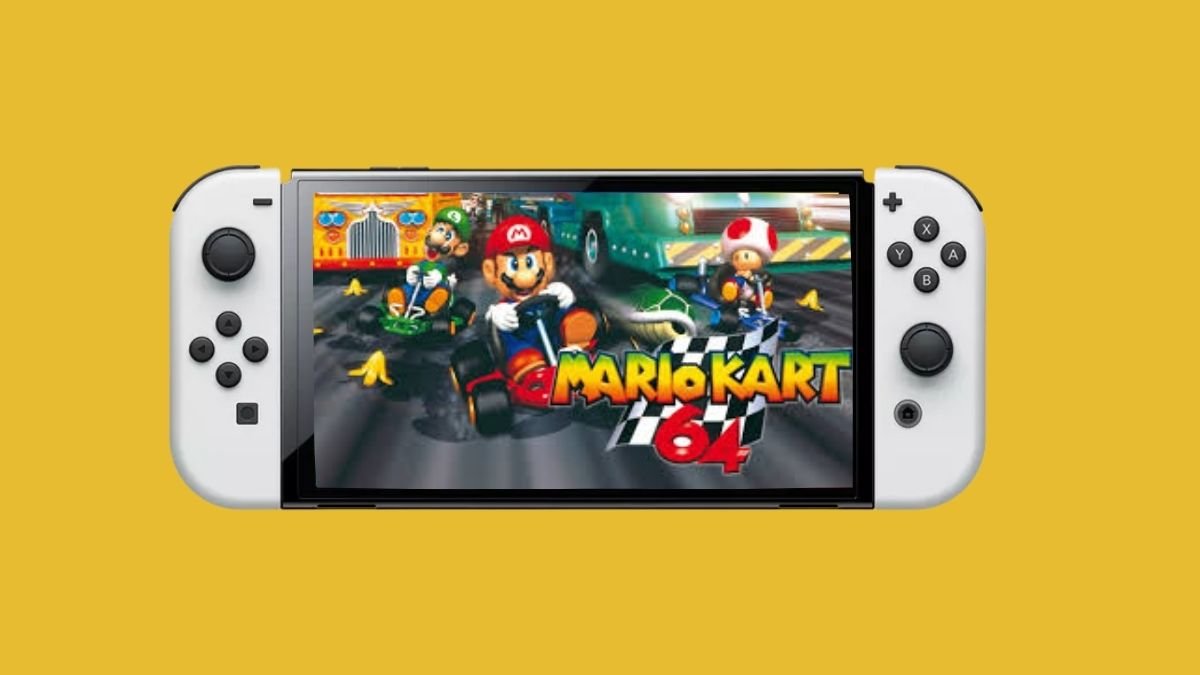
Mario Kart 64 – Nintendo’s Legendary 3D Racing Masterpiece
The definitive N64 multiplayer racing experience. With iconic tracks, accessible gameplay, and legendary Battle Mode, Mario Kart 64 remains a party gaming essential nearly 30 years later. Rating: 8.3/10
Game Info
Verdict
A defining multiplayer experience that remains fun three decades later despite AI rubber-banding and limited single-player content.
Pros
- Legendary four-player split-screen multiplayer and Battle Mode unmatched for local gaming
- Accessible controls and gameplay welcome all skill levels into competitive fun
- Iconic track design showcases N64's 3D capabilities while maintaining memorable themes
- Robust item system creates emergent, chaotic, highly entertaining race moments
- Extensive replay value through multiple difficulty tiers and competitive multiplayer modes
- Virtual Console and Switch availability preserves this classic for new generations
- Second best-selling N64 game with 9.87 million copies sold proves enduring appeal
Cons
- Aggressive AI rubber-banding severely limits single-player competitiveness and enjoyment
- Four-player split-screen severely limits visibility and creates viewing difficulty
- Limited character roster (8) and track count (16) feel sparse compared to modern standards
- No music plays during four-player modes due to technical limitations
- Zero online multiplayer restricts modern gaming expectations despite original cartridge era
- Frame rate drops during split-screen multiplayer impact competitive racing precision
Performance Notes
Runs at 60 FPS single-player on N64, drops to 30 FPS during four-player split-screen. Virtual Console and Switch versions maintain parity through emulation. 320x240 original resolution, upscaled on modern platforms to 480p (Wii) through 1080p (Switch docked).
Mario Kart 64 transformed a 16-bit phenomenon into a 3D spectacle that defined local multiplayer gaming on the Nintendo 64. Released in late 1996 in Japan and early 1997 worldwide, it became the second best-selling game on the N64 with 9.87 million copies sold. Critics praised its excellent multiplayer implementation and track design, though single-player experiences drew mixed responses. This review examines what made Mario Kart 64 a party game legend and whether it holds up in retrospective analysis as one of gaming’s greatest multiplayer achievements.
How to Play Mario Kart 64
Mario Kart 64 strips away complexity in favor of immediate accessibility. Players select from eight Mario universe characters, each with distinct weight classes affecting acceleration and top speed. The control scheme remains intuitive: accelerate with A, brake with B, and fire items with Z. Learning the power-slide mechanic takes practice but opens strategic racing possibilities.
- Controls – A to accelerate, B to brake, Z for items, R trigger for power-sliding. The N64 controller’s unusual layout initially confuses newcomers, but the responsive design rewards learning its quirks.
- Progression – Grand Prix mode chains four races across themed cups (Mushroom, Flower, Star, Special). Completing cups at higher difficulties (50cc, 100cc, 150cc) unlocks new features and increases challenge through aggressive AI rubber-banding.
- Combat Mechanics – Item collection determines race outcomes. Triple-red shells, Thunderbolts, and Spiny Shells create chaotic, unpredictable races where mechanical skill battles item luck.
- Tips – Master power-sliding on corners to build boost energy. Collect items defensively in first place; aggressive item usage works better when trailing. Use track knowledge to exploit shortcuts and gain advantages.
Who Should Play Mario Kart 64
Mario Kart 64 thrives as social gaming. It demands less execution skill than traditional racing games, making it accessible to players who have never touched a controller. The party atmosphere transforms technical racing into celebratory chaos perfect for gatherings and casual gaming nights.
- Local Multiplayer Enthusiasts – Four-player split-screen Battle Mode defines this game’s appeal. Balloon-popping arenas, destroyed racers transforming into bombs, and close-quarters chaos create unforgettable moments that online racing cannot replicate.
- Nintendo 64 Collectors – Owning the original cartridge preserves the authentic 30-year-old experience with all its technical quirks and character. The Virtual Console versions maintain fidelity while offering convenience.
- Party Gamers – Anyone seeking accessible, chaotic multiplayer entertainment will find Mario Kart 64 delivers consistent laughs, upsets, and memorable comebacks. Skill matters less than luck and item management.
- Skip if – Competitive racers seeking frame-perfect mechanics, sophisticated single-player campaigns, or online multiplayer should explore modern entries. The rubber-banding AI and limited track selection frustrate achievement-focused players.
Mario Kart 64 Platform Performance
Mario Kart 64 runs natively at 60 frames per second in single-player modes on original N64 hardware, though frame rates drop noticeably during four-player split-screen. Virtual Console and Nintendo 64 Classics versions maintain performance parity with slight emulation overhead. The Switch port running through Nintendo 64 Classics preserves the original experience without technical degradation.
| Platform | Resolution | FPS | Notes |
|---|---|---|---|
| Nintendo 64 | 320×240 | 60 (1P), 30 (4P) | Original cartridge; frame drops in split-screen multiplayer |
| Wii Virtual Console | Upscaled 480p | 60/30 | Released January 2007; faithful emulation |
| Wii U Virtual Console | Upscaled 1080p | 60/30 | Released January 2016; enhanced presentation |
| Nintendo Switch (N64 Classics) | 1080p docked / 720p handheld | 60/30 | October 2021 launch title; lag can appear in split-screen |
Mario Kart 64 System Requirements
Original hardware requirements for Nintendo 64 include 512MB cartridge space and 4MB RDRAM. Modern emulation on Switch, PC (via emulators), or Virtual Console versions require minimal processing power due to the game’s 1996 specifications. Any modern system easily handles emulation of this 30-year-old title.
| Component | Original N64 | Virtual Console / Emulation |
|---|---|---|
| Storage | 96 Megabit (12 MB) cartridge | 512 MB recommended |
| RAM | 4 MB RDRAM | 2 GB minimum for emulation |
| Display | Composite or S-Video | HDMI (Switch), Component/HDMI (Wii/Wii U) |
| Controllers | Original N64 controller (unique layout) | Pro Controllers, Joy-Cons, or arcade sticks supported |
| Additional | None required | Internet connection for eShop download recommended |
Similar Games to Mario Kart 64
Several games share Mario Kart 64’s multiplayer racing DNA while offering distinct experiences. Diddy Kong Racing on N64 provides deeper single-player content through Adventure Mode. F-Zero X emphasizes raw speed and competitive skill. Modern iterations like Mario Kart 8 Deluxe refine 30 years of design lessons into a superior package, though purists argue original experiences possess irreplaceable charm.
- Diddy Kong Racing – Features 20 tracks across 5 worlds, adventure mode with boss races, and vehicle variety (cars, hovercrafts, planes). Fewer items but more structured single-player content make it superior for solo play.
- F-Zero X – Runs at 60 frames per second with 30 competitors on screen. Emphasizes mechanical skill over item luck; appeals to competitive racers seeking speed and precision over casual chaos.
- Mario Kart 8 Deluxe (Switch) – Modern standard-bearer. 48 tracks, 42 characters, refined physics, and online multiplayer. Retains party gaming appeal while offering significantly more content and technical polish.
- Wave Race 64 – Water physics racing game with tight controls and responsive mechanics. Smaller character roster but excellent technical achievement showcasing N64 capabilities.
Mario Kart 64 vs Competitors
Mario Kart 64 dominated its era but faces stiff retrospective competition from genre peers. Diddy Kong Racing offered more single-player depth, while F-Zero X achieved superior technical performance. Modern Mario Kart entries provide exponentially more content, refined mechanics, and online infrastructure. However, Mario Kart 64 remains unmatched for local four-player split-screen chaos and nostalgic 90s charm.
| Feature | Mario Kart 64 | Diddy Kong Racing | Mario Kart 8 Deluxe |
|---|---|---|---|
| Price (at launch) | $59.99 | $59.99 | $59.99 (2017) |
| Playtime (main game) | 20-30 hours | 25-35 hours | 40+ hours |
| Character Roster | 8 characters | 10 characters (2 unlockable) | 42 characters |
| Track Count | 16 tracks | 20 tracks | 48 tracks |
| Online Multiplayer | None | None | Yes, full support |
| Metacritic | 83/100 | 77/100 | 92/100 |
Mario Kart 64 Story and World
Mario Kart 64 abandons narrative complexity for pure gameplay celebration. The eight playable characters represent Mario franchise icons, each with personality conveyed through victory animations and track-specific Easter eggs. Tracks draw inspiration from iconic Mario locations: Peach’s Castle, Donkey Kong Jungle, Bowser’s Castle, and the infamous Rainbow Road. The game establishes a jovial, competitive atmosphere where winners celebrate with gleeful expressions while losers receive comedic comeuppance. This approachable tone defined the series’ identity—racing transcends storytelling through moment-to-moment gameplay. Track design balances technical challenge with visual character. Wario Stadium sprawls expansively, Yoshi Valley forces strategic routing choices with branching paths, and Kalamari Desert delivers hazardous surprises through encroaching octopus tentacles. The environmental storytelling communicates Mario universe familiarity without demanding narrative investment, making the game universally accessible.
Mario Kart 64 Multiplayer and Online
Multiplayer defines Mario Kart 64’s legacy. Local split-screen accommodates up to four players simultaneously, a technical achievement for 1996. Battle Mode introduced one-on-one balloon popping in enclosed arenas, establishing a mode that appears in every subsequent series entry. Destroyed players transform into bombs, enabling revenge mechanics and dramatic last-second eliminations. Versus mode chains individual races, accumulating points across multiple courses. The original cartridge offers zero online functionality, predating internet-connected consoles by years. Virtual Console versions on Wii/Wii U and Switch Nintendo 64 Classics preserve pure local multiplayer without online additions.
- Grand Prix Mode – Four races per cup across difficulty tiers; CPU opponents scale difficulty dynamically
- Battle Mode – 4-player arenas with balloon destruction and bomb-transformation mechanics
- Versus Mode – Custom race tournaments between 2-4 players without CPU interference
- Time Trial – Single-player ghost racing measuring lap records; race against recorded performances
- Online Play – None; purely local multiplayer on original hardware and official re-releases
Mario Kart 64 DLC and Expansions
No downloadable content exists for Mario Kart 64, as the game predates modern DLC infrastructure by two decades. The original cartridge shipped with complete content: 8 characters, 16 tracks, and four game modes. Virtual Console and Switch releases maintain the original release without additional characters, tracks, or cosmetics. Modern Mario Kart games feature seasonal battle passes, cosmetic DLC, and post-launch content; Mario Kart 64 represents the complete package philosophy of 1996 game design.
- Original Cartridge – Complete game; no additional purchases required
- Virtual Console (Wii/Wii U) – Faithful port; no expanded content
- Nintendo 64 Classics (Switch) – Emulated version; maintains original feature set
- Cosmetics – None; character and kart customization introduced in later entries
- Post-Launch Support – Game received patches during Virtual Console era for emulation refinements only
Mario Kart 64 Community and Support
The Mario Kart 64 community remains active across retro gaming forums, Discord servers, and Reddit communities dedicated to N64 preservation. Emulation communities have produced ROM hacks, track modifications, and competitive netplay implementations extending the game’s lifespan. Nintendo provides minimal official support beyond Virtual Console distribution, though Switch Nintendo 64 Classics subscribers receive ongoing server access and emulation updates.
- Official Forums – Nintendo Switch Online community discussion; limited developer interaction
- Reddit/Discord – r/n64, r/mariokart, and dedicated Mario Kart 64 Discord servers host active communities discussing speedruns, competitive play, and nostalgia
- Speedrunning Community – Extensive speedrun documentation, routing strategies, and world record competitions on Speedrun.com
- Emulation Support – Project 64, Mupen64Plus, and RetroArch maintain compatibility; community patches optimize performance
- Updates – No new patches expected; game considered complete since 1997 release