
 58
58
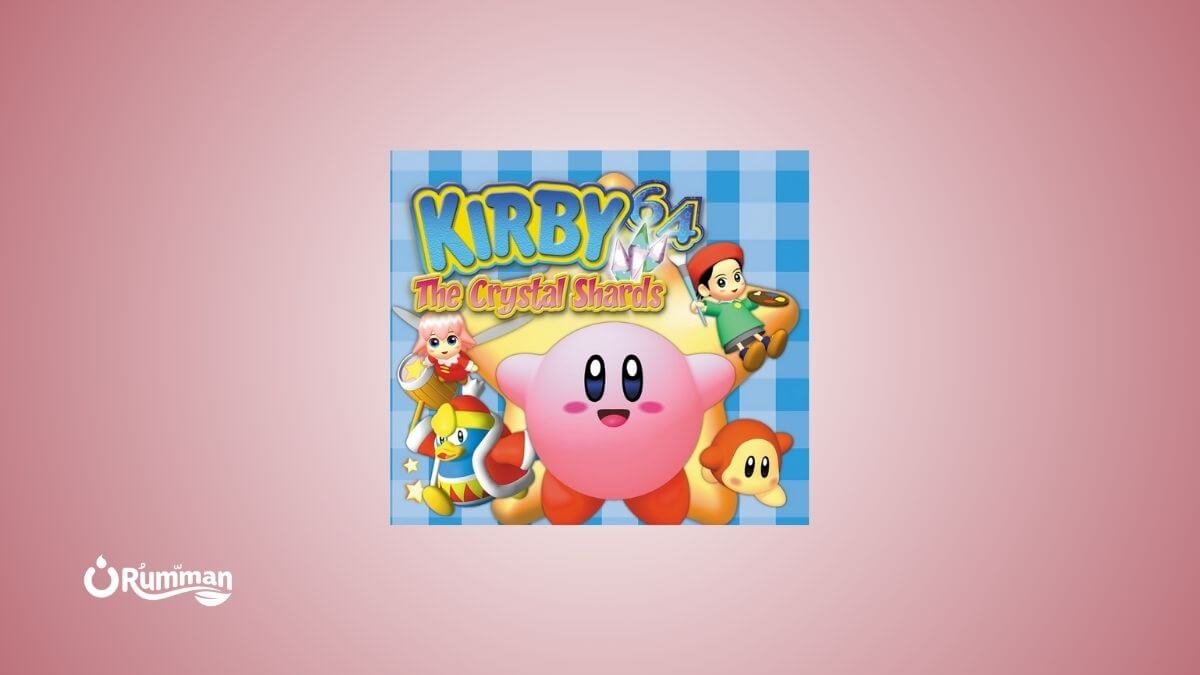
Kirby 64: The Crystal Shards – Polygonal Pioneers
The first Kirby adventure in 3D, featuring revolutionary copy ability combinations and stylized visuals that still impress. Metacritic score 77/100. Praised for innovative design and charm, criticized for brief length.
Game Info
Verdict
A pioneering 3D platformer with revolutionary ability combinations and timeless art direction, though brief campaign length limits longevity for completionist players.
Pros
- Revolutionary copy ability combination system creating 35 unique power variations from base set
- Exceptional art direction using stylized crayon aesthetic that ages far better than realistic N64 graphics
- Inventive level design emphasizing experimentation with combinations over rote platforming
- Impressive technical achievement running full 3D environments without Expansion Pak requirement
- Charming character animations and expressive design despite polygon-count limitations
- Multiple minigames provide competitive multiplayer entertainment via local play
- Strong soundtrack by Kota Nakamura featuring memorable melodic themes
Cons
- Campaign brevity (4-6 hours main story) disappoints players seeking substantial playtime value
- Relatively gentle difficulty throughout main adventure limits veteran platformer appeal
- No online multiplayer support; minigames limited to local four-player competitions
- Analog stick alternative not utilized (D-pad mandatory) feels archaic versus control standard established by Super Mario 64
- Limited ability selection (10 base abilities) appears restrictive versus contemporary games with larger move arsenals
Performance Notes
Nintendo 64 renders at 320x240 resolution, 30 FPS during gameplay, 60 FPS during cutscenes. No Expansion Pak required. Stylized visuals age exceptionally well compared to hyperrealistic N64 contemporaries. Switch Online version upscales to 1080p (TV) or 720p (handheld) through emulation.
Kirby 64: The Crystal Shards represents a defining moment in the platforming genre—the series’ courageous transition from 2D sprites to full 3D polygonal environments on Nintendo 64 hardware. Unlike contemporaries, Kirby 64 adopted a distinctive 2.5D perspective and stylized visual approach that ages remarkably well compared to rougher early-3D competitors. This review examines how HAL Laboratory’s technical ingenuity, ability combination system innovation, and artistic direction established a template that influenced handheld platformers for over two decades. Despite its brevity, Kirby 64 delivers concentrated platforming excellence that justifies its place in gaming history.
How to Play Kirby 64: The Crystal Shards
Kirby 64 introduces the revolutionary copy ability combination mechanic: Kirby can combine two absorbed abilities to create entirely new power combinations, generating 35 distinct variations from a base set of abilities. The 2.5D perspective splits levels between foreground and background planes, requiring players to master perspective-based platforming alongside ability management.
- Controls – D-pad (not analog stick, per developer preference) controls movement and jumping. C buttons execute ability attacks and special moves. Control scheme differs from Mario 64’s analog-forward design, requiring deliberate adjustment. Learning curve remains manageable within first 30 minutes of play.
- Progression – Campaign spans six worlds, each containing four main levels plus one boss encounter. Linear progression unlocks subsequent worlds; no non-linear world selection available. Story completion requires 4-6 hours depending on collectible hunting intensity.
- Combat/Mechanics – Core loop: inhale enemies with B button to absorb their ability; hold B and press a C button to combine with a currently-held ability, creating fusion power with unique effects (Fire + Stone = Fireball, Spark + Parasol = Lightning Shield, etc.). Experiments pay off through creative problem-solving and environmental navigation challenges.
- Tips – Experiment extensively with ability combinations; the game subtly rewards experimentation over prescribed solutions. Crystal shards hidden throughout levels unlock bonus content and true ending sequences. Revisit levels with new ability combinations to discover previously inaccessible areas.
Who Should Play Kirby 64: The Crystal Shards
Kirby 64 appeals to platforming historians, Nintendo 64 collectors, and players seeking artistically accomplished early-3D games. Its accessible main campaign welcomes newcomers while hidden collectibles and combination system depth satisfy enthusiasts. The game remains essential for understanding modern platformer design evolution.
- Nintendo 64 Enthusiasts – An essential N64 library entry showcasing cartridge-era technical achievement. The stylized visuals prove superior aging compared to hyperrealistic contemporaries. Collectors and preservation advocates appreciate this game’s preservation through Virtual Console and Nintendo Switch Online availability.
- Platformer Design Historians – Kirby 64’s combination system predates modern ability-swapping mechanics found in indie platformers and AAA titles. Understanding this game’s design philosophy illuminates 20+ years of subsequent platform game evolution.
- Family Gaming Sessions – The friendly presentation, manageable difficulty, and minigame collection support multi-generational play. Adults and children enjoy simultaneous play through minigame modes, creating nostalgia-driven bonding experiences.
- Skip if – Players requiring 30+ hour campaigns, demanding solo online multiplayer experiences, or those seeking challenging precision platforming beyond optional minigame sequences. Main story brevity (4-6 hours) may disappoint length-focused players.
Kirby 64: The Crystal Shards Platform Performance
Running on unmodified Nintendo 64 hardware without Expansion Pak requirement, Kirby 64 achieves impressive graphical presentation through art direction rather than processing power. The stylized crayon-like visuals intentionally echo Yoshi’s Island’s art style. Cutscenes render at 60 FPS while gameplay maintains 30 FPS—a technical decision maximizing visual impact for story moments.
| Platform | Resolution | FPS | Notes |
|---|---|---|---|
| Nintendo 64 (Original) | 320×240 | 30 (gameplay) / 60 (cutscenes) | No Expansion Pak required; stylized visuals maximize cartridge memory efficiency |
| Virtual Console (Wii) | 320×240 | 30 (gameplay) / 60 (cutscenes) | Emulated performance identical to original; remote controls supported |
| Virtual Console (Wii U) | 320×240 | 30 (gameplay) / 60 (cutscenes) | GamePad screen support; same emulation as Wii version |
| Nintendo Switch Online (N64) | 1080p upscaled (TV) / 720p (handheld) | 30 (gameplay) / 60 (cutscenes) | Modern emulation offers visual upscaling while preserving original gameplay timing |
Kirby 64: The Crystal Shards System Requirements
As a Nintendo 64 cartridge title from 2000, system requirements reflect early console gaming simplicity. The game occupies 32 MB of cartridge space—substantial for the era but trivial by modern standards. No additional hardware components, memory expansions, or network connectivity were necessary or supported.
| Component | Specification | Notes |
|---|---|---|
| Console | Nintendo 64 (any revision) | No Expansion Pak required; works on original N64 and revised motherboard versions |
| Cartridge Size | 32 MB | Standard N64 cartridge capacity; high-end for the platform |
| Controller | Standard N64 Controller | D-pad required (analog stick not utilized per developer choice) |
| Video Output | RCA Composite or S-Video | Original N64 supported both; later systems added component output via third-party cables |
| Audio Output | Stereo via RCA or optical (late models) | Excellent Kota Nakamura soundtrack in full stereo |
Similar Games to Kirby 64: The Crystal Shards
Games offering comparable experiences balance accessible platforming with creative ability-based mechanics. These alternatives share Kirby 64’s artistic approach to visual design and inventive level design emphasizing exploration and experimentation over raw difficulty.
- Yoshi’s Story – N64 contemporary with similar stylized art direction and relatively gentle difficulty. Less innovative mechanically but shares Kirby 64’s accessibility and family-friendly charm. Released same console generation.
- Kirby Super Star Ultra – Nintendo DS remake collecting multiple Kirby games with varied mechanics. Expands on original Super Star’s collection format with enhanced visuals and ability movesets. Builds directly on Kirby 64’s ability combination concepts.
- Kirby’s Return to Dream Land – Wii spiritual successor to Kirby 64’s design philosophy, featuring expanded copy abilities and optional challenge modes. Modernizes the 2.5D perspective with higher-resolution graphics.
- New Super Mario Bros 64 – Hypothetical spiritual peer if it existed; instead, Super Mario 64 represents N64-era 3D platforming innovation, though with fundamentally different gameplay approach emphasizing exploration over ability combinations.
Kirby 64: The Crystal Shards vs Competitors
Comparing Kirby 64 to contemporary platformers reveals how its combination system and stylized visuals separated it from mainstream 3D platforming trends. While lacking Super Mario 64’s complex control schemes, Kirby 64 offered more accessible gameplay with equal design innovation.
| Feature | Kirby 64: The Crystal Shards | Super Mario 64 | Donkey Kong Country 3 |
|---|---|---|---|
| Price (Original MSRP) | $59.99 | $59.99 | $49.99 |
| Playtime (Main Story) | 4-6 hours | 10-15 hours | 6-8 hours |
| Copy/Power Abilities | 10 base abilities (35 combinations) | N/A (single character) | 2 characters with unique moves |
| Multiplayer (Minigames) | 3 minigames (4 players each) | 2 minigames (split-screen) | 2-player cooperative campaign |
| Metacritic Score | 77/100 | 96/100 | 78/100 |
Kirby 64: The Crystal Shards Story and World
Dark Matter threatens Ripple Star, a peaceful crystal world home to peaceful inhabitants. When the mysterious entity shatters the titular crystal into fragments, Kirby volunteers to recover all pieces and restore peace. The narrative remains appropriately light—minimal dialogue, wordless character expressions, and environmental storytelling guide the adventure. Each world presents distinct thematic progression: pastoral Dream Land, technological Pop Star fortress, spiritual temple domains, and fantastical dream sequences.
King Dedede plays an unusual role—more victim than antagonist—alongside fresh enemy designs replacing Super Star’s familiar roster. The adventure concludes with Sectonia’s reveal as the true menace, transforming personal restoration quest into world-saving mission. Zero Boss fights present surprisingly substantial challenge despite the main campaign’s gentleness.
Kirby 64: The Crystal Shards Multiplayer and Online
Kirby 64 restricts multiplayer experiences to dedicated minigames accessible from the main menu. Unlike story mode which remains single-player exclusive, three distinct minigames support four-player local competitions. No online network functionality existed on Nintendo 64, making local wireless (impossible on cartridge hardware) or online play entirely unavailable.
- Kirby’s 100-Yard Hop – Racing minigame where up to four Kirbys compete to reach the finish line first while overcoming obstacles. Tilt-based movement controls reward rhythm and timing. Competitive scoring ranks players by finishing order.
- Bumper Crop Bump – Bumper-car style collision minigame in enclosed arena. Players use copy abilities and environmental bumpers to knock opponents into surrounding barriers. Battle royale format eliminates last-place players per round until winner emerges.
- Checkerboard Chase – Pattern-matching minigame where players race across checkerboard arenas collecting specific colored tiles. Cooperative and competitive scoring modes available; pattern complexity increases per round.
- Cross-Play – No network connectivity available on original N64. Virtual Console and Nintendo Switch Online versions maintain identical offline minigame functionality without adding online support.
Kirby 64: The Crystal Shards DLC and Expansions
Post-launch content strategy for Kirby 64 reflects late-1990s Nintendo practices: the complete game shipped on cartridge without digital distribution infrastructure or live-service content plans. No DLC, expansion packs, or additional content downloads existed either originally or during subsequent re-releases.
- Original Cartridge Content – The game shipped feature-complete with all copy abilities, levels, minigames, and boss encounters included. No hidden content required purchase; optional collectibles unlock through standard gameplay completion without paywalls.
- Re-release Additions – Virtual Console ports (Wii 2008, Wii U 2015, Switch Online 2022) maintained identical content libraries. No enhanced graphics, bonus levels, or additional features appeared in re-releases beyond emulation improvements.
- Bundled Appearances – Kirby’s Dream Collection (Wii, 2012) included the full game alongside other Kirby titles as twentieth-anniversary celebration package. This compilation version required separate purchase but added no unique content versus original cartridge.
- Free Updates – No post-release software updates, balance patches, or content expansions occurred. The cartridge released completed without requiring internet connectivity to access advertised features or complete the full campaign.
Kirby 64: The Crystal Shards Community and Support
Community engagement for Kirby 64 encompasses speedrunning documentation, ROM hacking innovations, and preservation advocacy. Official Nintendo support concluded decades ago, but passionate communities maintain comprehensive wikis and competitive tournament scenes. Emulation and preservation communities actively work ensuring future accessibility.
- Official Nintendo Resources – Original game manuals (scanned digitally by fans) provided complete gameplay instructions. Nintendo.com hosted promotional materials and media galleries (now archived). Official support transitioned following successor release; current Nintendo assistance limited to Virtual Console/Switch Online technical issues.
- Community Preservation – The Video Game History Foundation and similar organizations archive Kirby 64 documentation for historical research. WiKirby maintains comprehensive wiki covering mechanics, ability combinations, collectible locations, and speedrun routing. Reddit communities (r/n64, r/retrogaming) discuss preservation and emulation methods.
- Speedrunning Scene – Active speedrunning community maintains leaderboards on Speedrun.com tracking any% and 100% completion routes. World records hover around 1:15 (any%) and 2:45 (100%). Notable community members produce optimization guides and route explanation videos on YouTube.
- Technical Preservation – Emulation communities (Dolphin, RetroArch) maintain active development supporting accurate Kirby 64 playback. The transition to Switch Online’s N64 library ensures official digital preservation, though emulation enthusiasts debate accuracy versus convenience trade-offs.