
 46
46
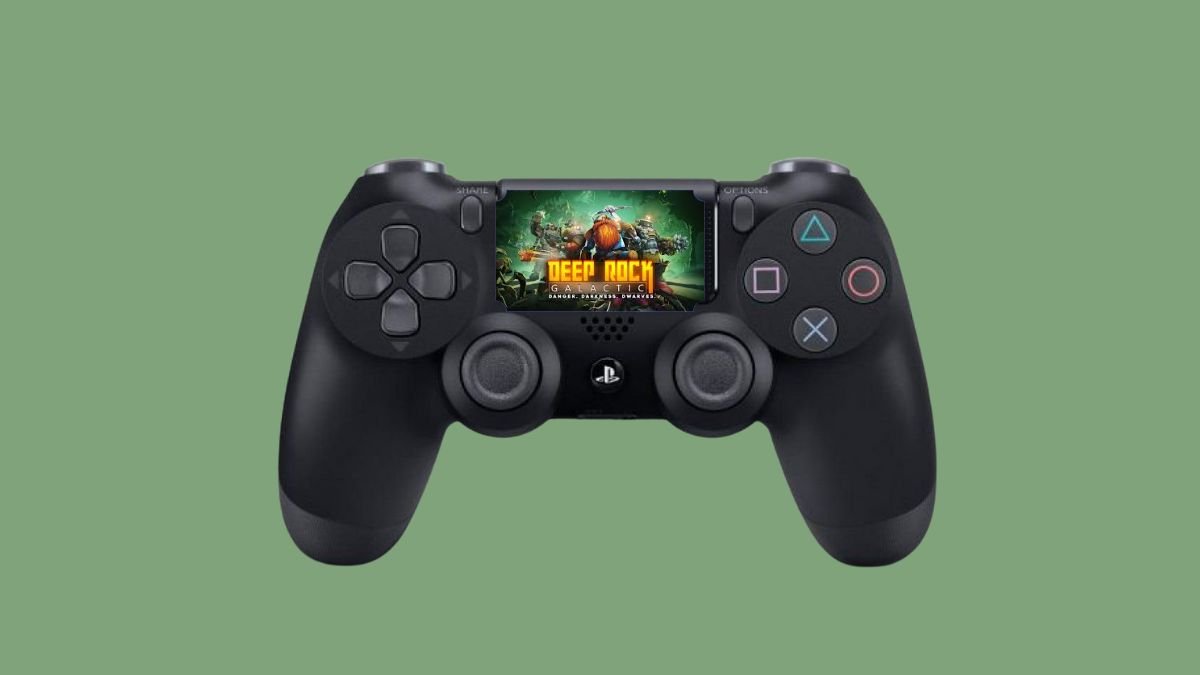
Deep Rock Galactic – Co-Op Mining FPS Masterpiece
Deep Rock Galactic delivers endless co-op mining chaos with four distinct classes, procedurally generated caverns, and terrain deformation that creates emergent gameplay. Rated 85 Metacritic, it's gaming's most beloved dwarven community.
Game Info
Verdict
Deep Rock Galactic remains gaming's most enduring co-op shooter, proving sustainable fun outlasts live-service monetization through genuinely excellent game design and developer-community respect.
Pros
- Procedurally generated caves create infinite unique expeditions
- Terrain deformation enables emergent tactical solutions
- Four-class synergy forces genuine team interdependence
- Cosmetic-only monetization model respects player time
- Exceptional longevity (500+ hours content) without paid progression
- Developer actively improves game based on community feedback
- Cross-save functionality and Steam Deck compatibility
- Incredibly welcoming community with zero toxicity culture
Cons
- Lack of cross-platform play between PC and console communities
- Steep learning curve for new players joining established squads
- Repetitive mission objective variety after 100+ hours
- Limited single-player content (solo mode feels incomplete without teammates)
- Cosmetic prices ($6.49 per pack) accumulate expensively for completionists
- No narrative campaign or story progression beyond seasonal flavor
Performance Notes
Deep Rock Galactic runs exceptionally clean on legacy hardware. Minimum specs (GTX 460, 6GB RAM) enable 1080p/60 fps gameplay; RTX 3070 systems achieve 1440p/144+ fps consistently. Procedural cave generation stresses CPUs more than GPUs; frame rate remains locked 60 fps on PS5 and Xbox Series X with zero performance fluctuation during 40+ simultaneous bug swarms.
Deep Rock Galactic represents the rarest achievement in cooperative gaming: an indie-scale FPS that achieved critical consensus (85 Metacritic, 95th OpenCritic percentile) and sustained engagement across 500+ hours without compromising its core vision or fracturing its community with monetization predation. Ghost Ship Games’ Danish team created a four-player mining simulator that weaponizes procedural generation, destructible terrain, and class synergy to generate infinite emergent moments where dwarves collaborate, fail spectacularly, and laugh together. This review examines why a game about shooting bugs inside randomly-generated caves became one of gaming’s most enduring co-op properties, outpacing live-service competitors through pure craft and genuine developer affection for its audience. Players will discover how mineral gathering, terrain carving, and enemy horde defense create opportunities for unexpected heroism, mechanical mastery, and unforgettable camaraderie.
How to Play Deep Rock Galactic
Deep Rock Galactic fuses FPS combat, mining management, and survival horror into a deceptively accessible loop. Four dwarven miners descend into procedurally generated caverns beneath the planet Hoxxes IV, armed with class-specific equipment, mission objectives, and an infinite supply of bugs to vaporize. Each expedition lasts fifteen to thirty minutes; the goal oscillates between resource extraction, environment navigation, and reaching the escape pod before the timer—or the bugs—eliminate your team. Mission variety prevents repetition: sometimes you mine Morkite, sometimes you eliminate Dreadnought bosses, sometimes you survive endless horde waves while drilling deep.
- Controls – Standard FPS controls (WASD movement, mouse aim, abilities mapped to number keys) with a pickaxe secondary weapon for terrain carving and traversal. Console versions remap elegantly to controller standard layouts; learning curve exists only for veterans of slower-paced shooters.
- Progression – Seasonal rank system provides cosmetics and unlock milestones without power gating. Equipment upgrades come through promotion cycles; each dwarf prestige adds cosmetic ranks and unlocks prestige armor skins. Endless content through procedural generation renders traditional progression loops obsolete.
- Combat/Mechanics – Class-based combat where Scout (mobility/lighting) scouts ahead, Engineer (sentry guns/defensive positioning) controls chokepoints, Driller (tunnel carving/incendiary weapons) creates escape routes, and Gunner (mobility platform/rocket launcher) provides area denial. Mission success demands all four roles function interdependently; solo play possible but suboptimal.
- Tips – “Rock and Stone!” before each mission for team morale. Ping terrain features to highlight mission-critical deposits; teammates follow pings automatically. Always preserve an escape route upward; isolation underground equals death. Shoot bugs, pick up gold, protect teammates, save dwarves from elimination by reviving them immediately.
Who Should Play Deep Rock Galactic
Deep Rock Galactic welcomes players across skill spectrum and platform preference. It thrives among competitive clans, casual friend groups, and solo drillers hunting self-improvement. The game demands minimal mechanical skill but rewards communication excellence, making it equally accessible to nursing-home gaming circles and esports-adjacent streamers.
- Co-op FPS Enthusiasts – Players seeking squad-based shooters without battle royale frustration or extraction mechanics. The respawn-anywhere design removes permadeath anxiety; failed missions simply reset the timer without progress penalties.
- Mining/Management Game Fans – Deep Rock Galactic merges resource management (mineral efficiency, equipment optimization) with real-time combat, appealing to players who love both genres equally. Mining becomes satisfying puzzle-solving under time pressure.
- Emergent Gameplay Seekers – The procedural generation + terrain deformation creates unique challenges each expedition; no two missions play identically. Designers studying emergent systems will find Deep Rock Galactic’s architecture revelatory.
- Skip If – Single-player purists (solo play exists but feels mechanically incomplete), players allergic to repetition (procedural generation creates sameness after 50+ hours), or those demanding story-driven narratives (Deep Rock Galactic treats story as optional cosmetic flavor).
Deep Rock Galactic Platform Performance
Deep Rock Galactic runs cleanly on hardware from 2012 onward, prioritizing accessibility and frame rate stability over visual fidelity maximalism. The art style—intentionally low-poly—enables incredible content density without taxing processors or GPU memory. Performance remains consistent across platforms, with PC enabling higher frame rates while console versions maintain locked 60 fps gameplay.
| Platform | Resolution | FPS | Notes |
|---|---|---|---|
| PC (High) | 1440p-4K | 100+ | Scales from GTX 460 baseline to RTX 4090; 240+ fps achievable. Procedural generation stresses CPUs more than GPUs. |
| PS5 | 1440p | 60 | Locked 60 fps with 1440p native rendering. Zero frame drops during intense bug waves; stable frame pacing preserves combat readiness. |
| Xbox Series X | 1440p | 60 | Identical PS5 performance. Slightly faster loading via DirectStorage; negligible advantage in practice. |
| Steam Deck | 720p | 45-60 | Native Proton compatibility; 720p/60 achievable with medium settings. Handheld mode recommended for couch co-op. |
Deep Rock Galactic System Requirements
Deep Rock Galactic’s minimum specifications accommodate decade-old hardware, enabling players without gaming PC budgets to participate fully. The recommended specs unlock higher frame rates and visual detail but remain unnecessary for competitive play; servers match players regardless of graphics quality, eliminating pay-to-see advantages.
| Component | Minimum | Recommended |
|---|---|---|
| OS | Windows 7 64-bit | Windows 10/11 64-bit |
| CPU | 2.4 GHz Dual-Core | 2.4 GHz Quad-Core (Intel i5-7th gen or equivalent) |
| GPU | NVIDIA GTX 460 / AMD Radeon HD 5770 (1GB VRAM) | NVIDIA GTX 970 / AMD Radeon R9 290 (4GB VRAM) |
| RAM | 6 GB | 8 GB |
| Storage | 3 GB SSD space | 3 GB SSD (for faster cave generation loading) |
Similar Games to Deep Rock Galactic
Deep Rock Galactic operates in a niche: co-op mining simulators merged with FPS mechanics don’t exist elsewhere. The closest alternatives sacrifice either mining depth for combat intensity, or vice versa. Competitors excel in different domains but fail to achieve the synthesis Deep Rock Galactic perfected.
- Helldivers 2 – Squad-based FPS with shared objective gameplay and weapon variety. Faster pace, zero environmental interaction, stronger narrative theming (satirical militarism). Better for twitch reflexes; worse for exploration.
- Warhammer 40K: Darktide – Class-based co-op shooter with loot progression and grimier aesthetic. Richer narrative, horde-fight focus, premium cosmetics. Lacks environmental destruction; terrain feels static by comparison.
- Payday 3 – Heist-focused co-op shooter with stealth-action options and objective complexity. Linear mission design, zero procedural generation. Better for narrative-driven players; lacks emergent gameplay chaos.
- Risk of Rain 2 – Procedural roguelike with cooperative third-person shooting and progression scaling. Different genre focus; no mining/gathering mechanics, more meta-progression layers than Deep Rock Galactic’s seasonal simplicity.
Deep Rock Galactic vs Competitors
Deep Rock Galactic competes against larger live-service shooters through sustainability rather than aggressive monetization. The comparison reveals Deep Rock Galactic’s positioning as the anti-live-service: identical cosmetic pricing across three years, zero battle pass, zero gameplay-affecting monetization, zero seasonal FOMO architecture. Players pay once, play infinitely.
| Feature | Deep Rock Galactic | Helldivers 2 | Warhammer 40K: Darktide |
|---|---|---|---|
| Price | $29.99 | Free-to-Play | $39.99 |
| Playtime (60+ hours) | 150+ hours | 50+ hours | 80+ hours |
| Player Count | 1-4 co-op | 1-4 co-op | 1-4 co-op |
| Multiplayer Type | Cross-friends, no crossplay | Cross-platform multiplayer | Cross-platform multiplayer |
| Metacritic | 85 | 84 | 79 |
Deep Rock Galactic Story and World
Deep Rock Galactic strips narrative to its essence: dwarves work for a mega-corporation mining precious resources on a hostile alien planet called Hoxxes IV. Story exists entirely through environmental storytelling, mission briefings written in humorous corporate-speak, and the dwarves’ own quirky dialogue during expeditions. The game’s tone—irreverent, self-aware, fundamentally funny—emerges from its setting rather than cutscenes: a universe where dwarves drink beer, shout “Rock and Stone!” compulsively, and genuinely love mining despite constant bug threats. Character development happens through player interaction with the environment and teammates rather than narrative arcs. The procedural caverns contain visual storytelling embedded in biomes: the crystalline Azure Weald suggests beauty despite danger, the toxic Hollow Bough warns of environmental hostility, the lava-filled Magma Core promises riches within death. Hoxxes IV itself becomes a character through procedural variation—every cave feels generated by the same geological forces, maintaining world coherence despite infinite variety.
Deep Rock Galactic Multiplayer and Online
Deep Rock Galactic pioneered seamless co-op matchmaking before industry standardization, proving that jumping into random lobbies with strangers could generate positive community outcomes through genuine camaraderie. Cross-platform matchmaking remains absent, but intra-platform friend networks thrive; players organically form permanent squads spanning continents through shared expeditions.
- Online Co-Op – Up to four players join remotely through P2P networking or dedicated servers. Lag compensation handles connection variance gracefully; server browser enables region selection and difficulty filtering.
- Matchmaking – Random squad generation matches players by hazard level, mission duration, and language preference. Reputation system (vote positive/negative after expeditions) helps identify quality teammates; toxic players face community filtering.
- Local Co-Op – Split-screen multiplayer on PC and consoles; no frame rate penalties for additional players. Handheld play on Steam Deck enables couch co-op anywhere.
- Cross-Platform – PC (Steam/Epic/GOG) and PlayStation communities remain separate; Xbox communities integrate within Microsoft ecosystem. Developer has not announced cross-platform play plans.
Deep Rock Galactic DLC and Expansions
Deep Rock Galactic monetizes exclusively through cosmetics, refusing to fragment its community with gameplay-affecting DLC. Seasonal cosmetic packs arrive alongside free content updates containing biomes, enemy types, equipment, and mission varieties. The subscription-free model proves sustainable across five+ years of continuous development.
- Cosmetic DLC Packs – Starter Pack ($7.99, two cosmetic bundles + credits), Dark Future ($6.49, sci-fi armor), Mega Corp ($6.49, corporate weapon skins), Rivals Tech ($6.49, sleek armor/weapons), Supporter Pack ($11.99, exclusive helmets and gold cosmetics), Ultimate Bundle ($24.99, all cosmetics).
- Free Updates – Seasonal patches add new biomes (Azure Weald, Hollow Bough, Magma Core added post-launch), enemy types (Dreadnoughts introduced in major updates), equipment varieties, and cosmetic tiers. Development roadmap published quarterly; community feedback shapes priority weighting.
- Season Content – Themed seasonal cosmetics aligned with real-world occasions (Halloween dwarves, winter themes, anniversary celebrations) rotate through cosmetic shops. No battle pass; cosmetics unlock through direct purchase or seasonal cosmetic drops during gameplay.
- Crossovers – Limited partnerships bring third-party cosmetics (Space Dwarf skins) without gameplay integration. Community votes on future cosmetic themes through official Discord channels.
Deep Rock Galactic Community and Support
Deep Rock Galactic’s community ranks among gaming’s healthiest, sustained by developer genuine interaction and franchise-wide respect for player time. Ghost Ship Games maintains official forums, Discord servers, and Reddit presence; developers respond directly to feature requests and balance concerns. The “Rock and Stone” catchphrase generates organic community identity transcending typical gaming tribalism.
- Official Channels – Ghost Ship maintains official Discord with 400,000+ members; weekly community showcases highlight player creativity. Developer livestreams occur bi-weekly; balance discussions happen transparently with design philosophy explanations.
- Community Spaces – r/DeepRockGalactic maintains 200,000+ active subscribers generating guides, cosmetic fan art, and emergent moment clips. YouTube creators sustain educational content (class builds, biome guides, speedruns).
- Mod Support – Steam Workshop integration enables cosmetic mods and UI improvements; developer actively encourages (not monetizes) community creations. Quality-of-life mods often get integrated into official patches.
- Updates – Patches arrive monthly with guaranteed balance passes, bug fixes, and community-requested features. Three-month roadmap published publicly; zero surprise nerfs or controversial changes without explanation.