
 38
38
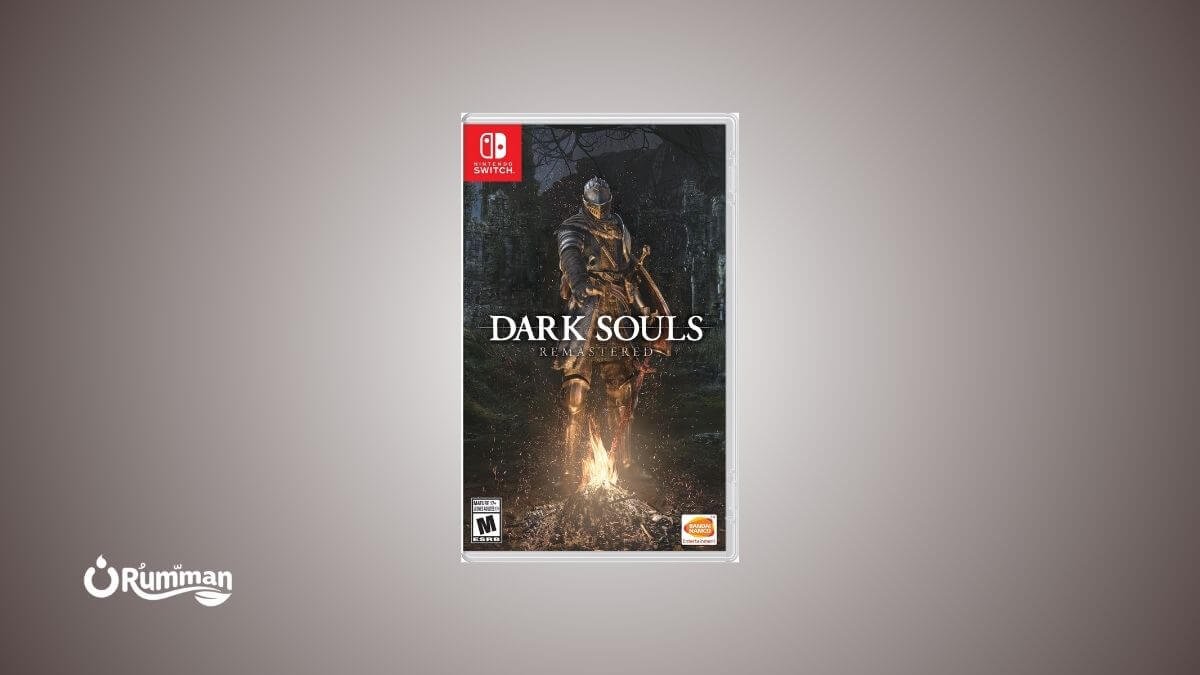
Dark Souls Remastered – Return to Lordran in HD
Dark Souls Remastered breathes new life into the genre-defining 2011 original with enhanced graphics and dedicated servers. Rated 8.4/10 on Metacritic, it remains essential.
Game Info
Verdict
Dark Souls Remastered remains the definitive way to experience the genre-defining original, balancing preservation with modernization better than any contemporary remaster.
Pros
- Interconnected world design rewards exploration and creates mastery through shortcuts
- Artorias DLC included in purchase adds substantial narrative and boss variety
- Dedicated servers eliminate infamous backstab latency plaguing original
- Runs smoothly on modest PC hardware; 60fps on all platforms except Switch
- PvP and co-op remain engaging seven years post-launch with active communities
- Minimalist storytelling and environmental lore encourage interpretation and discussion
- Challenge speedrunning community keeps the game fresh for veterans
Cons
- Combat feels slower and more cumbersome compared to Dark Souls 3 or Bloodborne
- Graphics improvements are modest; it remains fundamentally a 2011 game
- Nintendo Switch version's 30fps and occasional frame pacing issues diminish portable experience
- No cross-platform play divides multiplayer community across console and PC
- Game is feature-complete at launch; future content unlikely with FromSoftware focused on newer IPs
Performance Notes
Delivers 60fps on PC, PS4, and Xbox One at 1080p with stable frame pacing. Blight Town, infamous on original hardware for stutter, now maintains solid 60fps. Nintendo Switch targets 30fps with occasional frame pacing hiccups in crowded areas. Dedicated servers replaced P2P, reducing online latency issues significantly.
Dark Souls Remastered stands as one of gaming’s most important reissues, bringing FromSoftware’s 2011 masterpiece to modern platforms with meaningful improvements. Announced during a January 2018 Nintendo Direct Mini, this remaster launched May 24, 2018, across PlayStation 4, Xbox One, and PC, with a Nintendo Switch port arriving October 19, 2018. The game maintains the original’s punishing difficulty and interconnected world design while delivering enhanced visuals, improved performance, and dedicated servers replacing peer-to-peer connections. With an 84 Metascore and critical consensus calling it the definitive way to experience the series’ genesis, Dark Souls Remastered remains relevant seven years later as a reference standard for how remasters should preserve artistic intent while modernizing technical delivery.
How to Play Dark Souls Remastered
Dark Souls Remastered embraces cryptic level design and unforgiving combat. You emerge in the Asylum as an undead cursed to hollow, escaping imprisonment to discover Lordran and confront the impending Age of Darkness. Combat centers on patience: watch enemy patterns, dodge, counter-attack. Death returns you to the last bonfire (checkpoint), costing you all accumulated souls (currency). This cycle of discovery, death, and incremental progress defines the experience.
- Controls – Lock-on targeting with right stick, dodge roll with B/Circle, attack with light and heavy moves bound to triggers. The control scheme is standardized now but felt revolutionary in 2011. Learning curve is steep; mastery rewards observation and timing.
- Progression – Collect Souls by defeating enemies, spend them to level attributes at bonfires. Collect souls from fallen players (bloodstains) to learn from others’ mistakes. Reach the opposite bell towers to ring bells and open Anor Londo, the game’s midpoint. Progression is non-linear once you escape the Asylum; paths branch toward different boss encounters.
- Combat/Mechanics – Poise protects against interruption; stamina governs rolling and attacking. Equip weight matters: heavy armor increases poise but reduces roll distance. Weapon choice determines moveset, reach, and damage scaling with attributes.
- Tips – Level Endurance early for stamina and carry capacity. Don’t panic-roll; watch enemies before committing. Use shortcuts to access bonfires safely. Upgrade a weapon consistently rather than hoarding souls.
Who Should Play Dark Souls Remastered
Dark Souls Remastered targets players unafraid of failure and hungry for methodical, rewarding combat. Its reputation for difficulty is earned but exaggerated; pattern recognition beats reflexes. Newcomers to souls-like games should play this before Elden Ring or Bloodborne. Veterans seeking the series’ foundation find unmatched world design and boss variety.
- Souls-Like Newcomers – This is the original; experience the blueprint. Controls feel dated next to later entries, but the core loop is purest.
- World Design Enthusiasts – Lordran’s vertical interconnected geography feels alive. Shortcuts reward exploration and skill, creating a sense of mastery unmatched in Dark Souls 2 or 3.
- PvP Competitors – The community still thrives around the SL125 meta. Invasions and duels remain skill-based and unpredictable.
- Skip If – Avoid this if you need constant narrative direction, prefer action over deliberation, or dislike losing progress on death. The game respects player time investment, not handholding.
Dark Souls Remastered Platform Performance
The remaster delivers consistent performance across platforms. PC plays at 60fps on modest hardware; PS4 and Xbox One match at 1080p60. The Nintendo Switch version remains the most technically challenged, targeting 30fps with occasional frame pacing issues. Blight Town, infamous on original hardware for sub-30 performance, now holds 60fps steadily on all platforms except Switch. Online netcode switched from peer-to-peer (plagued by backstab latency issues) to dedicated servers, reducing lag during invasions and co-op.
| Platform | Resolution | FPS | Notes |
|---|---|---|---|
| PC (Recommended) | 1440p | 60+ | 60fps locked on most hardware; uncapped allows higher framerates but introduces camera issues |
| PS4 | 1080p | 60 | Consistent performance across all areas including Blight Town; dedicated servers smooth invasions |
| Xbox One | 1080p | 60 | Performance parity with PS4; slightly better texture filtering reported |
| Switch | 1080p (docked) | 30 | Portable play is convenience; handheld mode cuts to 720p. Frame pacing stutters occasionally in crowded areas |
Dark Souls Remastered System Requirements
PC system requirements are remarkably modest, reflecting 2011 development. Minimum specs run the game at 1080p30 on budget GPUs; recommended specs target solid 1080p60 on GPUs from 2013 onward. The 8GB install size is negligible by modern standards. No DRM beyond Steam, and offline play is supported (though online features require internet).
| Component | Minimum | Recommended |
|---|---|---|
| OS | Windows 7 64-bit SP1 | Windows 10 64-bit |
| CPU | Intel Core i5-2300 | Intel Core i5-4570 |
| GPU | AMD Radeon HD 6870 | AMD Radeon HD 7870 |
| RAM | 6GB | 8GB |
| Storage | 8GB | SSD Recommended |
Similar Games to Dark Souls Remastered
Dark Souls Remastered’s lineage includes Demon’s Souls (its predecessor), Dark Souls 2 and 3 (sequels with different design philosophies), and spiritual successors like Bloodborne and Elden Ring. Each iterates on the formula: Demon’s Souls is slower and more methodical; Dark Souls 3 prioritizes speed and aggressive bosses; Bloodborne demands offensive play; Elden Ring opens the world. Monster Hunter Rise offers similar depth through iteration and build variety but removes the souls-like penalty for failure.
- Demon’s Souls Remake – The spiritual predecessor with slower pacing and more deliberate boss encounters. More methodical, less varied enemy design than Dark Souls.
- Dark Souls 3 – The legacy sequel emphasizing speed and stamina management. Bosses are more aggressive; combat feels snappier but world design is more linear.
- Bloodborne – PlayStation exclusive demanding offensive play and parry mastery. Faster, meaner, and uncompromising compared to Dark Souls’ defense-oriented approach.
- Monster Hunter Rise – Similar depth and build diversity but replaces death penalty with hunt failure (which is forgiving). Boss design emphasizes pattern recognition over gear advantage.
Dark Souls Remastered vs Competitors
Dark Souls Remastered remains the standard-setter for souls-like remaster quality. It balances preserving artistic intent with technical modernization better than Dark Souls 2’s scholary remaster or Dark Souls 3’s graphical overkill. Elden Ring offers more content and world scope but at the cost of interconnected world cohesion. Bloodborne delivers superior boss design but limits accessibility to PlayStation. Dark Souls Remastered remains the purest, most complete experience for genre newcomers and speedrunners alike.
| Feature | Dark Souls Remastered | Dark Souls 3 | Elden Ring |
|---|---|---|---|
| Price | $39.99 | $59.99 | $59.99 |
| Playtime | 40-80 hours | 60-100 hours | 100-150 hours |
| Multiplayer | Yes (PvP/Co-op) | Yes (PvP/Co-op) | Yes (PvP/Co-op) |
| Metacritic | 84 | 89 | 96 |
Dark Souls Remastered Story and World
Dark Souls Remastered is set in the waning age of the Gods. The First Flame, the world’s primordial fire, fades. Undead curse spreads as the Age of Fire concludes. You emerge in the Undead Asylum—a prison for the cursed—and escape to Lordran, a crumbling kingdom caught between divine might and inevitable darkness. The narrative is sparse; lore hides in item descriptions, environmental storytelling, and NPC dialogue. King Gwyn, the lord of sunlight, faces inevitable ruin. The game’s ending—reach the Kiln of the First Flame to choose the world’s fate—carries weight because you’ve lived the journey. Unlike modern story-driven games, Dark Souls trusts players to interpret meaning from environmental texture and music composition.
Dark Souls Remastered Multiplayer and Online
Dark Souls Remastered pioneered asynchronous online multiplayer. Bloodstains show fallen players’ final moments. Summon signs allow cooperative fights against bosses or invasions by hostile players. Covenants align players with factions offering unique rewards: the Blade of the Darkmoon hunts red invaders; the Gravelord Servants curse other worlds. Dedicated servers (replacing the original’s P2P) reduce backstab latency and connectivity issues. Active communities thrive at specific soul level ranges (SL1 for challenge runners, SL125 for arena dueling). Cross-platform play is not supported (console and PC communities are separate).
- Co-op Summons – Place a white soapstone sign to be summoned into another player’s world for boss assistance. Limited uses per play session.
- PvP Invasions – Use Red Eye Orb to invade player worlds and duel. Covenants determine rewards and invasion restrictions based on level.
- Covenant Rewards – Complete covenant-specific objectives (protect hosts, hunt invaders, collect tokens) to earn unique spells and weapons unavailable in single-player.
- Cross-Play – Not supported. Console and PC pools are separate; Nintendo Switch forms its own smallest community.
Dark Souls Remastered DLC and Expansions
Dark Souls Remastered includes the Artorias of the Abyss DLC bundled with the base game purchase. This expansion adds four boss encounters, new weapons, spells, and armor sets woven into the base game’s narrative. The Knight Artorias storyline expands Lordran’s history and lore. No additional DLC or season pass exists beyond this inclusion. The game receives balancing patches and connectivity improvements but no new content post-remaster launch.
- Artorias of the Abyss – Included with purchase. Adds new areas, bosses (including the legendary Knight Artorias), weapons, and lore deepening Lordran’s backstory.
- Cosmetic DLC – None. The remaster is feature-complete at launch.
- Season Pass – Does not exist. One-time $39.99 purchase grants full experience.
- Free Updates – Balancing patches and server stability improvements released throughout the remaster’s lifespan. Content complete at launch.
Dark Souls Remastered Community and Support
Despite launching in 2018, Dark Souls Remastered maintains an active speedrunning and PvP community. Reddit’s r/darksouls remains vibrant with theorycrafting, challenge runs, and newcomer guidance. Official FromSoftware forums exist but pale in comparison to community-driven wikis. Fextralife’s Dark Souls Wiki serves as the exhaustive resource for lore, build optimization, and PvP guides. No mod support exists on console; PC modding is minimal and unofficial. Matchmaking remains active at SL125 (meta PvP) and SL1 (challenge speedrunning). The community sustains itself through tradition and shared difficulty rather than developer-driven seasonal content.
- Official Forums – FromSoftware maintains forums, but community interaction is minimal. No official balance roadmap provided.
- Reddit/Discord – r/darksouls (300k+ members) and community Discord servers coordinate invasions, speedruns, and challenge runs. Highly organized community events occur monthly.
- Mod Support – Unavailable on console; PC has minimal unofficial mods. The game is considered complete as-is without community balance patches.
- Updates – Balancing patches released on an as-needed basis; no quarterly roadmap. Development has de-prioritized Dark Souls in favor of newer FromSoftware titles (Elden Ring).