
 59
59
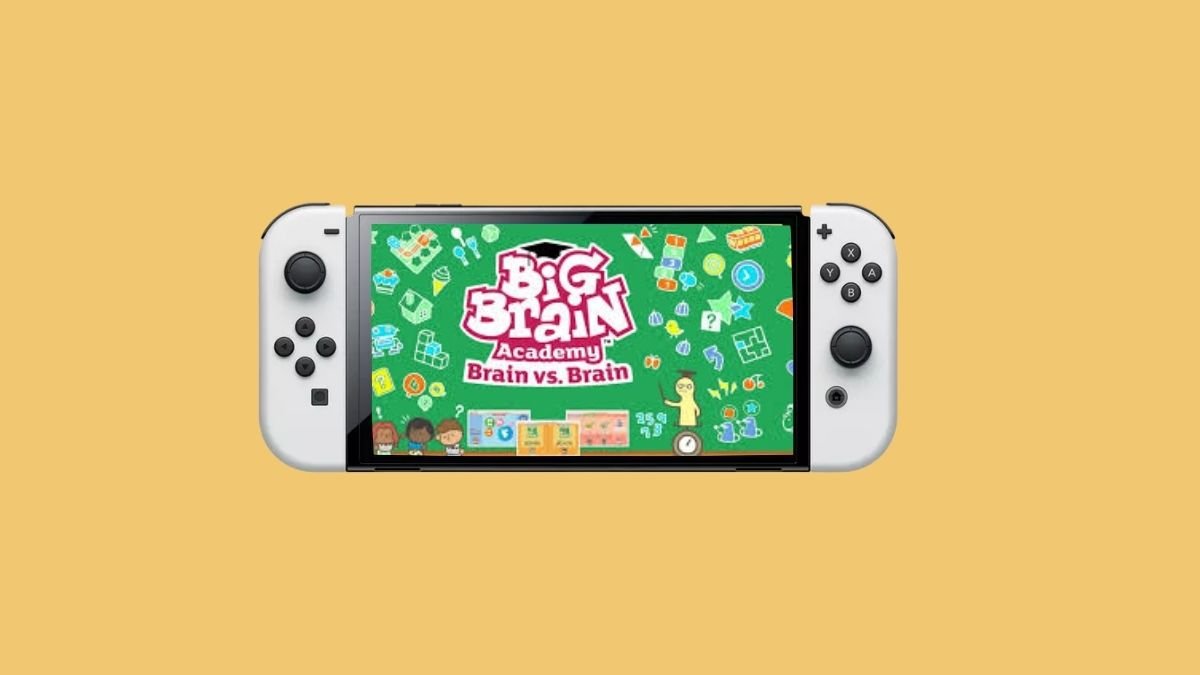
Big Brain Academy: Brain vs Brain – Family Brain Training
Nintendo's accessible brain-training party game emphasizing multiplayer competition through quick minigames. Metacritic 73%, praised for family appeal but criticized for repetitive single-player content.
Game Info
Verdict
Excellent family party game with unmatched accessibility but limited single-player engagement outside competitive scenarios.
Pros
- Exceptional four-player local multiplayer with automatic difficulty scaling enables genuine intergenerational competition
- Accessible minigame design welcomes casual audiences while maintaining depth for competitive players
- Enormous replayability through varied challenge combinations and competitive scoring dynamics
- Customizable avatars with 50+ cosmetic options enhance personalization appeal
- Ghost Clash global leaderboards provide long-term progression motivation through online ranking tracking
Cons
- Minimal single-player content; solo play becomes repetitive after 10-15 hours without competitive goals
- Activity variety limited to 20+ challenges; extended play sessions highlight repetition between minigame rotations
- Motion controls mandatory for certain activities create accessibility barriers for players with mobility limitations
- No real-time online multiplayer; Ghost Clash asynchronous nature eliminates live competitive excitement
Performance Notes
Stable 30fps during active 4-player gameplay across all Switch SKUs. 1080p docked / 720p handheld resolution. 60fps in menus. No performance degradation during multiplayer scenarios. Handheld mode slightly visually compressed but maintains readability.
Big Brain Academy: Brain vs. Brain represents the third entry in Nintendo’s brain-training franchise since 2005, launching December 2021 specifically designed for Nintendo Switch’s multiplayer capabilities. Unlike predecessor entries emphasizing solo training progression, this version pivots toward 4-player competitive gameplay while maintaining comprehensive solo difficulty scaling from 5-year-olds to competitive adults. The game features 20+ rapid-fire minigames spanning five cognitive categories, attracting both family audiences and competitive players seeking quick mental challenges. This review examines whether Big Brain Academy successfully balances accessibility with engagement depth, analyzing its strength in group settings against limitations in extended solo play.
How to Play Big Brain Academy: Brain vs Brain
Big Brain Academy presents five-minute minigame challenges testing memory, spatial reasoning, arithmetic, pattern recognition, and visual perception. Solo practice sessions operate independently, while multiplayer competitions pit players against identical challenges on identical timelines, determining winners through accuracy and speed combined into Big Brain Brawn scores.
- Controls – Motion controls required for certain activities (throwing actions, steering); traditional stick controls available for most challenges; learning curve minimal as tutorials introduce mechanics intuitively
- Progression – Difficulty classes (Sprout, Beginner, Intermediate, Advanced, Elite, Super Elite) automatically adjust based on performance; correct answers increase challenge while errors trigger downgrades
- Combat/Mechanics – Mental exercises replace combat; identify animals from partial images, memorize number sequences, solve math problems, arrange rotating 3D objects, and calculate train routes within 60-second windows
- Tips – Play solo practice regularly to unlock challenge variety; multiplayer mode unlocks all difficulties immediately, enabling immediate competitive engagement between skill levels
Who Should Play Big Brain Academy: Brain vs Brain
Family audiences seeking accessible group entertainment drive this game’s core demographic. Casual players valuing quick mental workouts benefit from bite-sized challenge structure. Competitive players pursuing online rankings find engagement through Ghost Clash leaderboards. Hardcore gamers demanding deep single-player progression should consider alternatives.
- Family Gamers – Four-player local multiplayer with independent difficulty scaling enables 5-year-olds competing directly against adults on level playing fields; rare accessibility feature
- Casual Players – 5-minute sessions fit television commercial breaks; no progression gates prevent pickup-and-play sessions at any time
- Competitive Types – Ghost Clash rankings compare scores against global player data or specific friend groups; addictive scoring system drives repeated engagement
- Skip if – Seeking single-player narrative focus, real-time online multiplayer, or extensive activity variety; this prioritizes party dynamics
Big Brain Academy: Brain vs Brain Platform Performance
Big Brain Academy: Brain vs. Brain releases exclusively on Nintendo Switch, with optimization specific to console hardware. Performance remains stable during 4-player scenarios despite visual complexity. Frame rates maintain consistent 60fps in menu systems and 30fps during active gameplay, prioritizing visual clarity over raw processing power.
| Platform | Resolution | FPS | Notes |
|---|---|---|---|
| PC | N/A | N/A | Not available; Nintendo exclusive |
| PlayStation 5 | N/A | N/A | Not available; Nintendo exclusive |
| Nintendo Switch | 1080p (docked)/720p (handheld) | 30-60 | Stable performance across 1-4 player modes; docked mode recommended for 4-player competitive sessions |
| Switch 2 | 1080p (docked)/720p (handheld) | 30-60 | Fully compatible; enhanced visual clarity via additional processing power |
Big Brain Academy: Brain vs Brain System Requirements
Big Brain Academy requires 1.2GB storage space and supports single Joy-Con controllers for multiplayer accessibility. Console requirements remain minimal; all Switch SKUs (original, Lite, OLED) run identically. Online functionality requires Nintendo Switch Online membership for Ghost Clash ghost data synchronization.
| Component | Minimum | Recommended |
|---|---|---|
| Platform | Nintendo Switch (any SKU) | Switch OLED for enhanced screen |
| Storage Required | 1.2 GB | SSD (internal) for faster loading |
| Controllers | Single Joy-Con per player | Joy-Con pairs for optimal motion controls |
| Online | None required for local play | Switch Online for Ghost Clash (optional) |
| Audio Setup | Internal speaker | Headphones for personal practice |
Similar Games to Big Brain Academy: Brain vs Brain
Big Brain Academy competes in the brain-training genre alongside puzzle and party games emphasizing rapid mental challenges. These alternatives offer comparable cognitive engagement through different mechanical frameworks. Most maintain local multiplayer parity but vary in challenge structure and replayability approaches.
- Dr. Kawashima’s Brain Training for Switch – Narrative-driven solo brain training through recognizable exercises; more extensive single-player campaign despite lower multiplayer emphasis
- Tetris Effect: Connected – Puzzle competition emphasizing pattern recognition and spatial reasoning; more demanding skill floor but deeper progression systems
- Lumosity (Mobile) – Digital brain training with analytics tracking cognitive improvement; free with premium version, but lacks local multiplayer entirely
- Memorado (Mobile) – Mobile brain training emphasizing visual memory and concentration; more extensive exercise library than Big Brain Academy
Big Brain Academy: Brain vs Brain vs Competitors
Big Brain Academy differentiates itself through unmatched 4-player local accessibility and automatic difficulty scaling. Competitor games typically target either solo players or feature less sophisticated difficulty balancing. The comparison table below positions it against brain-training alternatives emphasizing family accessibility.
| Feature | Big Brain Academy | Brain Training Switch | Tetris Effect |
|---|---|---|---|
| Price | $29.99 | $29.99 | $39.99 |
| Playtime | Unlimited (replayable) | 40-60 hours | 100+ hours |
| 4-Player Local | Yes | No | Limited |
| Metacritic | 73 | 75 | 79 |
Big Brain Academy: Brain vs Brain Story and World
Big Brain Academy contains negligible narrative structure; the game prioritizes mechanics over plot. Character customization through dozens of avatar outfits (cat costumes, corn costumes, recognizable Nintendo references) provides personalization absent from competitors without narrative justification. Dr. Lobe hosts proceedings through text-based challenge introductions and score announcements. The minimalist approach keeps focus on competitive gameplay rather than distracting through story exposition. Difficulty classes bear thematic naming (Sprout, Beginner, Elite) but carry no lore significance, functioning purely as mechanical progression markers.
Big Brain Academy: Brain vs Brain Multiplayer and Online
Multiplayer functionality drives Big Brain Academy’s entire design philosophy. Local 4-player competition operates flawlessly with adjustable difficulty ensuring competitive balance regardless of skill gaps. Online Ghost Clash mode competes asynchronously against recorded player data rather than real-time opponents.
- 4-Player Local Multiplayer – All activities support simultaneous 4-player competition; difficulty adjusts independently per player enabling 5-year-old versus adult parity
- Party Mode Variants – Spin the Wheel (random activity selection) or Choose Category (players select preferred minigames); 100-point victory targets create natural competition endpoints
- Ghost Clash Online – Asynchronous multiplayer competing against ghost data from global players, friend lists, or system profiles; requires Switch Online membership
- Cross-Play – No cross-platform play; limited to Nintendo Switch ecosystem exclusively
Big Brain Academy: Brain vs Brain DLC and Expansions
Big Brain Academy adopted minimal post-launch monetization; no paid DLC or expansions released since launch. Free content updates addressed balance adjustments and minor quality-of-life improvements. April 2025 update adjusted difficulty tuning but added no new minigames or content categories.
- DLC Content – None; all 20+ minigames included at purchase
- Season Pass – Not applicable; game uses one-time purchase model
- Free Updates – April 2025 difficulty rebalancing; January 2026 Switch 2 compatibility patch addressing minor display optimization
- Content Roadmap – No announced expansion plans; development appears maintenance-focused post-launch
Big Brain Academy: Brain vs Brain Community and Support
Community engagement remains active through Nintendo’s official channels and user-driven platforms. Competitive player bases maintain leaderboard discussions despite Nintendo’s minimal official esports promotion. Speedrunning represents minimal category given competitive minigames lacking defined completion criteria.
- Official Forums – Nintendo eShop community boards facilitate casual discussion; customer support addresses technical issues consistently
- Reddit/Discord – r/NintendoSwitch hosts Big Brain Academy discussions; dedicated community Discord maintains 2,000+ active members sharing high scores and strategies
- Competitive Scene – No official esports organization exists; grassroots leaderboards track individual player accomplishments through community tracking spreadsheets
- Updates – Quarterly balance patches maintain competitive integrity; development team communicates through Nintendo’s Switch Online app notifications