
 30
30
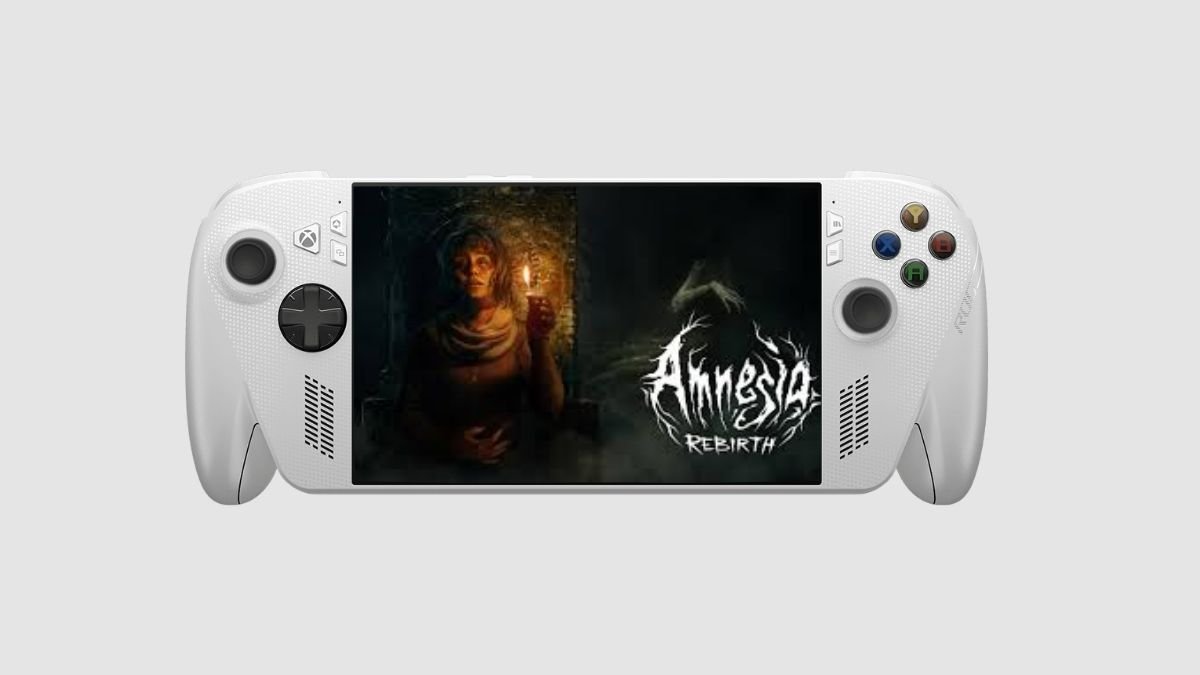
Amnesia: Rebirth – Terror in the Desert, Masterfully Crafted
Frictional Games delivers exceptional atmospheric horror with outstanding sound design and compelling narrative. The survival experience proves genuinely terrifying while offering philosophical depth. Rating: 8.0/10
Game Info
Verdict
Masterfully crafted survival horror offering genuine atmospheric terror, exceptional sound design, and compelling narrative that justifies the critical acclaim.
Pros
- Exceptional atmospheric tension building through expert sound design and environmental psychology rather than cheap jump scares
- Outstanding narrative exploring trauma, memory, and identity with philosophical depth and emotional resonance
- Remarkably modest system requirements enable playability on aging hardware without sacrificing visual quality or performance
- Free Adventure Mode update provides accessibility for varied player preferences without compromising original horror vision
- Excellent modding community support through Steam Workshop enabling hundreds of user-created scenarios and total conversions
Cons
- Puzzle design inconsistency causes occasional frustration; some solutions feel arbitrary rather than intuitively telegraphed by environment
- Certain enemy encounters feel frustratingly unfair; creature behavior unpredictability occasionally punishes careful play with unavoidable damage
- Excessive protagonist dialogue dilutes immersion for some players; Tasi's constant internal monologue interrupts atmospheric tension
- Limited accessibility options; uncompromising survival mechanics provide no difficulty variations or assistance features
- Late-game narrative pacing stumbles slightly; ending explanations feel rushed after measured buildup throughout earlier sections
Performance Notes
PC scales from 4K on high-end systems to playable framerates on budget hardware through optimization; console versions maintain stable 30fps; Switch version compromises to 720p handheld mode while maintaining solid performance and playability.
Amnesia: Rebirth stands as Frictional Games’ most ambitious horror project since the acclaimed Dark Descent, earning a Metacritic score of 80 and widespread critical praise for its masterful execution of survival horror principles. Released in October 2020, the game transports players into a nightmare landscape where memory fragmentation and supernatural terror intertwine. This comprehensive review examines Amnesia: Rebirth’s achievement in crafting genuine fear through environmental design and sound work, details the survival mechanics that define the experience, and evaluates its technical performance across platforms available in 2026.
How to Play Amnesia: Rebirth
Amnesia: Rebirth operates on survival horror principles where players lack combat abilities and must navigate dangerous environments through hiding, evasion, and environmental awareness. Protagonist Tasi Trianon awakens in the Algerian desert with fragmentary memories and immediately faces existential threats requiring clever problem-solving rather than confrontation. The core gameplay loop emphasizes stealth, exploration, and psychological management; players monitor fear levels that increase through darkness, monster encounters, and disturbing imagery, managing Tasi’s mental state through light sources and safe spaces.
- Controls – Third-person movement feels responsive and natural across all platforms, with simple directional controls and contextual interaction prompts. Players adapt quickly within the first exploration sections; no complicated input sequences or complex control schemes frustrate novice players. Inventory management remains intuitive, allowing quick access to collected items and light sources.
- Progression – Players advance through linear narrative chapters spanning eight to ten hours for mainline story content. Each major section introduces new underground locations, reveals fragmented memories through encounters and environmental storytelling, and deepens understanding of Tasi’s suppressed past. Progression flows naturally without artificial gatekeeping; players proceed at psychological pace matching narrative revelations.
- Survival and Mechanics – Fear management forms the core mechanical system; darkness and monster encounters increase fear levels, causing visual distortion and psychological deterioration. Players counteract fear through light sources (matches, lanterns) and finding safe spaces to recover. No combat exists; encountering monsters requires hiding, evasion, or waiting for creatures to lose interest. Physics-based puzzles require manipulating objects to solve environmental challenges, often under time pressure from pursuing threats.
- Tips – Conserve light sources; darkness triggers fear but wasting resources proves costly when genuine threats emerge. Listen carefully to audio cues; sound design telegraphs monster locations and environmental dangers. Take time reading notes and collectibles; narrative depth emerges through environmental storytelling rather than cinematic exposition.
Who Should Play Amnesia: Rebirth
Amnesia: Rebirth targets horror enthusiasts seeking genuine atmospheric fear combined with meaningful narrative. The game rewards players comfortable with tension-based gameplay, puzzle-solving under pressure, and exploring disturbing psychological themes. Understanding player preferences helps determine whether Amnesia: Rebirth provides the intended experience or proves too intense.
- Hardcore Horror Fans – Players seeking legitimately terrifying horror experiences will find Amnesia: Rebirth satisfies that craving through masterful sound design, oppressive atmosphere, and genuine threat encounters. The game rarely uses cheap jump scares; instead building sustained tension through careful environmental design and creature behavior unpredictability.
- Narrative-Driven Gamers – Those valuing story, character development, and philosophical exploration will appreciate Tasi’s journey and the existential questions about memory, identity, and human potential. The narrative unfolds gradually through exploration and discovery rather than exposition dumps, rewarding attentive players.
- Survival Game Enthusiasts – Players enjoying hide-and-seek survival mechanics without combat will find Amnesia: Rebirth’s fear management system engaging and consistently challenging. Resource management becomes strategic as light sources deplete and psychological deterioration threatens progress.
- Skip if – Those with low tolerance for disturbing imagery, psychological content, or sustained tension should avoid. Players preferring action-oriented gameplay or combat encounters will find Amnesia: Rebirth frustrating. Those wanting difficulty options or assistance features may struggle with uncompromising survival mechanics and minimal accessibility options.
Amnesia: Rebirth Platform Performance
Amnesia: Rebirth demonstrates excellent scalability across hardware generations, from aging PC setups to current-generation consoles. The game runs on highly optimized engine code, achieving solid performance even on modest hardware through careful optimization. PC allows extensive graphics customization, while console versions maintain stable 30fps across PlayStation 4, Xbox One, and current generation systems through hardware-specific optimization.
| Platform | Resolution | FPS | Notes |
|---|---|---|---|
| PC (High) | 1440p/4K | 60+ | Fully scalable with extensive graphics settings; high-end systems achieve 4K 60+fps; optimized engine allows even modest hardware playable framerates |
| PlayStation 4 | 1080p | 30 | Stable performance across all PS4 hardware variants; Pro version offers enhanced visuals with consistent framerate |
| Xbox One | 1080p | 30 | Reliable 30fps targeting across Xbox One, One S, and One X variants; X version features enhanced graphics and faster load times |
| Nintendo Switch | 720p/1080p | 30 | Portable version delivers surprisingly solid performance; handheld mode reduces to 720p while docked maintains 1080p output |
Amnesia: Rebirth System Requirements
Amnesia: Rebirth features remarkably modest system requirements, allowing playability on aging hardware through aggressive optimization. The game’s engine prioritizes smooth CPU performance and smart GPU memory management, enabling even budget systems to experience the horror effectively. This accessibility extends Amnesia: Rebirth’s appeal to players without high-end gaming hardware.
| Component | Minimum | Recommended |
|---|---|---|
| OS | Windows 7/8/10 64-bit | Windows 7/8/10 64-bit |
| CPU | Intel Core i3 / AMD FX 2.4GHz | Intel Core i5 / AMD Ryzen 5 |
| GPU | NVIDIA GTX 460 / AMD Radeon HD 5750 (OpenGL 4.0) | NVIDIA GTX 680 / AMD Radeon RX 580 (OpenGL 4.3) |
| RAM | 4GB | 8GB |
| Storage | 35GB available space | 35GB SSD recommended |
Similar Games to Amnesia: Rebirth
Amnesia: Rebirth occupies a specific niche within survival horror, emphasizing atmosphere and fear management over combat. Games sharing similar mechanical frameworks, thematic approaches, or design philosophy offer comparable experiences for players seeking alternatives. Frictional Games’ other titles provide consistent quality, while other developers explore similar survival horror principles through different settings and mechanics.
- Amnesia: The Dark Descent – Frictional Games’ original masterpiece that defined modern horror gaming. Features similar survival mechanics and atmospheric tension building, though with different setting (medieval castle) and shorter playtime. Still stands as the genre’s gold standard for psychological horror design.
- SOMA – Frictional Games’ philosophical horror about consciousness and identity in an underwater facility. Shares Amnesia: Rebirth’s emphasis on atmosphere and narrative over combat, though with more forgiving difficulty options and different thematic focus on transhumanism.
- Outlast Series – First-person survival horror emphasizing hide-and-seek mechanics and sanity systems. Similar tension building through vulnerable protagonist, though with more intense jump scares and slightly less sophisticated atmosphere building.
- Resident Evil 7: Biohazard – Modern survival horror balancing action with tension, set in Southern gothic household. Offers more combat options than Amnesia while maintaining psychological horror elements and sanity mechanics affecting player experience.
Amnesia: Rebirth vs Competitors
Comparing Amnesia: Rebirth against contemporary survival horror titles reveals clear positioning within the genre. The game offers superior atmosphere and sound design compared to most competitors, justified by higher critical reception. Pricing remains competitive, with additional free updates and mod support providing post-purchase value unavailable in many alternatives. Overall value proposition strongly favors Amnesia: Rebirth for horror enthusiasts.
| Feature | Amnesia: Rebirth | The Medium | Resident Evil 7 |
|---|---|---|---|
| Price | $29.99 | $49.99 | $59.99 |
| Playtime (hours) | 8-10 | 8-10 | 10-12 |
| Multiplayer | No | No | Yes (DLC) |
| Metacritic Score | 80 | 72 | 84 |
Amnesia: Rebirth Story and World
Amnesia: Rebirth transports players into a nightmarish journey across the Algerian desert and ancient underground chambers filled with architectural impossibilities and cosmic horror elements. Protagonist Tasi Trianon awakens in crashed aircraft wreckage with fragmented memories and increasingly disturbing visions. As exploration deepens through desert ruins and subterranean complexes, players gradually reconstruct Tasi’s past through environmental storytelling, found documents, and memory sequences. The narrative explores themes of identity, sacrifice, transformation, and the price of revelation. The game masterfully blends desert-based claustrophobia with the oppressive atmosphere of underground caverns, creating varied environments despite maintaining consistent dread. Voice acting throughout proves superb, with Tasi’s constant internal monologue and dialogue providing character depth while maintaining immersion despite some player criticism about excessive talking breaking tension in select moments.
Amnesia: Rebirth Multiplayer and Online
Amnesia: Rebirth contains no multiplayer functionality, competitive modes, or online cooperative gameplay. This single-player survival experience prioritizes intimate psychological horror atmosphere incompatible with multiplayer frameworks. No cross-platform features, online rankings, or social progression systems exist. The game supports standard platform achievements and Steam community features without requiring online authentication beyond initial activation.
- Campaign Only – Single-player narrative-driven experience lasting eight to ten hours, designed for solitary psychological engagement without cooperative alternatives or multiplayer variants of any kind.
- Adventure Mode – Free update introducing reduced-intensity playthrough option featuring diminished monster encounters and reduced psychological disturbance for players seeking story focus over horror intensity.
- Custom Stories – Steam Workshop integration allows community creators to design and share additional content; dedicated editors provided enable full conversions and new scenarios created by passionate mod developers.
- Cross-Platform – No cross-play support exists between PC, console, and mobile versions; each platform maintains separate communities, though gameplay experiences remain largely identical.
Amnesia: Rebirth DLC and Expansions
Amnesia: Rebirth has received meaningful post-launch support through free updates and community creation tools rather than traditional paid DLC. The Adventure Mode free update provides accessibility options for players seeking story focus over horror intensity. Community modding through Steam Workshop integration enables enthusiast creators to design additional content, substantially extending post-purchase value. No paid story expansions or cosmetic DLC fragmentary monetization exists.
- Adventure Mode – Free substantial update allowing story experience with reduced monster encounters, diminished psychological effects, and customizable difficulty parameters enabling broader player accessibility without compromising narrative.
- Mod Tools – Official editing software provided free enabling custom story creation; extensive documentation supports community developers in creating levels, entities, and total conversions using development tools.
- Steam Workshop – Integrated distribution platform for community mods and custom stories; hundreds of user-created scenarios available, continually expanding content library years post-release.
- Free Updates – Ongoing technical patches address performance, bugs, and compatibility issues across platforms; no content-locked seasonal updates or battle passes exist.
Amnesia: Rebirth Community and Support
Frictional Games maintains robust community presence through official forums, social media channels, and technical support infrastructure. The player community remains actively engaged five years post-release, sharing custom stories, discussing gameplay experiences, and analyzing narrative mysteries across multiple platforms. Official support emphasizes technical assistance and mod enablement rather than live service operations.
- Official Community – Frictional Games maintains official forums, website, and social media channels providing updates, patch notes, community highlights, and development insights into future projects alongside Amnesia: Rebirth support.
- Reddit and Discord – Dedicated subreddit communities and unofficial Discord servers host active discussions about gameplay mechanics, puzzle solutions, narrative interpretation, mod showcases, and platform performance comparisons.
- Mod Community – Steam Workshop hosts hundreds of user-created custom stories and total conversions; modding community remains active, creating new content regularly and maintaining quality standards through community curation and feedback.
- Ongoing Support – Patch frequency reflects maintenance rather than live service development; Frictional Games addresses critical bugs and performance issues while focusing studio resources on future original projects rather than extensive post-launch content pipelines.